







2026 Best Single Stage Pump Buying Guide?
Choosing the right Single Stage Pump is not a simple catalog exercise. It is a practical engineering decision involving flow, pressure, fluid temperature, installation space, and maintenance access. A pump that looks efficient on paper may struggle when suction lines are undersized or the liquid contains abrasive particles.
Igor J. Karassik, a respected pump engineer and co-author of the Pump Handbook, wrote, “A pump is a device that adds energy to a liquid.” That simple statement remains useful. It reminds buyers to evaluate the complete hydraulic system, not only the motor rating. Check the required flow rate, total dynamic head, Net Positive Suction Head available, seal arrangement, impeller material, and expected duty cycle. Small details matter. A poorly supported pipe can transmit vibration directly into the casing.
This 2026 Best Single Stage Pump Buying Guide explains how to compare pump types, materials, efficiencies, controls, and lifecycle costs. It also considers real operating conditions, including water treatment rooms, irrigation systems, heating circuits, and light industrial service. Independent testing, manufacturer documentation, and applicable safety standards should guide the final decision. Marketing claims deserve careful review. Sometimes, the cheapest pump becomes the most expensive choice after repeated seal failures, energy waste, or unexpected downtime. There is no perfect selection for every site. A reliable choice begins with honest system data and a willingness to question incomplete specifications.
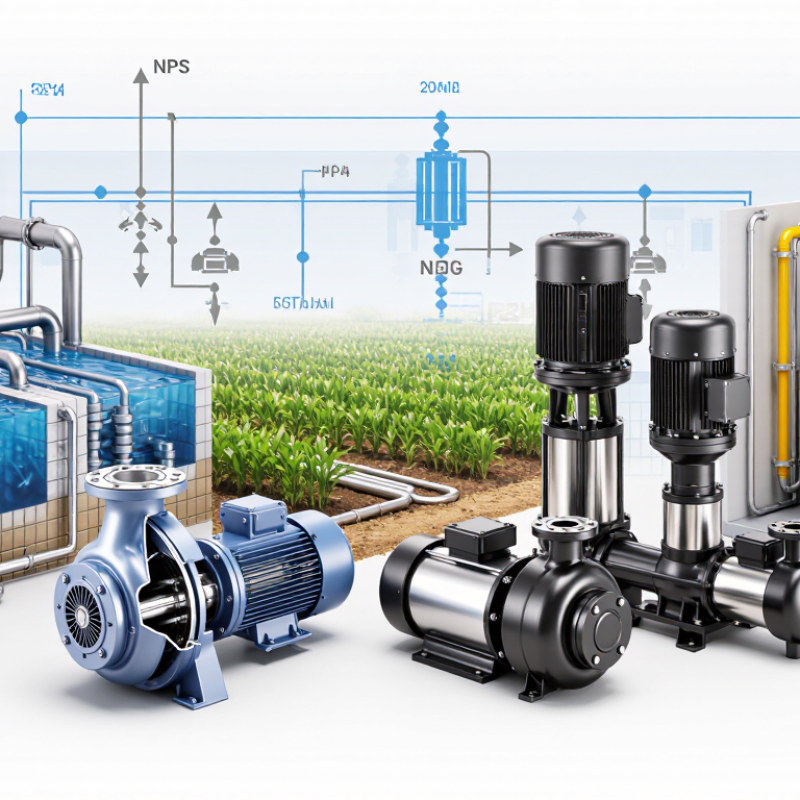
Single Stage Pump Basics and Operating Principles
2026 Best Single Stage Pump Buying Guide: Single Stage Pump Basics and Operating Principles
A single-stage pump uses one impeller to move liquid from the suction side to the discharge side. The motor turns the impeller, creating velocity inside the casing. The casing then converts much of that velocity into pressure. Simple principle. However, actual performance depends on flow rate, head, liquid temperature, pipe size, and pump speed. A pump selected only by outlet diameter may perform poorly.
During operation, liquid should enter smoothly and remain available at the suction inlet. Insufficient suction pressure can cause cavitation, producing a rattling sound, vibration, and damaged surfaces. Correct priming is also important for many centrifugal designs. Air inside the casing can stop normal pumping. In field inspections, blocked strainers and undersized suction pipes are common problems. I have also seen specifications treated as permanent facts, although real systems often change after installation.
Tips: Check the duty point, including required flow and total head. Confirm the liquid’s temperature, viscosity, and solids content. Compare the operating point with the pump curve, not just the maximum rating. Keep suction piping short, straight, and properly supported. Install gauges where readings are easy to observe. Listen for unusual noise. A small pressure change can reveal a larger system problem. When uncertain, ask a qualified engineer to verify NPSH, motor loading, and shutoff conditions before purchase.
2026 Best Single Stage Pump Buying Guide? - Single Stage Pump Basics and Operating Principles
| Buying Dimension | Single Stage Pump Principle or Specification | Typical Guidance and Real-World Considerations | Selection Check |
|---|---|---|---|
| Operating Principle | A rotating impeller transfers mechanical energy to the liquid. The casing converts part of the velocity energy into pressure, producing a continuous flow. | A single-stage design has one impeller. It is generally simpler, more compact, and easier to maintain than a multistage pump. | Confirm that the required pressure can be achieved with one impeller at the intended speed. |
| Pump Configuration | Common configurations include end-suction centrifugal, close-coupled, frame-mounted, vertical inline, and self-priming designs. | End-suction pumps are widely used for general water service. Vertical inline pumps can reduce floor space, while self-priming models are useful where air may enter the suction line. | Match the configuration to installation space, suction conditions, maintenance access, and priming requirements. |
| Required Flow Rate | Flow rate is the volume of liquid moved per unit of time, commonly expressed as m³/h, L/s, or gallons per minute. | Select the duty point from the system requirement rather than choosing the largest available capacity. Oversizing can increase energy use, throttling losses, and wear. | Record normal, minimum, and maximum flow requirements before reviewing pump curves. |
| Total Dynamic Head | Total dynamic head combines static elevation, required discharge pressure, pipe friction, fittings, valves, and equipment pressure losses. | Head is normally stated in metres or feet of liquid. It is not the same as the vertical height alone and changes with flow rate. | Calculate the complete system curve and identify the operating point where the system curve intersects the pump curve. |
| Pump Curve | The pump curve shows the relationship between flow and head at a specified impeller diameter and rotational speed. | Head generally decreases as flow increases. The best choice normally operates near the pump's best efficiency point rather than at shutoff or runout. | Review head, efficiency, power, NPSH required, and allowable operating range on the same curve set. |
| Best Efficiency Point | The best efficiency point, or BEP, is the flow region where the pump converts input power to hydraulic output most efficiently. | Continuous operation close to BEP usually reduces vibration, radial loads, recirculation, seal stress, and energy consumption. | Prefer a duty point reasonably close to the manufacturer's recommended preferred operating region. |
| Net Positive Suction Head | NPSH available is supplied by the system, while NPSH required is a pump characteristic. Adequate margin prevents cavitation. | Cavitation can cause noise, vibration, unstable flow, and impeller damage. Liquid temperature, atmospheric pressure, elevation, suction losses, and vapor pressure affect NPSH available. | Verify that NPSH available exceeds NPSH required by an appropriate project margin at the maximum expected flow. |
| Liquid Temperature | Temperature influences viscosity, vapor pressure, seal performance, elastomer compatibility, and material strength. | Hot liquids may require upgraded seals, cooling arrangements, special gaskets, or a pump casing rated for the service temperature. | Specify normal, minimum, maximum, and possible transient temperatures. |
| Liquid Properties | Density, viscosity, solids content, corrosiveness, abrasiveness, and gas entrainment affect pump selection and performance. | A centrifugal pump selected for clean water may not perform correctly with high-viscosity liquids, abrasive slurries, or liquids containing significant entrained air. | Provide the liquid's density, viscosity, pH, solids size and concentration, and chemical compatibility data. |
| Materials of Construction | Typical choices include cast iron for many water services, stainless steel for improved corrosion resistance, and engineered materials for selected chemical duties. | Material selection must consider corrosion, erosion, temperature, pressure, and local regulations. No single material is suitable for every liquid. | Check casing, impeller, shaft, wear components, gasket, and seal materials separately. |
| Mechanical Seal | A mechanical seal limits leakage where the rotating shaft passes through the casing. Seal faces and elastomers must suit the liquid and temperature. | Seal failure may result from dry running, abrasive particles, misalignment, thermal shock, incorrect materials, or operation outside the recommended range. | Confirm seal type, face materials, elastomer compatibility, pressure rating, and dry-run protection. |
| Motor and Power | Required shaft power depends on flow, head, liquid density, and pump efficiency. Motor rating must cover the expected operating range without excessive oversizing. | Electrical requirements may include single-phase or three-phase supply, voltage, frequency, enclosure, insulation class, and starting method. | Check rated power, service conditions, overload protection, voltage, frequency, and local electrical requirements. |
| Speed Control | A variable frequency drive can adjust motor speed to match changing demand. For geometrically similar conditions, affinity laws indicate that flow varies approximately with speed, head with speed squared, and power with speed cubed. | Speed control can reduce throttling losses, but minimum speed, motor cooling, resonance, seal limits, and drive compatibility must be evaluated. | Use a drive only when the pump, motor, controls, and system are designed for variable-speed operation. |
| Pipe Connections | Suction and discharge sizes, flange standards, connection orientation, and allowable nozzle loads affect installation and reliability. | The pump nozzle size should not be used as the only basis for pipe sizing. Excessive suction velocity and poorly designed reducers can increase losses and cavitation risk. | Verify pipe size, flange rating, reducer orientation, support, alignment, and flow direction. |
| Priming and Suction Arrangement | Most standard centrifugal pumps must be filled with liquid before starting when installed with suction lift. They cannot reliably pump air as a normal operating condition. | Flooded suction is generally easier to operate. Foot valves, air-release provisions, or self-priming construction may be needed for suction-lift installations. | Define static suction level, suction lift, priming method, air leakage risk, and minimum liquid level. |
| Noise and Vibration | Noise and vibration can result from cavitation, imbalance, misalignment, bearing wear, pipe strain, hydraulic instability, or operation far from BEP. | Rigid foundations, correct alignment, flexible couplings where appropriate, and properly supported piping improve operating stability. | Review installation requirements, vibration limits, foundation details, and maintenance access. |
| Efficiency and Life-Cycle Cost | Total cost includes purchase, installation, electricity, maintenance, spare parts, downtime, and eventual replacement. | For frequently operated pumps, electricity can exceed the initial purchase price over the service life. A properly sized, efficient pump may reduce operating cost. | Compare wire-to-water efficiency, expected annual operating hours, energy tariffs, maintenance intervals, and serviceability. |
| Protection and Controls | Protection may include overload protection, dry-run detection, low-level shutdown, high-temperature monitoring, pressure switches, flow sensors, and vibration monitoring. | Controls should prevent operation outside safe limits and should support the actual process sequence, including starts, stops, standby changeover, and alarms. | List required sensors, alarm actions, automatic restart rules, emergency stops, and control-panel requirements. |
| Maintenance Requirements | Routine tasks can include checking leakage, lubrication where applicable, coupling alignment, fasteners, vibration, bearing condition, and operating performance. | A replaceable wear ring, accessible seal chamber, standard bearings, and readily available service parts can reduce downtime. | Request maintenance intervals, recommended spare parts, lifting requirements, service clearances, and repair procedures. |
| Application Suitability | Single-stage centrifugal pumps are commonly used for water transfer, circulation, irrigation, cooling systems, building services, and general industrial liquid handling. | They may be unsuitable for very high pressure, very high viscosity, precise metering, severe solids handling, or liquids that require a different pumping principle. | Confirm that flow pattern, pressure range, liquid properties, solids content, and control accuracy fit the application. |
| Final Acceptance Criteria | The selected pump should meet the specified duty point while maintaining adequate NPSH margin, acceptable efficiency, compatible materials, safe power loading, and maintainable operation. | A complete evaluation should include hydraulic performance, mechanical design, electrical compatibility, installation conditions, compliance requirements, and life-cycle cost. | Approve the selection only after checking the certified performance data, dimensional drawing, operating limits, documentation, and warranty conditions. |