
2026 Top LPG Gas Detector Suppliers for Global Buyers
Choosing the right Lpg Gas Detector supplier in 2026 requires more than comparing prices or browsing polished product pages. Global buyers need dependable detection, clear technical evidence, and support that remains available after delivery. A suitable supplier should explain sensor type, detection range, alarm settings, response time, battery life, and operating temperature without hiding important limitations.
This guide examines leading LPG gas detector suppliers serving international markets. It considers manufacturing experience, product testing, calibration records, quality systems, certifications, and documented field performance. Practical details matter. A detector installed near a commercial kitchen may face heat, grease, vibration, and frequent cleaning. Industrial sites may require weather-resistant housings, relay outputs, remote alarms, or continuous monitoring. Small details can prevent serious purchasing mistakes.
No supplier is perfect for every application. That point is easy to overlook. Some companies offer strong hardware but weak technical support. Others provide attractive certifications, yet limited proof of long-term reliability. Buyers should verify certificates with the issuing organization, request sample reports, and confirm compatibility with local installation requirements. Independent testing is also valuable when safety decisions depend on one device.
The suppliers discussed here are assessed from a buyer’s perspective, combining technical knowledge with practical procurement experience. The goal is not to promote the loudest brand. It is to help readers compare trustworthy manufacturers, identify unclear claims, and select equipment suited to real operating conditions. A careful decision begins with evidence, not assumptions.
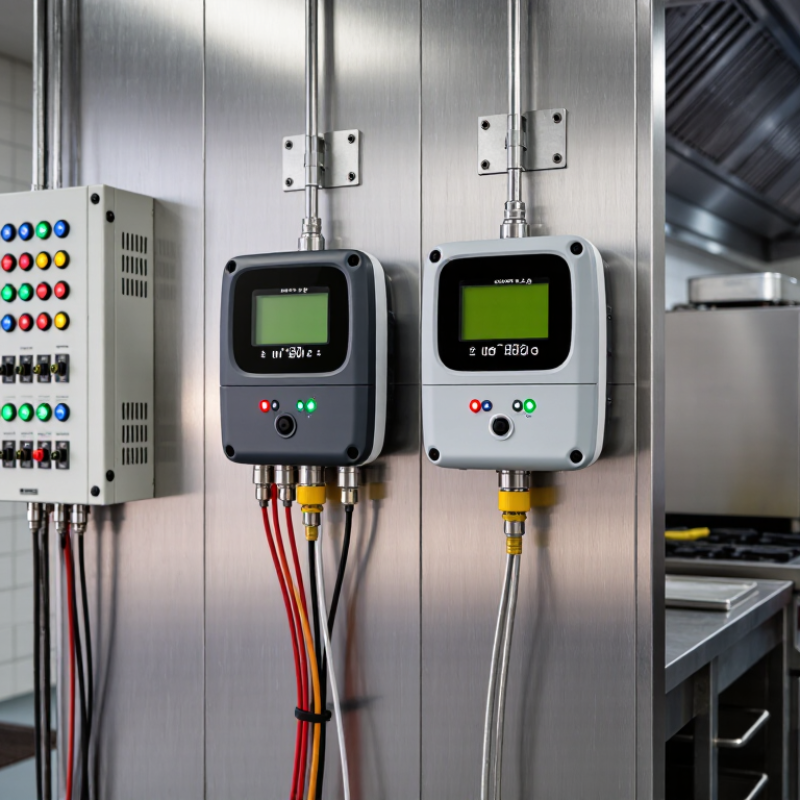
LPG Detection Fundamentals: Propane LEL 2.1% and UEL 9.5%
2026 Top LPG Gas Detector Suppliers for Global Buyers
Propane detection starts with two limits. The NIOSH Pocket Guide lists propane’s lower explosive limit at 2.1% by volume. Its upper explosive limit is 9.5%. Between these values, an ignition source can create a serious fire risk. Propane vapor is heavier than air, with a relative density near 1.5, according to NIOSH data. It can collect near floors, drains, pits, and poorly ventilated corners.
A practical detector layout should reflect real site conditions. NFPA 58 addresses ventilation, container safety, and LPG handling practices. However, a code reference cannot replace a site survey. Sensor placement may change around cylinders, filling points, valves, and enclosed equipment. Many systems use alarms at a percentage of the LEL, often 10%, but settings must follow local requirements and risk assessments. A detector is not a substitute for leak prevention. That assumption deserves more criticism.
Tips: Place sensors low, but do not hide them behind machinery. Test alarm relays, sounders, and ventilation interlocks together. Review calibration records after maintenance. NIOSH data is useful, yet field measurements may vary with temperature, airflow, and vapor release rate. One overlooked drain can defeat an otherwise careful design.
Sensor Technologies: Catalytic, Infrared, and T90 Response Under 30 Seconds
For global buyers, LPG gas detector selection should begin with sensor behavior, not a supplier’s catalog image. Catalytic sensors oxidize combustible gas on a heated element and provide reliable readings in oxygen-rich areas. They can, however, lose sensitivity after exposure to silicone compounds, sulfur, or heavy vapors. Regular bump testing is essential.
Infrared sensors measure gas through infrared absorption and do not require oxygen for detection. They usually resist poisoning better, making them useful in storage rooms, filling areas, and process spaces. Yet condensation, dirty optical windows, and changing pressure can affect performance. Installation experience matters here. A T90 response under 30 seconds means the detector reaches 90% of its final reading within that period after gas exposure. This figure should be verified under actual test conditions, including gas concentration, tubing length, airflow, and temperature. A laboratory result may not represent a crowded equipment room.
Ask suppliers for calibration records, response-time test methods, alarm repeatability, ingress protection details, and maintenance intervals. Check whether the sensing range matches the lower explosive limit monitoring requirement for LPG. Catalytic technology may offer a practical cost advantage, while infrared technology can reduce some maintenance risks. Neither is perfect. Portable detectors also need battery checks, sensor replacement planning, and clear alarm visibility in noisy environments. A detector that responds quickly but is poorly positioned can still fail to protect workers. Supplier documentation should be specific, dated, and traceable.
Global Compliance Benchmarks: ATEX, IECEx, UL 1484, and IP66 Ratings
2026 Top LPG Gas Detector Suppliers for Global Buyers
Global buyers should treat compliance evidence as a purchasing requirement, not a decorative certificate. ATEX confirms suitability for defined explosive atmospheres within its stated equipment category. IECEx supports international comparison through a recognized certification system. Neither approval covers every installation automatically.
Ask suppliers for current certificates, test reports, and product marking photographs. Check the gas type, detection range, ambient temperature, wiring method, and installation zone. LPG may collect near floors, so sensor placement needs practical site assessment. A detector designed for one environment may perform poorly in another.
UL 1484 is especially relevant to certain household and recreational-vehicle gas detection applications. Verify that the exact model falls within the standard’s scope. IP66 indicates dust-tight construction and protection against powerful water jets. It does not mean safe underwater operation. That distinction is easy to miss.
Reliable suppliers explain limitations clearly. They provide calibration intervals, alarm settings, response-time data, and maintenance instructions. Watch for certificates that apply only to a sensor family, not the offered configuration. Small details matter. Procurement teams should also confirm regional installation rules and qualified commissioning support.
In practice, paperwork can look stronger than field readiness. A detector may pass laboratory testing yet face condensation, paint dust, or poor airflow onsite. That gap deserves honest review. The best supplier discussions include failure scenarios, replacement planning, and evidence from comparable installations. Some evaluations remain imperfect, but transparent documentation makes decisions safer and more defensible.
Supplier Evaluation Metrics: Accuracy, Calibration, MOQ, and Lead Times
Choosing among the 2026 top LPG gas detector suppliers requires more than comparing prices. Accuracy should be tested at several gas concentrations, not only at the alarm point. Ask for test records showing response time, repeatability, and cross-sensitivity results. A detector that reacts quickly in a clean laboratory may behave differently near solvents, dust, or temperature changes.
Calibration evidence deserves close attention. Reliable suppliers provide calibration certificates, recommended intervals, and clear field-calibration instructions. Check whether technicians can recalibrate sensors without specialized equipment. Replacement sensor availability also affects long-term cost. In practice, I would request a sample unit for independent testing. Supplier data is useful, but it is not always complete.
MOQ and lead time can quietly disrupt a project. Confirm the minimum order for detectors, spare sensors, and customized packaging separately. Ask for production time, inspection time, shipping preparation, and realistic peak-season delays. A quoted seven-day lead time may exclude calibration or export documentation. That detail matters. Buyers should also compare warranty terms, technical support, and failure-handling procedures. No supplier score is perfect. A lower MOQ may indicate flexibility, yet it can also raise unit costs. A short lead time may be attractive, but rushed inspection creates risk. Document every answer in a comparison sheet, then verify critical claims with certificates, test samples, and written delivery commitments.
2026 Top LPG Gas Detector Suppliers for Global Buyers - Supplier Evaluation Metrics: Accuracy, Calibration, MOQ, and Lead Times
| Anonymous Supplier Profile | Primary Detector Type | LPG Detection Range | Typical Accuracy | Calibration Method | Recommended Calibration Interval | Typical MOQ | Standard Production Lead Time | Export Documentation | Best-Fit Buyer |
|---|---|---|---|---|---|---|---|---|---|
| Supplier Profile 01 | Fixed catalytic-bead detector | 0–100% LEL | Typically ±5% of full scale | Certified LPG test gas with portable calibrator | Every 6–12 months, subject to site conditions | 50 units | 4–6 weeks | Certificate of conformity, test report, packing list, commercial invoice | Industrial gas rooms and utility facilities |
| Supplier Profile 02 | Fixed infrared point detector | 0–100% LEL | Typically ±3% of full scale | Certified gas challenge and electronic zero adjustment | 12 months, with periodic response testing | 20 units | 6–8 weeks | Calibration record, inspection report, conformity documents, export package | LPG terminals and outdoor process areas |
| Supplier Profile 03 | Portable single-gas detector | 0–100% LEL | Typically ±5% of full scale | Fresh-air zero plus certified bump-test gas | Before use or at least every 6 months | 100 units | 3–5 weeks | User manual, battery transport documentation, inspection record, invoice | Maintenance teams and field service contractors |
| Supplier Profile 04 | Portable multi-gas detector | LPG channel: 0–100% LEL | Typically ±5% of full scale | Bump test followed by full calibration with certified mixture | Before each shift where required by risk assessment; otherwise 6 months | 50 units | 5–7 weeks | Calibration certificate, product test record, transport and customs documents | Confined-space entry and emergency response teams |
| Supplier Profile 05 | Wall-mounted alarm controller with remote sensor | 0–100% LEL | Typically ±5% of full scale | Gas injection through sensor calibration adapter | 6–12 months, depending on local regulations | 25 systems | 5–8 weeks | Wiring diagram, factory acceptance test, calibration record, conformity file | Commercial kitchens, warehouses, and boiler rooms |
| Supplier Profile 06 | Explosion-protected fixed detector | 0–100% LEL | Typically ±3–5% of full scale | Certified gas application with zero and span verification | Every 6 months or according to the safety case | 10 units | 8–12 weeks | Hazardous-area certificate, material declaration, test report, shipping documents | Refineries, filling plants, and hazardous-area installations |
| Supplier Profile 07 | OEM-integrated LPG alarm module | Configurable alarm threshold; commonly 10–20% LEL | Typically ±5% of full scale | Factory calibration with batch verification | 12 months or per equipment manufacturer instructions | 500 units | 8–14 weeks | Batch test report, technical datasheet, RoHS/REACH declarations where applicable | Appliance manufacturers and private-label programs |
| Supplier Profile 08 | Battery-powered residential LPG alarm | Alarm-oriented detection near the lower explosive limit | Alarm performance verified by functional test | Functional test gas or manufacturer test procedure | Monthly functional test; sensor replacement per product specification | 200 units | 4–7 weeks | User instructions, battery details, product test report, packaging declaration | Residential, recreational, and small commercial LPG applications |
Note: The figures above are anonymized 2026 procurement benchmarks and typical technical ranges for LPG gas detection products. Actual accuracy, calibration intervals, minimum order quantities, certifications, and lead times must be confirmed in the supplier’s current datasheet, quotation, certificate package, and purchase contract. Detector selection should be based on the applicable hazardous-area classification, installation environment, local regulations, and the relevant requirements of IEC 60079-29-1 or equivalent standards.
2026 LPG Detector Supplier Shortlist: Coverage, Certifications, and Support
Choosing an LPG detector supplier in 2026 requires more than comparing product prices. Global buyers should examine coverage, certification records, and technical support. A credible supplier should explain detection ranges, alarm thresholds, sensor life, and operating limits in clear language. Vague specifications deserve caution.
Coverage includes more than shipping destinations. Check whether the supplier supports warehouses, kitchens, cylinder storage areas, and outdoor installations. Ask about local service partners, spare sensors, calibration tools, and response times. For hazardous locations, request documentation for applicable standards, such as IECEx, ATEX, or other recognized regional requirements. Certification scope matters. A certificate for one model may not cover an entire product family.
Support quality becomes visible after installation. Strong suppliers provide wiring diagrams, placement guidance, commissioning instructions, and technician training. They should also explain how temperature, ventilation, dust, and sensor aging affect readings. A practical test is useful: ask the supplier to review a simple site layout before purchase. Their questions can reveal real experience.
A shortlist is never perfect. Product pages may look complete, yet after-sales coverage can remain unclear. Buyers should verify certificate numbers, test dates, warranty terms, and replacement procedures directly. I would also request sample reports from previous projects, where disclosure is permitted. Small suppliers may offer excellent advice, but limited regional support can create delays. That weakness should be recorded, not ignored.
2026 LPG Detector Supplier Shortlist: Coverage, Certifications, and Support
LPG detector specifications should be evaluated against the flammability characteristics of the gases being monitored. The chart below shows commonly referenced lower and upper explosive limits for propane and n-butane in air.
Reference values are approximate volume percentages in air: propane LEL 2.1% and UEL 9.5%; n-butane LEL 1.8% and UEL 8.4%. Actual detector selection should also verify hazardous-area certification, regional compliance, calibration procedures, warranty terms, documentation, and after-sales support.