What is an Aluminum Radiator Used For in Different Applications?
In various industries, the Aluminum Radiator plays a crucial role in cooling applications. Its lightweight design and excellent thermal conductivity make it a preferred choice. According to a recent report by Global Market Insights, the aluminum radiator market is projected to reach USD 12 billion by 2027. This growth highlights its importance in automotive, aerospace, and industrial sectors.
Expert insights further emphasize its significance. Dr. James Whitaker, a leading specialist in thermal management systems, states, "The efficiency of aluminum radiators can significantly enhance performance in high-demand scenarios." His observation underscores the benefits of using aluminum radiators in environments where optimal heat dissipation is vital.
While aluminum radiators offer many advantages, they also present challenges. For instance, they can be more susceptible to corrosion than brass or copper alternatives. Additionally, improper installation may lead to leaks or performance inefficiencies. Thus, understanding their applications and limitations is essential for maximizing effectiveness across different uses.
What Are Aluminum Radiators and Their Key Characteristics?
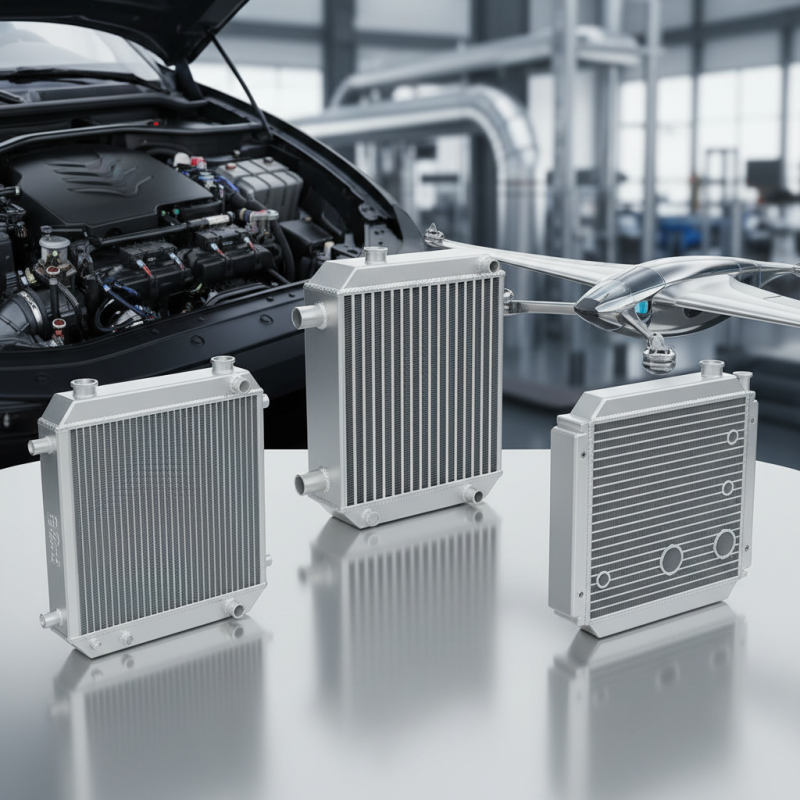
Aluminum radiators are lightweight heat exchangers commonly used in various industries. Their design allows for effective heat dissipation, making them ideal in automotive, aerospace, and HVAC applications. The use of aluminum enhances efficiency due to its excellent thermal conductivity. These radiators can be molded into complex shapes, providing versatility in design.
The key characteristics of aluminum radiators include resistance to corrosion and strong durability. They can withstand high-pressure environments, which is crucial in many applications. A notable aspect is their recyclable nature, aligning with increasingly eco-conscious manufacturing practices. However, while aluminum radiators are favored for their efficiency, they can sometimes be more costly upfront compared to traditional options.
Despite their advantages, some users may find that improper installation or maintenance can lead to performance issues. Regular inspections are vital to ensure optimal function. It is important to consider the specific application needs when choosing a radiator. Each installation may present unique challenges and benefits. This reflection is essential for achieving the best outcomes.
Applications of Aluminum Radiators in Automotive Engineering
Aluminum radiators are essential in automotive engineering. Their lightweight nature supports better fuel efficiency. This is crucial as the automotive industry aims for more environmentally friendly solutions. According to a recent report, cars equipped with aluminum radiators can reduce weight by up to 20%. This reduction can enhance performance and lower carbon emissions.
In vehicles, aluminum radiators effectively dissipate heat. They have a higher thermal conductivity than copper, which makes them more efficient. Many manufacturers now prefer aluminum for its durability and resistance to corrosion. An industry analysis indicates that aluminum radiators will account for 60% of the global market by 2025. This reflects their growing importance and reliability in automotive applications.
**Tip:** Regular maintenance can enhance radiator efficiency. Checking for leaks and ensuring proper coolant levels are vital. These simple steps can prevent serious engine issues.
Some issues exist with aluminum radiators. They may not be as robust as traditional materials in high-temperature applications. This could lead to a need for more frequent replacements. Engineers are constantly developing better designs to address these concerns.
Uses of Aluminum Radiators in Industrial Cooling Systems
Aluminum radiators play a crucial role in industrial cooling systems. They efficiently dissipate heat from machinery and processes. This ensures optimal performance and longevity. Commonly used in large factories, these radiators are essential for preventing overheating.
In power plants, aluminum radiators regulate temperatures of turbines and generators. They help maintain operational efficiency. The lightweight nature of aluminum allows for easier installation and reduced transportation costs. Additionally, in chemical processing, these radiators manage temperatures to protect sensitive reactions.
However, not every aluminum radiator is suitable for every application. Proper sizing and design must be considered. Failure to do so can lead to ineffective cooling or equipment damage. Regular maintenance is also needed for maximum efficiency. Ignoring this can cause performance issues over time.
What is an Aluminum Radiator Used For in Different Applications?
| Application Area | Purpose | Advantages |
| Automotive | Engine cooling for vehicles | Lightweight, corrosion resistant, and efficient heat transfer |
| Industrial Machinery | Cooling systems for generators and compressors | High durability and low maintenance |
| HVAC Systems | Heat exchange in heating and cooling systems | Improved thermal conductivity and compact design |
| Marine Applications | Cooling for marine engines and equipment | Resistance to saltwater corrosion |
| Aerospace | Cooling systems for aircraft systems | Weight reduction and improved performance |
Benefits of Aluminum Radiators in HVAC Solutions
Aluminum radiators have gained popularity in various applications due to their efficiency and lightweight properties. In HVAC systems, they offer several benefits that enhance performance. According to the American Society of Heating, Refrigerating and Air-Conditioning Engineers (ASHRAE), aluminum radiators can improve heat transfer efficiency by 25% compared to traditional materials. This translates into energy savings and improved indoor air quality.
One significant advantage of aluminum is its corrosion resistance, which enhances durability. Reports from the Department of Energy indicate that systems using aluminum radiators require 30% less maintenance. This aspect alone makes them appealing for commercial and residential applications. They also have a quicker response time, allowing HVAC systems to reach desired temperatures faster.
Despite their benefits, some challenges exist. Aluminum is sensitive to temperature fluctuations, which can lead to structural integrity issues if not managed properly. Ensuring compatibility with other materials is also crucial, as it can prevent galvanic corrosion. Proper design and installation are paramount. Overall, while aluminum radiators present clear advantages, attention to detail in application and maintenance remains essential.
Aluminum Radiators in Electronics Cooling: A Growing Trend
Aluminum radiators are becoming increasingly popular in electronics cooling. They are lightweight and highly efficient in dissipating heat. This makes them ideal for various electronic devices, from computers to industrial equipment. Traditionally, copper and plastic were used, but aluminum offers better performance and cost-effectiveness.
In addition to being effective, aluminum radiators can be designed in various shapes and sizes. This flexibility allows for integration into
compact devices. As electronics continue to evolve and become more powerful, the demand for
effective cooling solutions rises. Some applications require more precision in temperature management to ensure optimal performance. Here, aluminum radiators shine with their ability to maintain stable temperatures.
However, there are challenges. The production process can lead to
inconsistencies in quality. Users should ensure that they choose radiators from reputable suppliers. Additionally, the thermal conductivity of aluminum is high, but it still requires
careful design and engineering for maximum efficiency. Pushing boundaries in design is essential, but it's worth considering potential shortcomings and areas for
improvement.