
What Are the Best Drilling Rig Types in 2026?
What Are the Best Drilling Rig Types in 2026? The answer depends on geology, depth, mobility, emissions, and project economics. No single rig wins. A desert pad may favor a fast-moving land rig, while a deepwater field demands a dynamically positioned drillship or semisubmersible. The ground decides.
The International Energy Agency’s Oil 2024 report highlights changing demand patterns and continued uncertainty across upstream investment. This uncertainty makes equipment flexibility increasingly valuable. Baker Hughes’ International Rig Count remains a practical benchmark for tracking drilling activity across land and offshore markets. It also shows how regional cycles can change equipment demand quickly. A rig selected for one basin may become inefficient when pressures, well depths, or logistics change.
In 2026, contractors should compare conventional land rigs, walking rigs, truck-mounted units, jack-ups, semisubmersibles, and drillships. Each type carries different limits. Walking rigs reduce pad relocation time, but they may require higher initial capital. Jack-ups offer strong performance in shallow water, while drillships provide greater mobility in deeper areas. IADC safety guidance also reinforces the importance of well-control systems, crew competence, maintenance, and operational discipline.
Technology matters, but it cannot replace engineering judgment. Automated pipe handling, real-time monitoring, and hybrid power systems can improve efficiency. However, poorly maintained equipment still creates costly delays. This is where many comparisons become too optimistic. The best Drilling Rig is not always the newest model. It is the machine that matches the well plan, local conditions, crew capability, and total lifecycle cost. Reliable selection requires verified specifications, field experience, and transparent supplier evidence.
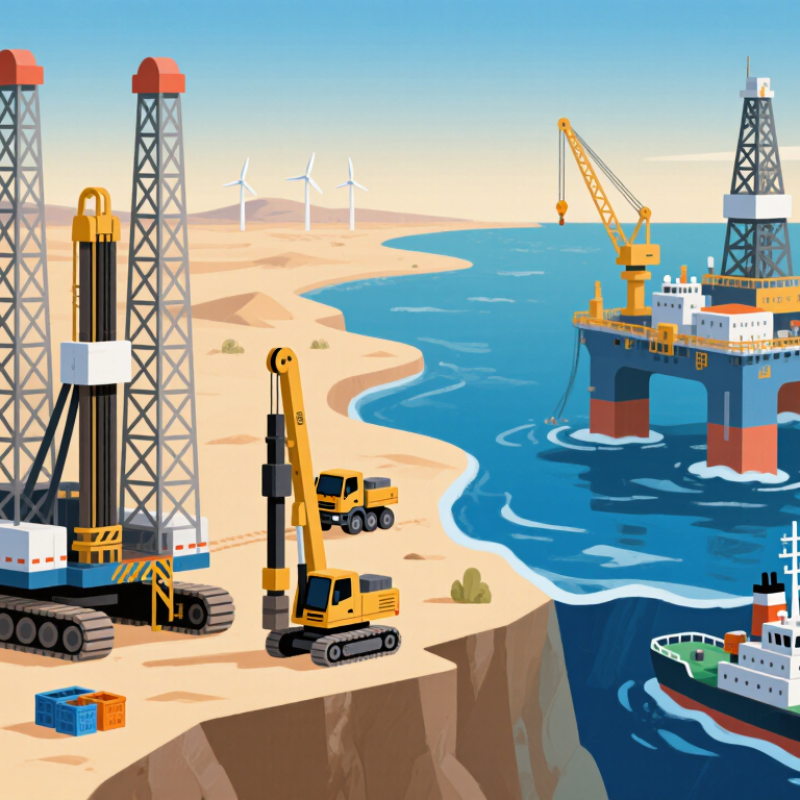
Drilling Rig Basics and Classification
What Are the Best Drilling Rig Types in 2026?
Drilling Rig Basics and Classification
A drilling rig is selected by ground conditions, target depth, hole diameter, and site access. No single rig performs best everywhere. Rotary rigs use continuous bit rotation and suit many soil and rock formations. Top-drive systems improve control during deep drilling, especially when operators need steady torque and accurate pressure.
Percussive rigs break hard layers through repeated impact. They can work effectively in fractured rock, where rotation alone may struggle. Auger rigs remove soil with helical flights and are practical for shallow foundations and sampling. Core drilling rigs recover cylindrical rock samples for geological inspection. Cable-tool rigs operate more slowly, but their simple mechanism can remain useful in specific ground conditions.
Modern classification also considers mobility, power source, automation, and data collection. Crawler-mounted rigs cross uneven sites, while truck-mounted units reduce travel and setup time. Electric or hybrid systems may lower local noise and emissions, but charging access can limit productivity. Field teams should compare torque, pullback force, mast height, compressor capacity, and maintenance access before choosing equipment.
In practice, classifications overlap. A rig may combine rotary drilling, down-the-hole impact, and automated monitoring. That flexibility sounds ideal, yet it can increase training demands and maintenance complexity. Experienced crews review borehole records, weather, groundwater, and previous tool wear. My own view is cautious: equipment tables help, but real ground often changes the plan. Sample quality may decline, and performance estimates can prove optimistic.
Key Drilling Rig Types for Different Applications
Choosing the best drilling rig in 2026 depends on ground conditions, hole size, access, and project goals. No rig is perfect.
Rotary drilling rigs suit large-diameter holes in soil, clay, and weathered rock. They offer steady torque and practical control for foundation work, water wells, and construction surveys.
Auger rigs work well in softer ground with limited groundwater. Their flights lift cuttings efficiently, but performance drops sharply in hard rock. That limitation is easy to overlook.
Down-the-hole hammer rigs deliver focused impact energy for fractured rock and deep exploration holes. They provide accurate penetration, although noise, dust control, and compressor demand require careful planning.
Core drilling rigs recover cylindrical rock samples for geological testing. They are slower, but sample quality often matters more than drilling speed.
Sonic rigs reduce vibration at the bit and can produce clean samples in mixed formations. Their higher operating complexity may not suit every crew.
For shallow soil studies, direct-push and cone penetration rigs reduce setup time and site disturbance. They are useful near roads, buildings, and environmentally sensitive areas.
Compact crawler rigs reach narrow spaces, while truck-mounted units travel faster between sites. Automated monitoring can improve pressure, rotation, and depth records in 2026.
Yet sensors cannot replace an experienced operator reading changing ground behavior. In real projects, the “best” choice may shift after the first few meters. Soil logs, groundwater, maintenance access, and crew skill should influence the final selection.
How to Compare Rig Power, Mobility, and Drilling Capacity
In 2026, the best drilling rig depends less on a single power rating than on the worksite. A compact truck-mounted rig can move quickly between roadside locations, while a crawler rig handles uneven ground with greater stability. Both have limits. A narrow access road may rule out a large carrier before drilling begins.
Compare power by looking beyond engine output. Check available torque, feed force, and the depth range the rig can sustain in the expected rock or soil. A high-powered unit may still be a poor fit if its tools cannot match the ground conditions. Ask for operating data from comparable projects, not just maximum ratings. Those figures can be optimistic.
Mobility also affects real drilling capacity. A rig that takes hours to reposition may complete fewer holes per shift, even if its rated depth looks impressive. Consider setup time, transport width, ground pressure, and room for support equipment. For a confined site, a smaller rig may reach more locations. For deep or large-diameter holes, a heavier platform may be necessary. Check maintenance access, too; a machine that is difficult to service can lose valuable working time. Site estimates are imperfect. Revisit them after the first few holes.
Best Drilling Rig Types in 2026: Power, Mobility, and Drilling Capacity
This comparison uses representative mid-range specifications for common drilling rig categories. Power is shown in kilowatts, drilling capacity is represented by typical maximum drilling depth, and mobility is rated from 1 to 5, where 5 indicates high self-propelled or road mobility.
Safety, Automation, and Environmental Factors in 2026
What Are the Best Drilling Rig Types in 2026?
Safety, Automation, and Environmental Factors in 2026
The best drilling rig depends on the site, well design, and risks—not a single “best” model. For remote land projects, a modular rig can simplify transport and reduce setup time. Offshore work demands rigs designed for harsh weather, emergency response, and safe crew movement. The details matter.
Automation can help operators monitor pressure, torque, and equipment condition in real time. Clear alarms and well-designed controls may reduce exposure to hazardous tasks, but automation is not a substitute for training or sound procedures. A sensor can miss context. Crews still need to understand what the data means and when to stop work.
Environmental performance deserves equal attention. Electric or hybrid power systems may reduce on-site emissions, while efficient water handling can limit waste and spills. Noise, fuel use, and the distance required to move equipment also affect a project’s footprint. Ask for measurable operating data, not just broad claims. Small maintenance issues can undermine ambitious targets; that is easy to overlook. In 2026, compare rig options using site-specific safety plans, automation safeguards, and practical environmental controls.
Choosing the Right Drilling Rig for a Specific Project
What Are the Best Drilling Rig Types in 2026?
Choosing the right drilling rig depends on the project, not the newest specification sheet. Rotary rigs suit many soil conditions and offer steady torque for deep foundations. Down-the-hole rigs can improve penetration in hard rock. Auger rigs work efficiently in softer ground with limited water use. For narrow urban sites, compact rigs reduce access problems and surface disturbance. I have seen good equipment underperform because the rig was too large for the working area.
Review the ground investigation before selecting a machine. Check soil layers, groundwater, required depth, hole diameter, and expected productivity. A rig must also match transport limits, power availability, noise controls, and operator experience. For example, a high-torque rig may look impressive, but it can waste fuel on a shallow bore. Maintenance access matters too. A short delay caused by a difficult filter change can disrupt an entire shift.
Tips: Compare measured torque, pullback force, mast height, and drilling speed. Ask for field data from similar ground conditions. Confirm spare-part access and technician support near the site. Leave capacity for unexpected geology. Perfect predictions are rare. Recheck the plan after the first test hole, because real ground often disagrees with the report.