





7 Best Universal Power Adapters for Travel in 2026
Universal Power Adapter models differ in port selection, power ratings, plug coverage, and build quality. For a 2026 trip, the right choice depends on where you are going and what you plan to charge. A compact adapter may fit neatly beside a hotel bed, while a heavier model can offer more USB ports for shared devices. Small details matter.
This guide compares seven travel options using practical criteria: supported plug types, USB-A and USB-C output, stated wattage, size, and safety features. It also considers whether a model is suited to phones, tablets, or higher-draw electronics. An adapter changes plug shape; it does not automatically convert voltage. Check each device’s input label before connecting it, especially when packing hair tools or other heat-producing appliances. That step is easy to miss.
Specifications can change between versions and sellers, so verify the manufacturer’s current product information before buying. Regional outlets also vary, even within a country. No single adapter is perfect for every itinerary. Some trade a lighter packing profile for fewer ports, and that may be a fair compromise. The picks below aim to make those trade-offs easier to see, not promise a flawless travel setup. For frequent travelers, a reliable fit, clearly marked ratings, and a secure connection can matter more than an impressive feature list. Pack deliberately.
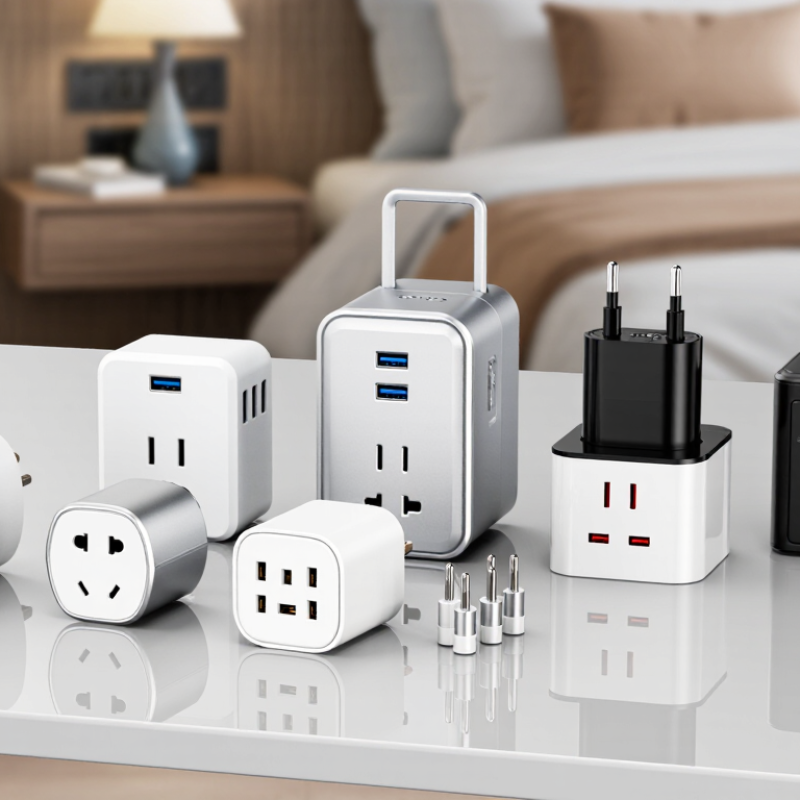
What a Universal Travel Adapter Does
A universal travel adapter lets a plug from one country fit a wall socket in another. Its sliding pins or interchangeable plug heads match common outlet shapes. That solves a practical problem: your charger’s prongs may not fit the socket beside your hotel bed. It does not automatically make every device safe to use.
Most basic adapters change the plug connection, not the electricity’s voltage or frequency. Check the small print on each device or its power supply. If it lists “100–240V,” it is generally designed to accept a range of voltages; a single-voltage appliance may need a separate converter. I once assumed the adapter handled both jobs. That was a costly misunderstanding, and worth double-checking.
A built-in USB port can charge phones or earbuds without a separate wall charger, but output varies. A tablet may charge slowly, and a laptop may need more power than the adapter provides. Keep high-wattage appliances, such as hair dryers, out of a small adapter unless its rating clearly supports them. Look for a grounded connection when your device requires one. Fit matters, too: a loose plug can wobble or lose contact. An adapter is a useful travel accessory, not a universal guarantee. Check the device label, the adapter’s ratings, and the fit before plugging in.
Key Features to Compare When Choosing a Travel Adapter
A travel adapter should match your devices, not just the countries on your itinerary. Check the plug types used at each stop, since one compact unit may not cover every outlet style. More importantly, read the input label on each charger. An adapter changes the plug shape; it usually does not convert voltage. If a device is not rated for the local supply, you may need a separate voltage converter. Easy to overlook.
Compare USB-C output carefully. A port that fits your cable may still charge a laptop slowly if its power output is low. Check the adapter’s listed wattage against your device’s requirements, and note whether multiple ports share power when used together. For a phone and earbuds, modest output may be enough. A laptop needs more. Port labels can be confusing, and product descriptions do not always make shared limits obvious.
Consider the physical details, too: grounded sockets, a secure fit, and a fuse or recognized safety certification. A loose adapter can sag from a wall outlet, especially with several cables attached. I would also weigh it in a bag before a long trip; “compact” is not always as compact as it looks online. Carrying fewer ports may be wiser if the adapter feels bulky, but that trade-off depends on how many devices you actually use.
Seven Best Universal Power Adapters for Travel in 2026
A useful travel adapter should fit the outlets you expect to encounter, stay secure in the socket, and avoid blocking nearby plugs. The seven best universal power adapters for travel in 2026 are not necessarily the ones with the most ports. Look for clearly labeled plug configurations, sturdy contacts, and a compact shape that will not sag from a wall outlet. Small details matter. A loose connection can interrupt charging while you sleep.
Check the adapter’s electrical rating before packing it. Plug shape alone does not convert voltage, so verify that each device supports the destination’s supply. Travelers carrying phones, cameras, or laptops may value USB-C ports, but port output varies; check the specifications against your devices. Heat deserves attention, too. An adapter that feels unusually warm should be unplugged and inspected. I once assumed every hotel socket was equally firm. It was not, and a heavy adapter slipped out overnight.
For a more dependable shortlist, compare surge protection, fuse details, and safety certifications, then confirm those claims with the product documentation. A built-in fuse can help protect against certain faults, but it cannot make an incompatible device safe. Avoid covering the adapter or stacking it with another converter. Pack a lightweight backup cable, and test the adapter at home before departure. That check takes a minute. It can save a frustrating search for power after a long flight.
| Travel Pick | Typical Plug Coverage | Common Charging Setup | Typical AC Rating | Best For | Key Limitation |
|---|---|---|---|---|---|
| Best All-Rounder | Retractable or sliding pins for several regional socket systems, commonly including North America, Europe, the United Kingdom, and Australia | One AC outlet plus USB-A and USB-C ports; USB-C output varies by model | Often up to 6 A, subject to the destination’s voltage and the adapter’s rating | Travelers carrying a phone, earbuds, and one small AC-powered device | A plug adapter changes the plug shape; it does not convert voltage or frequency |
| Best for USB-C Devices | Multi-region plug system covering several common international socket types | USB-C Power Delivery port, sometimes paired with USB-A ports | AC load rating is model-specific; check the printed rating | Charging compatible phones, tablets, and some USB-C laptops | USB-C charging speed depends on the adapter’s output and the device’s supported charging profile |
| Best for Multiple Devices | Multi-region plug system for common travel destinations | Several USB ports and one AC outlet | AC load rating is model-specific; USB output may be shared across ports | Small groups or travelers charging several low-power devices together | Using multiple ports can reduce the power available to each port |
| Best Compact Option | Foldable or retractable pins for a selection of regional socket systems | Usually one or more USB ports; some compact designs omit an AC outlet | Check the device label; compact size does not indicate its permitted load | Carry-on packing and phone-focused trips | Small designs may have fewer ports and less spacing for bulky plugs |
| Best for Grounded Plugs | Multi-region design with grounding support where the destination socket and adapter allow it | Grounded AC outlet, sometimes with USB charging ports | Use only within the adapter’s stated current and power limits | Devices whose plugs require an earth connection | Grounding is not guaranteed in every socket type or country; check the adapter and destination outlet |
| Best for Higher-Power USB-C Charging | Multi-region plug system for common international socket types | Higher-output USB-C PD port, often with additional lower-output ports | USB-C output is model-specific; AC rating is separate | Compatible laptops and other USB-C devices that need more power | Confirm the laptop’s required input and the adapter’s single-port output before travel |
| Best for Simple, Occasional Trips | Basic multi-region plug arrangement for a limited set of common socket systems | One AC outlet, with USB ports depending on the design | Varies by model; follow the marked maximum rating | Travelers who mainly need to connect one charger at a time | Some universal adapters do not fit every outlet, and none should be forced into a socket |
| Important: These are comparison categories, not specifications for a particular product. Check the adapter’s markings, plug compatibility, grounding, and port output before use. Many electronic chargers accept 100–240 V, but this must be confirmed on each device’s label. A plug adapter alone does not convert voltage; appliances that require voltage conversion need a suitable converter, and high-power appliances may exceed an adapter’s rating. | |||||
How to Match an Adapter to Your Destination
Match the adapter to the sockets used at your destination, not just the country name. Plug shapes can vary across regions, and some countries use more than one type. Check a current destination-specific socket chart before packing; official travel and trade guides often list plug types, mains voltage, and frequency together. A universal adapter changes the plug connection. It does not convert voltage.
Read the label on each device. The IEC 60038 standard recognizes nominal supply voltages such as 230 volts and 120 volts, so a device rated only for one range may need a separate voltage converter. Many chargers state “100–240 V, 50/60 Hz”; that range usually supports use across common electrical systems, with the correct plug adapter. Check the small print. It is easy to miss.
Match the adapter’s socket layout to your itinerary, including stopovers, and confirm its rated current suits higher-power devices. A phone charger and a hair dryer are not equivalent loads. For example, a compact adapter may fit a wall outlet but still be unsuitable for a high-wattage appliance. I would verify the device label twice; rushed packing makes tiny print surprisingly easy to overlook.
Safety Tips for Using Universal Power Adapters
A universal adapter changes plug shape; it does not convert voltage. Before packing, check the tiny “Input” label on each device and compare it with the destination’s supply. A phone charger marked 100–240 V can usually accept different mains voltages, but a single-voltage hair dryer may not. The International Electrotechnical Commission’s IEC 60884-1 standard covers household plugs and socket-outlets rated up to 440 V and 32 A. That rating is not a promise that every travel adapter handles every appliance safely. Read the adapter’s own limits, especially its maximum wattage.
Keep it simple. Tips: Use one adapter per outlet, keep it dry, and never force a loose plug. Avoid stacking adapters or running high-wattage heaters through a compact travel model. The Electrical Safety Foundation International estimates that extension cords are involved in about 3,300 residential fires annually in the United States. This figure is not specific to travel adapters, but it shows why damaged cords and overloaded connections deserve attention. Check for cracks, heat, or a burning smell. Unplug immediately if the adapter becomes unusually warm. A small detail, often missed: some adapters have an earthed socket but do not provide an earth connection themselves. Don’t assume. Check the product markings and your device’s grounding needs before use.