
7 Tips for Choosing Slim Frame Aluminum Sliding Doors?
A wide glass opening can make a room feel brighter and more connected to the garden. Slim frame aluminum sliding doors help achieve that look, but the narrow sightlines are only one part of a good choice. Glass performance, frame strength, drainage, and installation all affect how the doors work in daily use. Looks matter.
The U.S. Department of Energy’s Energy Saver guidance reports that heat gain and loss through windows account for about 25–30% of residential heating and cooling energy use. That figure is not specific to sliding doors, but it shows why glazing and air leakage deserve attention. The National Fenestration Rating Council (NFRC) provides independently verified ratings, including U-factor and solar heat gain coefficient. Check the actual product label rather than relying on broad claims.
Architect and former American Institute of Architects president Carl Elefante is often credited with the reminder, “The greenest building is the one that is already built.” It is a useful perspective when weighing replacement against repair, though it does not determine which door is right for a particular home. Details matter. A slim profile cannot compensate for poor sealing, awkward operation, or a track that collects grit after rain. Even attractive showroom samples reveal little about performance on a windy, exposed wall. Slightly inconvenient, but true.
These seven tips will help you compare real specifications, inspect key details, and ask better questions before buying. The goal is not simply the thinnest frame. It is a door that suits the opening, climate, and way you live.
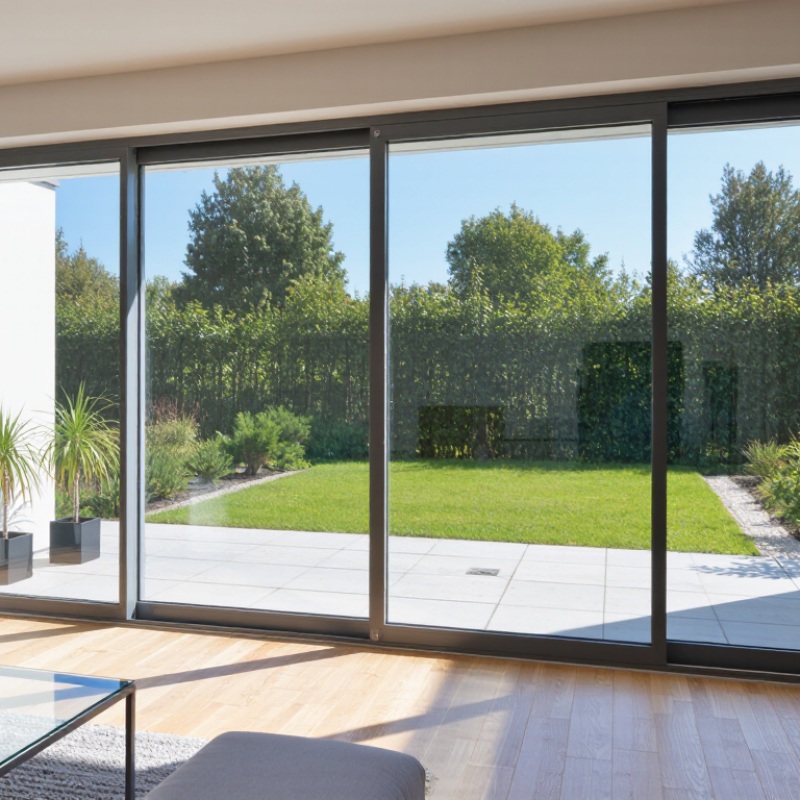
Define Your Space, Layout, and Access Requirements
Before choosing slim frame aluminum sliding doors, map how people actually move through the room. Mark the proposed opening with painter’s tape, then walk the route carrying a laundry basket or serving tray. Check nearby furniture, switches, radiators, and curtains. A wide glass panel can still feel awkward if its handle lands behind a sofa.
Decide what the door needs to connect: a kitchen and patio, bedroom and balcony, or living room and garden. Measure the clear opening, not just the frame width. Sliding panels do not swing into the room, but the fixed panel and track affect usable access. Note which direction the moving panel should slide, where panels stack, and whether the threshold interrupts wheeled access. Details matter.
Access needs may change over time. AARP’s 2024 Home and Community Preferences Survey found that 75% of adults aged 50 and older want to remain in their homes as long as possible. That makes easy operation and a predictable path worth considering now. Test the handle height and track with everyone who will use the door. I once focused too much on sightlines; the daily route mattered more. A small plan can miss real-life clutter. Walk the space again before ordering.
Compare Frame Profiles, Materials, and Sightlines
When comparing slim-frame aluminum sliding doors, look beyond the advertised frame width. Measure the visible sightlines on the fixed panel and meeting stile; these often differ. A narrow vertical edge can still pair with a bulky interlock. Check the drawings.
Ask for section drawings and a finished sample, not just a product photo. Aluminum profiles vary in depth, reinforcement, drainage paths, and thermal-break design. These details affect stiffness, condensation risk, and how much glass remains visible. The thinnest profile is not automatically the best choice. Large panels may need stronger sections, which can widen the frame. Trade-offs matter.
Compare finishes in daylight beside your flooring, because metallic tones can shift indoors. If possible, test a full-size sample: check handle reach, closing effort, and the meeting point. Smooth motion matters. Review track height and sill drainage, especially where wind-driven rain is common. Ask how rollers and seals can be serviced later. A tiny sightline may look elegant on paper, yet feel less important if the door rattles or sticks. I’ve found that corners deserve a closer look; drawings rarely show every awkward junction.
Choose Glass for Insulation, Light, and Privacy
With slim-frame aluminum sliding doors, glass does more than fill the opening. It affects heat loss, daylight, and privacy every day. For cooler rooms, consider insulated double glazing with a low-emissivity coating. It helps limit heat transfer while still admitting natural light. Check the glass’s documented thermal rating, not just the frame’s appearance. The frame and installation matter too.
Light has trade-offs. A large clear panel can brighten a hallway, but afternoon sun may create glare or warm the room. A suitable solar-control coating can reduce excess heat while keeping the view relatively clear. Ask how the glass performs on your home’s actual orientation; a south-facing opening may need a different choice from a shaded one. Details like nearby trees matter.
Privacy needs a practical check. Frosted or patterned glass softens views while spreading daylight, though shapes may still show at close range. For a bedroom or street-facing living area, test a sample from both sides, in daylight and after dark. You may still want blinds. That can feel like an extra step, but it is better than discovering too late that bright glass also exposes the room at night.
7 Tips for Choosing Slim Frame Aluminum Sliding Doors
Choose glass for insulation, natural light, and the level of privacy you need.
Representative center-of-glass values are approximate; actual performance varies with glass thickness, coatings, gas fill, and construction. A lower U-factor means better insulation, while higher visible transmittance (VT) means more daylight. For privacy, consider frosted or patterned glass; check its light transmission and the specific door system’s certified ratings before choosing.
Evaluate Sliding Hardware, Security, and Ease of Use
Slim frames leave less room for bulky hardware, so check the rollers and track as carefully as the visible profile. The rollers should suit the door panel’s weight and move without scraping or rattling. Ask whether they can be adjusted or replaced without removing the entire frame. Small detail. It matters after years of daily use.
Inspect the track for smooth, even travel and a practical way to clear dust or grit. A low threshold can improve access, but it still needs to manage water effectively. For security, look for a lock that engages firmly and anti-lift features that help prevent a panel being lifted from its track. Strong glass alone is not enough; installation, frame anchoring, and correct hardware all contribute.
Try the handle before choosing, if a sample is available. It should feel comfortable, and the panel should start moving without a hard tug. Check that the lock is easy to operate from inside, especially if children or older adults use the door. A door can meet its specifications and still feel awkward in a real room. That part is easy to overlook. Ask about routine cleaning and adjustment, too; even a good system may need occasional attention.
7 Tips for Choosing Slim Frame Aluminum Sliding Doors: Evaluate Sliding Hardware, Security, and Ease of Use
| Tip | What to Evaluate | Practical Checks | Why It Matters |
|---|---|---|---|
| 1 | Check the roller system | Ask for the panel weight rating and confirm that the rollers are designed for the selected door size and glass specification. Roll the sample panel through its full travel. | Correctly matched rollers support smooth movement and help reduce premature wear. |
| 2 | Inspect the track and drainage | Check that the track is straight, securely supported, and easy to keep clear of grit. For exposed locations, ask how the sill manages water and where it drains. | A clean, well-installed track helps the door move consistently; suitable drainage helps manage water at the threshold. |
| 3 | Review locking points | Operate the lock and check that it engages reliably. Ask how the meeting stiles lock and whether the frame can be securely fixed to the surrounding structure. | Security depends on the complete door assembly, including its lock, frame, fixings, and installation. |
| 4 | Assess glass and impact safety | Confirm the proposed glass type and thickness suit the opening and local building requirements. Ask whether safety glazing is required in the door location. | Glass selection affects safety, weight, and the hardware specification. Requirements vary by location and application. |
| 5 | Test everyday operating effort | Open and close the door several times, including from different handle positions. Check for sticking, excessive effort, rattling, or a panel that does not stay aligned. | A hands-on test can reveal issues that may not be obvious from appearance or product descriptions alone. |
| 6 | Compare frame sightlines with performance | Compare the visible frame width with the size of the opening, then review the system’s published air, water, and structural performance for the intended exposure. | A slimmer sightline can increase visible glass area, but suitability also depends on the tested system and installation conditions. |
| 7 | Confirm maintenance and adjustment access | Ask how rollers are adjusted or replaced, how the track should be cleaned, and whether service parts will remain available. Review the care instructions before purchase. | Accessible maintenance can make it easier to preserve smooth operation over time. |
Check Installation Quality, Warranty, and Long-Term Costs
For slim-frame aluminum sliding doors, installation quality matters as much as the frame. The U.S. Department of Energy’s Energy Saver guidance estimates that windows, doors, and skylights account for about 25–30% of residential heating and cooling energy use. Poor sealing can add to that load. Ask the installer to show how the sill will drain, how the frame will be shimmed, and how the perimeter will be sealed. A smooth showroom glide proves little; the opening at your home may be less forgiving.
Tip: Inspect the opening before work begins. Photograph the sill, flashing, and frame alignment during installation. After fitting, slide the panels several times and check for scraping, uneven gaps, or water pooling. Small defects can become expensive. I would not assume a premium-looking finish means the installation is sound.
Tip: Read the warranty before comparing quotes. Check coverage for glass, rollers, seals, finish, and installation labor, plus any maintenance conditions. NFRC ratings can help compare tested U-factor and solar heat gain, but they do not guarantee workmanship. Ask for the product’s rating documentation and a written service process. Compare the full cost over time: purchase, installation, cleaning, seal or roller replacement, and likely energy use. A cheaper door may cost more later, though estimates are imperfect.