





How to Choose the Right Aluminum Ceiling Panel?
Choosing the right Aluminum Ceiling Panel is a performance decision, not merely a decorative exercise. The ceiling must manage moisture, sound, light, fire safety, maintenance, and installation conditions. The United Nations Environment Programme reported in its 2023 Global Status Report for Buildings and Construction that buildings consumed about 34% of global energy and produced approximately 37% of energy-related emissions. These figures make material efficiency and long service life increasingly important. Aluminum can support that goal, but only when its alloy, coating, thickness, and recycled content match the project’s demands.
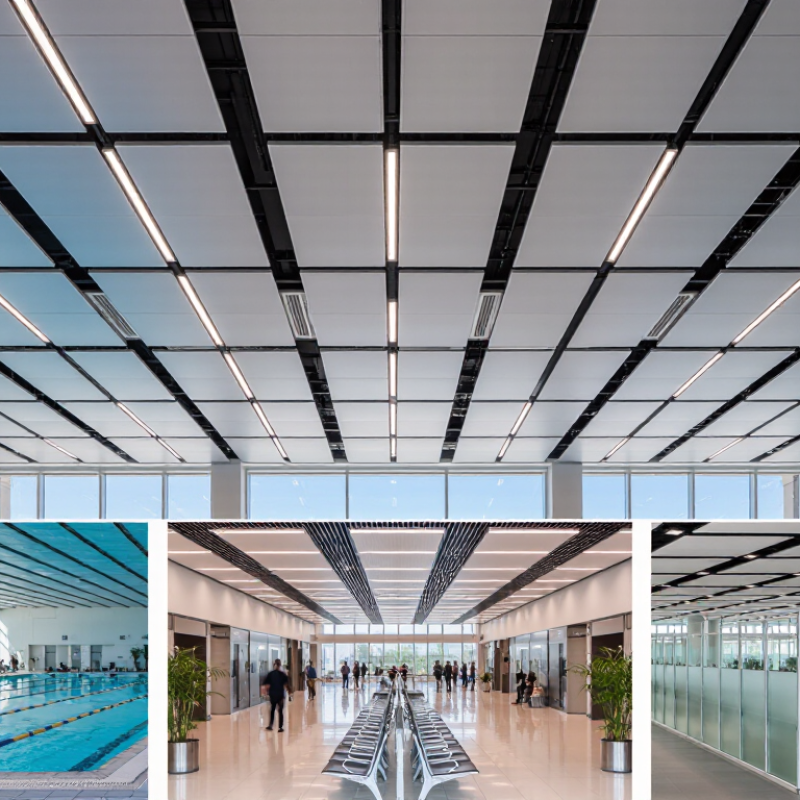
Start with the room itself. A humid swimming pool requires corrosion-resistant finishes and carefully protected suspension components. A busy airport needs impact resistance, accessible service zones, and durable cleaning performance. Office interiors may prioritize acoustic backing, glare control, and appearance under LED lighting. Product data should identify panel dimensions, load behavior, fire classification, acoustic results, and cleaning limits. EN 13964 and relevant local standards provide useful benchmarks, but certification must apply to the complete ceiling assembly, not one attractive sample. The International Aluminium Institute states that recycling aluminum can save about 95% of the energy used for primary production, although recycled content claims still require credible supplier documentation.
Looks can mislead. A cheaper panel may deform, stain, or amplify noise over time. A premium finish may also be unnecessary in a dry storage room. Experience shows that specifications often overlook access frequency and replacement logistics. They should not. Comparing verified technical sheets, installation records, warranties, and lifecycle costs creates a more dependable choice. No panel fits every building. The best selection remains a careful compromise between performance, evidence, budget, and future maintenance.
Define the Types and Structural Features of Aluminum Ceiling Panels
How to Choose the Right Aluminum Ceiling Panel?
Aluminum ceiling panels vary by type, edge detail, and suspension method. Lay-in panels rest on a visible grid, making access simple for offices and service areas. Clip-in panels attach to concealed carriers, creating a cleaner, more continuous surface. Strip panels use narrow, long sections and suit corridors, stations, and modern commercial interiors. Open-cell and baffle systems leave part of the ceiling exposed, improving visual depth and air movement.
Structure matters more than appearance. Check the panel thickness, alloy, coating, and edge profile before selection. A stronger panel usually resists dents during installation and maintenance. Perforated panels can reduce reflected noise when paired with acoustic fleece or mineral backing. Moisture-resistant finishes are useful in kitchens, bathrooms, and humid entrances. The suspension system must also match the panel weight and local wind or service requirements. A ceiling can look perfectly flat yet fail because its carriers are poorly spaced. I have seen this overlooked on rushed projects.
Tips: Request a physical sample. Press its edge gently. Inspect coating consistency, corner accuracy, and perforation alignment. Confirm access needs for lights, sprinklers, and ventilation. For large rooms, ask an engineer to verify loading and fire-performance documentation. Do not choose the thinnest panel only to reduce cost. It may save money briefly, but visible oil-canning or damaged edges can create expensive rework. Test the proposed layout under actual lighting, because small surface waves become obvious after installation.
How to Choose the Right Aluminum Ceiling Panel?
Typical Aluminum Ceiling Panel Thickness by Panel Type
Thickness is an important structural factor when selecting an aluminum ceiling panel. Lay-in panels are generally lightweight and easy to access, while clip-in and linear panels typically use thicker material or reinforced profiles for improved rigidity. Baffle systems may require greater thickness or folded edges to reduce deflection across longer spans. The ranges shown are typical industry values and should be verified against the project’s span, suspension system, wind load, acoustic requirements, and local building standards.
Assess Room Conditions and Functional Requirements
Choosing an aluminum ceiling panel starts with the room, not the color chart. In a humid bathroom, moisture resistance and ventilation deserve close attention. In a busy hallway, impact resistance may matter more than appearance. Measure temperature, humidity, ceiling height, and existing services before selecting a panel. I once focused on finish alone and underestimated cleaning needs. That mistake made maintenance harder than expected.
Function should guide the panel structure. Perforated panels can help control echo when paired with suitable acoustic backing. Solid panels may provide a cleaner surface in areas needing frequent wiping. Kitchens and laboratories require finishes that resist grease, stains, and regular cleaning products. Check the panel’s fire performance and installation system against local building requirements. Qualified contractors should confirm those details.
Think about access, lighting, and future repairs. Removable panels can simplify inspection above the ceiling. Larger panels may reduce joints, but they can be difficult to handle in narrow corridors. Smaller panels offer flexibility, though they create more visible lines. Request a physical sample and view it under the room’s actual lighting. Small details matter. Panel edges, suspension alignment, and uneven shadows can change the final appearance. My own planning has not always been perfect, so I now test one section before approving the full installation.
| Room Condition or Requirement | Typical Area or Example | Recommended Panel Characteristics | Useful Technical Considerations | Preferred Surface or Finish | Key Performance Benefit | Selection Note |
|---|---|---|---|---|---|---|
| Standard dry interior | Bedrooms, living rooms, offices, retail areas | Lightweight aluminum panels with regular thickness and concealed or exposed suspension | Common panel thickness: approximately 0.6–1.0 mm; select size according to ceiling grid and stiffness needs | Powder-coated or pre-painted smooth finish | Low maintenance, clean appearance, and good dimensional stability | Suitable where humidity, impact, and acoustic demands are moderate. |
| High-humidity environment | Bathrooms, laundry rooms, indoor swimming-pool surroundings | Corrosion-resistant aluminum panels with durable coating and moisture-tolerant suspension components | Use corrosion-resistant fasteners and avoid materials that can rust when exposed to condensation | Powder coating or high-quality baked coating with sealed edges where required | Resists moisture-related deterioration and is easy to wipe clean | Provide adequate ventilation to limit condensation above the ceiling. |
| Coastal or salt-laden atmosphere | Buildings near the sea, coastal transport facilities | Aluminum panels with enhanced corrosion protection and compatible corrosion-resistant accessories | Confirm coating suitability for salt exposure; isolate incompatible metals to reduce galvanic corrosion | Durable exterior-grade coating appropriate for the exposure level | Improved resistance to salt-related surface and suspension-system corrosion | Regular inspection is recommended in exposed or semi-outdoor locations. |
| Kitchen or food-preparation area | Commercial kitchens, food-processing support rooms | Non-porous, washable panels with stable coating and accessible modules | Prioritize smooth joints, cleanable surfaces, and resistance to grease and routine detergents | Smooth light-colored finish with minimal texture | Supports hygiene routines and simplifies cleaning access | Coordinate panel layout with exhaust, sprinkler, lighting, and service access. |
| Healthcare or clean environment | Clinics, treatment rooms, laboratories, controlled work areas | Low-dirt-retention panels with sealed or carefully detailed joints and cleanable coatings | Consider smoothness, access requirements, fire performance, and compatibility with cleaning agents | Smooth, low-gloss, light-colored coating | Supports frequent cleaning and a visually clean environment | Verify the complete ceiling system, not only the panel, against project hygiene requirements. |
| Noise control required | Open offices, classrooms, conference rooms, restaurants | Perforated aluminum panels backed with an acoustic fleece or mineral-fiber acoustic layer | Acoustic performance depends on perforation pattern, backing material, ceiling plenum, and installation | Perforated or micro-perforated finish | Can reduce reflected sound and improve speech intelligibility when correctly specified | Request tested sound-absorption data, such as weighted absorption coefficients, for the complete assembly. |
| Strong reverberation or large open volume | Airports, halls, atriums, large public interiors | Acoustic aluminum ceiling system with substantial absorptive backing and a layout designed for sound control | Review ceiling coverage, room volume, occupancy, and reverberation targets during design | Perforated panels with acoustic backing | Provides better control of reflected sound than solid panels | Panels alone may not solve reverberation; combine with wall or suspended acoustic treatments when needed. |
| High-traffic public area | Shopping centers, corridors, stations, public lobbies | Rigid panels with impact-resistant coating and secure suspension details | Consider panel size, deflection, edge strength, access frequency, and resistance to accidental impact | Hard-wearing powder-coated finish | Maintains appearance and reduces the risk of frequent replacement | Use a robust suspension system where panels may be disturbed by maintenance or vibration. |
| Frequent maintenance access | Data rooms, offices with dense services, mechanical zones | Lay-in, clip-in, or easily demountable panels matched to the access frequency | Coordinate module size with lighting, air diffusers, detectors, valves, and inspection points | Finish selected for repeated handling and cleaning | Allows faster access to concealed building services | Do not choose a fully concealed system if regular service access is essential unless it is designed for demountability. |
| Fire and life-safety priority | Escape routes, high-occupancy buildings, public facilities | Non-combustible aluminum panels used with a suspension system approved for the project | Check applicable building codes, fire classifications, plenum requirements, and details for light fittings | Coating and finish selected to meet the required fire-performance specification | Aluminum itself is non-combustible, but coatings, backing, insulation, and other components must also be assessed | Obtain documentation for the complete ceiling assembly rather than relying on the panel material alone. |
| Exterior or semi-exterior use | Canopies, covered walkways, soffits, sheltered entrances | Panels and suspension components specifically designed for outdoor exposure | Consider wind load, drainage, thermal movement, UV exposure, fastener corrosion, and panel restraint | Exterior-grade coating with appropriate weather resistance | Better durability under changing weather and temperature conditions | Do not use an interior ceiling specification outdoors without structural and coating verification. |
| Strong lighting or visual design focus | Showrooms, hotels, reception areas, feature ceilings | Precisely formed panels with consistent color, flatness, and joint alignment | Review reflectance, panel tolerances, joint width, module layout, and compatibility with lighting | Matte, metallic, wood-look, or custom-color finish as required | Creates a coordinated ceiling appearance and supports lighting design | Request physical samples because color and gloss can vary under different light sources. |
| Thermal comfort or energy goals | Large offices, educational buildings, spaces with high cooling loads | Aluminum panels coordinated with insulation, ventilation, or radiant ceiling systems | Metal panels conduct heat; thermal performance depends mainly on the full ceiling build-up and building services | Finish selected according to reflectance and maintenance requirements | Can integrate with services and support efficient ceiling coordination | Do not treat the aluminum face panel alone as a significant thermal insulator. |
| Sustainability and long service life | Green-building projects, renovation work, long-term commercial facilities | Durable, repairable, demountable aluminum panels with documented material content | Assess recycled content, service life, replacement access, coating durability, and end-of-life recyclability | Durable finish with replaceable individual modules | Supports maintenance, refurbishment, and material recovery at the end of service life | Evaluate the full system life cycle, including suspension components and packaging. |
Compare Panel Materials, Finishes, Sizes, and Installation Systems
Choosing the right aluminum ceiling panel starts with the material, not the color chart. Standard aluminum offers a practical balance of weight, strength, and corrosion resistance. In humid rooms, select panels with suitable protective treatment and verify the alloy specification. Recycled content may support sustainability goals, but it should not replace performance testing. Ask for fire, moisture, and coating documentation.
Finish affects both appearance and maintenance. Powder coating usually provides a durable, consistent surface, while anodizing reveals a more metallic texture and can vary slightly between batches. Matte finishes hide dust better than high gloss surfaces. I once selected a bright finish for a busy corridor, and fingerprints became a daily problem. That choice looked impressive at handover. It aged poorly.
Panel size changes the ceiling’s visual rhythm and installation effort. Large panels create fewer joints, but they can be harder to handle and replace. Smaller modules suit complex layouts and simplify access to services. Check the room dimensions before fixing a pattern. A few centimeters can create awkward edge cuts. Also compare clip-in, lay-in, and hook-on systems. Clip-in systems offer a clean, secure appearance, while lay-in panels allow faster access above the ceiling. Hook-on systems can improve alignment on larger surfaces, but installers need accurate suspension levels. Confirm compatibility between panels, carriers, trims, lighting, and air grilles. A sample bay installed on site reveals problems that drawings often miss.
Evaluate Safety, Performance, Maintenance, and Environmental Factors
How to Choose the Right Aluminum Ceiling Panel?
Evaluate safety before appearance. Request fire-test evidence, such as EN 13501-1 or ASTM E84 classifications. Confirm the system’s load capacity, suspension spacing, and seismic requirements. Sharp cut edges can injure installers and maintenance staff. Check that every panel can be removed without damaging nearby services. Acoustic performance also needs care. A laboratory NRC result may change after installation, lighting, and air gaps are introduced.
Maintenance affects long-term value. Select a surface that tolerates routine wiping, humidity, and approved cleaning agents. In kitchens or transport areas, inspect joints for grease and trapped dust. Damaged coatings should be repaired early, not ignored. The International Aluminium Institute reports that recycled aluminium requires about 5% of the energy used for primary aluminium. Still, recycling claims need evidence. Ask for an Environmental Product Declaration, recycled-content data, and a clear end-of-life route. UNEP’s 2024 Global Status Report states that buildings consumed about 32% of global energy and produced approximately 34% of global carbon emissions in 2022. Ceiling panels cannot solve this alone, but lighter systems and responsible material choices can support wider efficiency goals.
Tips: Compare tested results, not marketing language. Keep spare panels from the same production batch. Record cleaning chemicals and inspection dates. A reflective finish may reduce lighting demand, but glare can create complaints. Performance is rarely perfect. Recheck it after installation.
Verify Suppliers, Costs, Standards, and Long-Term Value
Choosing the right aluminum ceiling panel starts with supplier evidence, not attractive samples. Request mill certificates, coating specifications, batch traceability, and recent test reports. Confirm the panel’s thickness, alloy, load behavior, and corrosion resistance. For suspended systems, check EN 13964 or the applicable national standard. Fire performance should match EN 13501-1 or local code requirements. A supplier avoiding clear documentation deserves caution.
Cost comparisons must include suspension grids, trims, access panels, freight, installation, cleaning, and replacement access. A low unit price can become expensive after repeated repairs. The International Aluminium Institute reports that recycled aluminum requires about 5% of the energy used for primary aluminum production. Ask for recycled content evidence and an ISO 14025-compliant Environmental Product Declaration where available. This supports environmental claims with measurable data. However, recycled content alone does not guarantee a durable ceiling. Installation quality still matters. Even careful estimates miss site delays and damaged edges.
Tips: Compare three itemized quotations. Check a physical corner sample under actual lighting. Confirm cleaning chemicals before approval. Require warranty terms, inspection intervals, and spare-panel availability in writing. The neatest spreadsheet is not always the honest one. Recheck assumptions after installation.