
How to Choose the Right Mining Truck for Your Project?

Choosing the right Mining Truck can determine whether a project runs smoothly or struggles with rising costs. The decision involves more than comparing payload figures. Site conditions, haul distance, road quality, weather, and loading equipment must work together. A truck that performs well in a dry open pit may lose efficiency on steep, wet haul roads.

Project teams should examine real operating demands before trusting brochure specifications. Payload capacity matters, but so do fuel consumption, cycle time, braking performance, tire availability, and operator visibility. A 100-ton truck may appear productive, yet it could be unsuitable for narrow benches or weak ground conditions. Measure the route carefully. Record gradients, turning points, idle periods, and average loading times.

Maintenance planning also deserves serious attention. Reliable access to trained technicians, genuine parts, and diagnostic support can protect production during demanding shifts. Review the manufacturer’s service network and request performance evidence from comparable mines. Speak with operators who use similar equipment. Their experience often reveals practical issues that technical sheets overlook.

No selection is perfect. Budget pressure can encourage compromises, but the cheapest purchase may create higher lifetime costs. A sound evaluation compares total cost of ownership, including fuel, tires, scheduled maintenance, downtime, and resale value. Safety features should remain non-negotiable, especially around visibility, braking, access ladders, and fatigue management. By combining field observations, verified data, and experienced judgment, project leaders can select a Mining Truck that fits today’s work and tomorrow’s production demands.
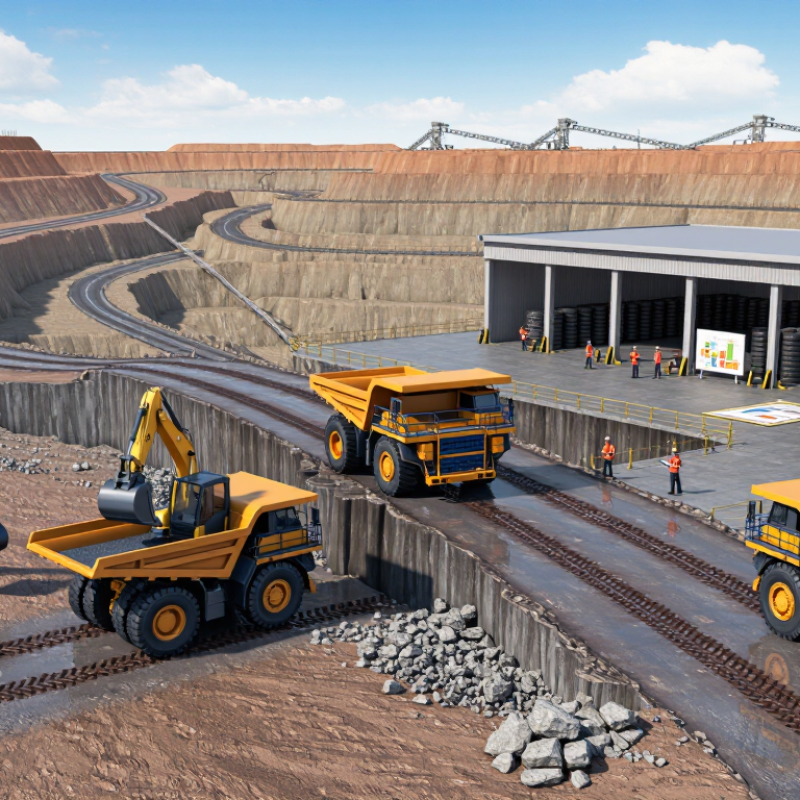
How to Choose the Right Mining Truck for Your Project?

Define the Project’s Mining Conditions and Production Goals

Choosing the right mining truck starts with the site, not the machine. Define haul distance, road width, gradients, ground strength, and loading conditions. A truck working on steep, wet ramps faces different demands from one operating on a wide, dry pit floor.

Record real operating details from several shifts. Measure payload, loading time, travel speed, queue time, fuel use, and average cycle time. Include seasonal changes, because rain can weaken roads and reduce traction. Your production goal should be equally specific. State the required tonnes per hour, operating hours, and acceptable availability. A larger truck may carry more material, but it can create longer queues or require costly road upgrades.

Tips: Compare truck capacity with the excavator’s bucket size and the road’s safe limits. Check braking performance on the longest descent. Review maintenance access, tire conditions, and spare-part availability. A trial run with measured data is more dependable than a brochure estimate. Small details matter.

Be honest about uncertainty. Early production figures are often optimistic. I have seen schedules fail because loading delays were ignored. Leave room for weather, operator breaks, inspections, and unexpected repairs. Then test the plan against a slower cycle time. If the target still works, your equipment choice is more credible and easier to defend.

How to Choose the Right Mining Truck for Your Project? - Define the Project’s Mining Conditions and Production Goals

Project Mining Condition Production Goal Recommended Truck Class Typical Rated Payload Suitable Haul-Road Profile Typical Loaded Speed Estimated Production Range Key Selection Priority
Small open-pit operation
Short haul distances, narrow benches, moderate traffic, and limited turning space.
0.5–1.5 million tonnes per year Compact rigid-frame or articulated haul truck 20–40 tonnes Haul roads generally 8–12 m wide; sustained grades commonly below 10% 25–45 km/h 80–180 tonnes per operating hour per truck, depending on cycle time and utilization Maneuverability, low operating cost, service access, and compatibility with small loading equipment
Medium-depth hard-rock mine
Moderate-to-long haul routes, abrasive rock, frequent elevation changes, and regular blasting.
2–8 million tonnes per year Medium rigid-frame haul truck 45–90 tonnes Haul roads generally 12–18 m wide; sustained grades commonly 6–10% 30–50 km/h 180–400 tonnes per operating hour per truck Payload balance, braking performance, tire durability, fuel efficiency, and loading-match efficiency
Large open-pit mine
High-volume production, wide haul roads, long operating shifts, and high equipment utilization.
8–30 million tonnes per year Large rigid-frame haul truck 100–220 tonnes Haul roads generally 18–25 m wide; sustained grades commonly 6–8% 35–55 km/h 400–900 tonnes per operating hour per truck High availability, drive-train performance, payload control, braking capacity, and haul-cycle productivity
Deep or steep-pit operation
Long uphill hauls, repeated braking, elevation changes, and high thermal load on the power train.
Production constrained by haul-road capacity High-power electric-drive or optimized mechanical-drive truck 90–220 tonnes Sustained grades above 8% require detailed speed, braking, and thermal analysis 15–40 km/h on loaded uphill segments Highly dependent on elevation gain, ramp length, and traffic control Retarding capacity, continuous gradeability, cooling performance, traction, and operator safety
Soft ground or wet-weather site
Weak subgrade, mud, water accumulation, and changing road conditions.
Stable production through seasonal conditions Articulated haul truck or truck configured for high traction 25–65 tonnes Variable road width; grades should be evaluated together with soil bearing capacity 15–35 km/h 100–300 tonnes per operating hour per truck Traction, ground pressure, articulation, flotation, mud clearance, and all-weather availability
Long-distance overburden removal
Long one-way haul routes, large waste volumes, and a high proportion of empty-return travel.
More than 5 million tonnes of waste per year Large-capacity rigid-frame haul truck or optimized truck fleet 90–220 tonnes Wide, well-maintained roads with controlled intersections and passing areas 35–55 km/h, subject to road geometry and safety limits Production is primarily determined by haul distance, cycle time, and fleet availability Lowest cost per tonne, fuel consumption, tire life, payload consistency, and dispatch efficiency
Planning basis: The production ranges are indicative engineering benchmarks calculated from payload, cycle time, operating hours, and fleet utilization. Actual results vary with loading efficiency, haul distance, road condition, weather, elevation, traffic delays, maintenance time, and operator performance.

Compare Mining Truck Types and Operating Capabilities

Choosing a mining truck starts with the haul road, not the catalogue. Rigid-frame trucks suit hard, well-maintained roads and long, steady cycles. Articulated trucks handle wet ramps, uneven benches, and tighter turns better. Their typical payload ranges from 25 to 60 tonnes. Larger rigid trucks often carry 100 to 400 tonnes. Payload alone can mislead. A 200-tonne truck may lose productivity when gradients, queues, or loading delays increase.

Compare operating capabilities through a complete cycle: loading time, travel speed, dumping time, tyre life, fuel use, and availability. McKinsey’s mining productivity research indicates that autonomous haulage can improve productivity by roughly 10–20% in suitable operations. However, those gains depend on road discipline, dispatch quality, and stable traffic patterns. The Global Mining Guidelines Group also highlights interoperability and defined operating zones as important controls for autonomous systems. These details matter at 2 a.m., when dust limits visibility and a loaded truck climbs a 10% ramp.

Powertrain choice deserves equal attention. Diesel-electric trucks can support high continuous loads and regenerative braking on downhill routes. Mechanical-drive trucks may be simpler to maintain where workshops lack specialist electrical skills. I would not select a truck from payload figures alone. Site data should include annual tonnes, average cycle distance, ramp grades, weather, and maintenance response time. A spreadsheet can still lie. Test the expected cycle with actual road geometry before committing. Deloitte’s Tracking the Trends 2024 report links mining competitiveness with productivity, energy efficiency, and technology readiness; those factors should shape the comparison.

How to Choose the Right Mining Truck for Your Project?

Compare mining truck types by typical payload capacity and sustained operating grade.

Articulated trucks are generally suited to uneven haul roads and steeper grades, while rigid-frame trucks provide higher payload efficiency on well-engineered haul roads. Underground trucks prioritize compact dimensions and maneuverability. The payload figures represent typical published equipment ranges, and actual performance depends on truck configuration, site conditions, road design, altitude, and material density.

Match Truck Size and Payload to Site Requirements

How to Choose the Right Mining Truck for Your Project?

Truck size should follow the site, not the supplier’s largest available model. Measure haul-road width, turning radius, ramp gradient, dumping space, and ground bearing capacity. A large truck may carry more material, yet lose time on narrow benches or sharp corners. A smaller unit can deliver better cycle consistency. Field measurements matter more than brochure figures.

Payload deserves equal attention. Match the rated load to the excavator bucket, loading area, road strength, and material density. Overloading increases tyre stress, braking distance, structural fatigue, and fuel use. Underloading wastes each cycle. The Global Mining Guidelines Group recommends site-specific mobile-equipment risk assessments, especially where traffic interaction and changing road conditions affect performance. The United States Geological Survey’s Mineral Commodity Summaries 2024 also shows how commodity production varies widely by operation, reinforcing the need for project-specific equipment planning.

Safety cannot be separated from productivity. MSHA recorded 40 mining fatalities in the United States during 2023, with powered haulage remaining a major hazard category. That figure should influence speed controls, visibility planning, berm design, and operator training. I would compare actual cycle times across wet and dry conditions, then revisit the model after two weeks. Real sites rarely behave perfectly. My first estimate may still be wrong. That is useful information, not failure.

Evaluate Powertrain, Fuel Use, and Maintenance Needs

How to Choose the Right Mining Truck for Your Project?

A mining truck should match your haul roads, payload, and operating hours. The powertrain is a practical starting point. Diesel-electric systems can deliver strong torque on steep ramps. Mechanical systems may feel simpler in remote sites with limited technical support. Review acceleration, gradeability, and cooling performance under real loads. A truck that performs well during a short test may struggle during a twelve-hour shift.

Fuel use deserves careful measurement. Ask for fuel data from similar temperatures, payloads, and road conditions. Idling can quietly increase operating costs. So can underinflated tires and poorly maintained haul roads. Track liters per operating hour, not only the manufacturer’s estimate. That figure may be optimistic. I would also inspect service records and speak with operators. Their comments often reveal slow response, uncomfortable controls, or repeated overheating.

Tips: Compare total operating cost over five years. Check access to trained technicians and critical parts. Schedule oil analysis, filter changes, brake inspections, and cooling-system checks. Keep a maintenance log with hours, faults, and repair time. Leave room for mistakes. Production targets can encourage rushed inspections, which later create longer delays. Choose a powertrain with enough reserve, but avoid paying for capacity your site rarely uses. Test it on your actual ramp, with your typical payload, before signing a purchase agreement.

Assess Safety, Total Cost, and Long-Term Fleet Value

Choosing a mining truck starts with risk, not payload. The U.S. Mine Safety and Health Administration recorded 40 mining fatalities in 2023, compared with 29 in 2022. Safety deserves measurable criteria. Examine visibility, braking performance, access steps, fatigue controls, and emergency response design. Ask for verified incident data, not polished sales language. Small details matter. A poorly positioned handrail can slow evacuation.

Total cost requires more than purchase price. Build a five-year model using fuel, tires, scheduled maintenance, unplanned downtime, operator training, and resale assumptions. The CostMine 2024 Equipment Costs guide identifies fuel, maintenance, labor, and tires as core ownership-and-operating inputs. Use local figures. Haul distance, gradients, weather, and road conditions can change the result sharply. A spreadsheet can still lie. Test the truck on your actual cycle before approving the fleet.

Long-term value also depends on adaptability. The International Energy Agency reported that global battery demand reached about 750 GWh in 2023, rising roughly 40% from 2022. This trend may influence future charging, power, and emissions requirements. Consider trucks with upgradeable controls, accessible diagnostic systems, and strong parts support. Avoid buying maximum capacity automatically. An oversized truck may wait longer, burn more fuel, and create higher tire costs. The better choice is the truck that remains productive when the mine plan changes.