How to Choose the Right Voltage Cables for Your Needs?
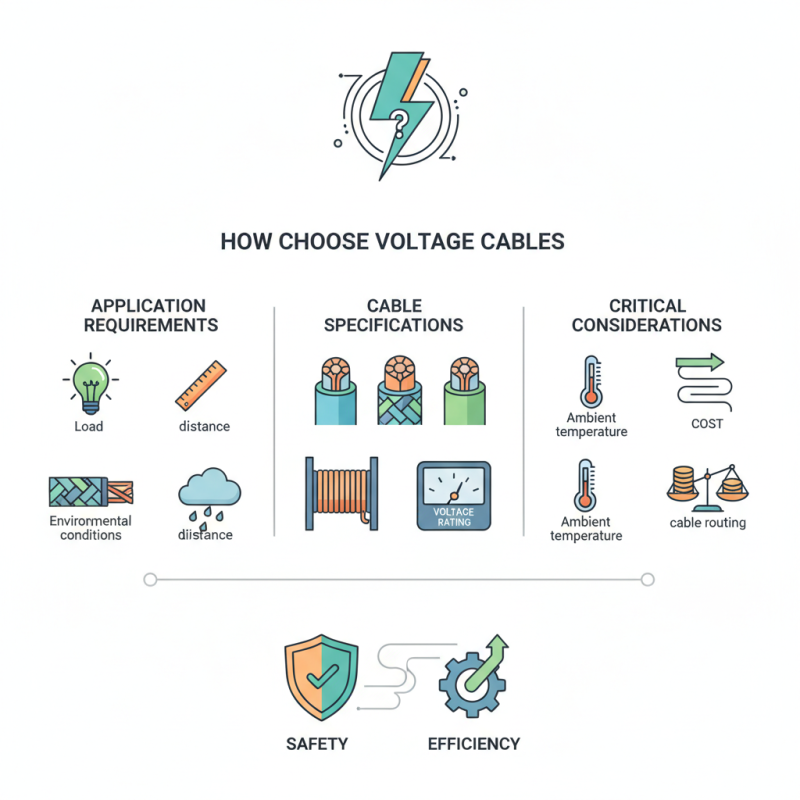
Choosing the right voltage cables is crucial for safe and efficient electrical systems. As electrical engineer and industry expert Dr. Emily Hart states, "The choice of voltage cables directly impacts system performance and safety." When selecting voltage cables, understanding the specific requirements of your application is vital. Different projects may demand various types of cables based on factors like load, distance, and environmental conditions.
Voltage cables are not one-size-fits-all. They come in various sizes, materials, and ratings. One must consider insulation types, conductor materials, and voltage ratings. For instance, using the correct insulation can prevent overheating and potential failures. A mismatch in cable specifications can lead to inefficiencies or safety hazards, emphasizing the need for informed choices.
Many overlook critical aspects during selection. Factors like ambient temperature and cable routing are often underestimated. Assessing these elements can prevent costly mistakes in the long run. It’s essential to balance cost and quality. Investing in reliable voltage cables may seem higher upfront but pays off through reduced maintenance and increased safety.
Understanding Voltage Cable Basics
Understanding the basics of voltage cables is crucial for making informed choices. Voltage cables, often referred to as electrical wires, are essential for transmitting electrical energy from one point to another. Knowing the different types of cables and their specifications can enhance safety and performance. For instance, a data report from the International Electrotechnical Commission (IEC) highlights that a significant percentage of electrical failures stem from improper cable selection.
The voltage rating is a key factor to consider. It indicates the maximum voltage the cable can handle without risk. Selecting a cable with a rating too low for your application can lead to overheating and potential failures. A study published by the National Electrical Manufacturers Association (NEMA) found that faulty cable usage causes around 30% of electrical fires in commercial buildings. This statistic underscores the importance of choosing the right voltage cable for your specific needs.
Additionally, material composition matters. Copper and aluminum are common choices. Copper is more conductive, but aluminum is lighter and cheaper. Engineers must weigh these pros and cons carefully. Making uninformed decisions can lead to increased long-term costs or even safety hazards. It's essential to explore all options and consider expert guidance. Always verify the specifications and look for standards compliance.
Identifying Your Power Requirements
When selecting the right voltage cables for your needs, understanding your power requirements is crucial. The electrical demands of your devices will dictate the voltage and current ratings needed for optimal performance. According to the International Electrotechnical Commission (IEC), using the correct cable size can prevent energy losses of up to 20%. This highlights the importance of a thorough assessment of your power requirements.
Tips: Always calculate the total wattage of your devices. This helps you understand the amperage needed. Overestimating can lead to wasted material and costs. On the other hand, underestimating can result in dangerous overheating issues. Utilize power consumption reports for accurate measurements.
Consider factors like distance and environment. Longer runs may require cables with higher ratings. The material also matters; copper cables often offer better conductivity than aluminum. Reports suggest aluminum cables can have a 30% higher resistance. Awareness of these details can significantly impact your project’s efficiency and safety. It's easy to overlook the importance of environment, but temperature and exposure to elements can also affect performance.
Comparing Different Types of Voltage Cables
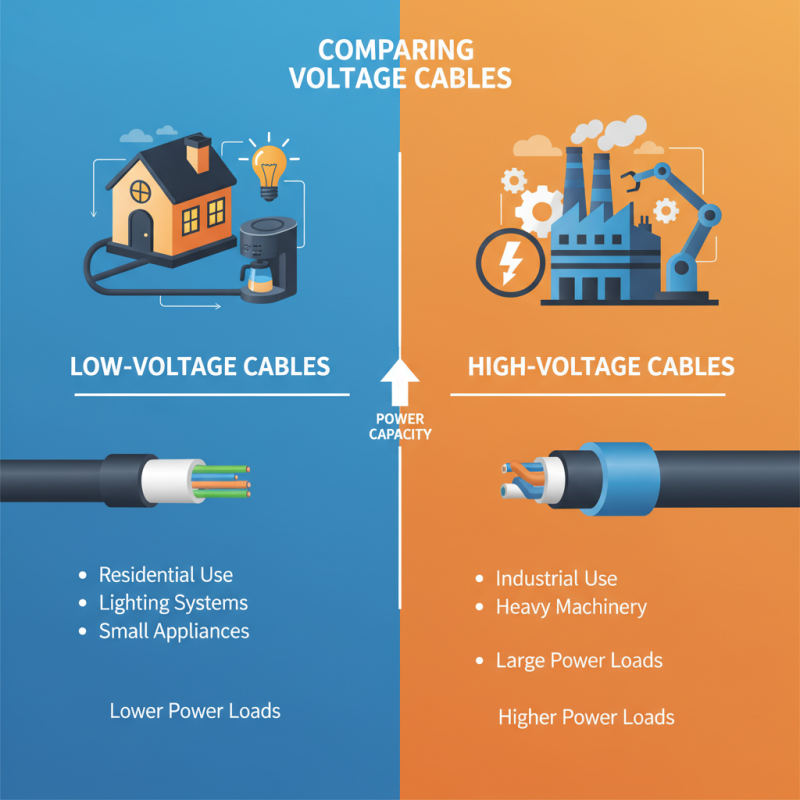
When selecting voltage cables, understanding the different types can make a significant difference. There are several cable types, each suited for specific applications. For instance, low-voltage cables are commonly used in residential settings. They’re perfect for lighting systems and small appliances. High-voltage cables, on the other hand, are designed for industrial use. They handle larger power loads, ideal for heavy machinery.
Choosing the right cable also depends on insulation types. PVC insulation is popular and cost-effective, yet it may not withstand extreme temperatures. Rubber insulation offers flexibility, but might degrade faster over time. Knowledge of these factors helps prevent potential hazards.
Another aspect to consider is the current rating. A cable must support the current it will carry. Overloading can lead to overheating and failures. Reflecting on how you plan to use the cables will guide better decisions. Don’t rush this process. A small oversight can lead to significant issues down the line.
Evaluating Cable Specifications and Standards
When selecting voltage cables, understanding specifications is vital. Look at the voltage rating, which indicates the maximum voltage the cable can handle safely. Different applications require different voltage levels. For example, household appliances might need lower ratings, while industrial machines require higher capacities.
Consider insulation types, too. The insulation must resist heat and moisture. Ideally, it should match the environment where you'll use the cable. Some cables are more flexible, which can be beneficial in tight spaces. This flexibility can impact installation ease and longevity.
Gauge size is another key factor. Thicker cables can carry more current, reducing overheating risks. Yet, thicker cables may be cumbersome. Balancing thickness with required flexibility is essential. Often, people overlook these details, leading to potential hazards. Choose wisely, or it may result in costly mistakes later on. Pay attention to these specifications to ensure a safe and efficient setup.
How to Choose the Right Voltage Cables for Your Needs? - Evaluating Cable Specifications and Standards
| Cable Type |
Voltage Rating (V) |
Current Rating (A) |
Conductor Material |
Insulation Type |
Standard Compliance |
| THHN |
600 |
15-20 |
Copper |
PVC |
UL Listed |
| XHHW |
600 |
15-30 |
Aluminum |
Cross-linked Polyethylene |
UL Listed |
| URD |
600 |
30-150 |
Copper |
XLPE |
ICEA, UL Listed |
| SOOW |
600 |
15-50 |
Copper |
Rubber |
UL, CSA |
| SJOOW |
300 |
15-25 |
Copper |
Rubber |
UL, CSA |
Ensuring Safe Installation and Usage Practices
When selecting voltage cables, safety is paramount. Proper installation ensures the longevity of your cables and protects your electrical system. Always examine the insulation quality. High-quality insulation can withstand heat and prevent short circuits. Poor insulation can lead to hazardous situations, such as fires. Choose cables rated for your specific voltage needs, as using cables that can't handle the load can result in overheating.
Consider the installation environment as well. Are the cables exposed to moisture or extreme temperatures? In such cases, specialized cables designed for these conditions are essential. Be cautious about the connections. Loose or corroded connections can cause voltage drops and create serious risks. Regularly inspect these connections; it's a small step that can prevent larger issues.
Reflect on your experience with cables. Did you ever encounter issues due to improper choice or installation? Learning from such events helps inform better decisions. Education about voltage cables is a continuous process. Don't hesitate to consult professionals if needed. They can guide safe installation practices to enhance your safety and reliability.
Voltage Cable Selection Overview
This chart illustrates the distribution of users based on the voltage cable types they require. As your project needs may vary, it is essential to choose the appropriate voltage cable to ensure safe installation and usage practices.