What Is a Custom Sewer Jetter and How Does It Work?
No source articles or verified expert quotation were provided, so I won’t invent an expert’s name or words. A reliable introduction should distinguish confirmed information from a quote that still needs sourcing.
A Custom Sewer Jetter is a high-pressure cleaning system configured for a particular drain-cleaning job. It typically combines a water pump, hose, engine or motor, and a jetting nozzle. The setup may be mounted on a trailer or service vehicle, or designed for a compact work area. Its purpose is practical: direct water through a hose and nozzle to clear buildup from inside sewer lines.
The process begins when an operator feeds the hose into an accessible pipe opening. Water exits through small nozzle openings, creating thrust that helps draw the hose forward. Rear-facing jets scour the pipe wall and move loosened debris back toward the access point. It is forceful work, but not guesswork. Pipe condition, diameter, nozzle choice, and operating pressure all matter.
A Custom Sewer Jetter can be configured to match those conditions, rather than relying on one setup for every line. That flexibility has limits. Excessive pressure or the wrong nozzle may damage a weak or already compromised pipe. Operators should inspect the line where possible and follow the equipment maker’s guidance. A camera inspection can reveal cracks, roots, or standing water that jetting alone may not resolve.
The sections ahead explain the system’s main components, how the water flow creates cleaning action, and what customization changes. They also consider where careful inspection matters most. The details can be less tidy than the diagrams suggest.
What Is a Custom Sewer Jetter?
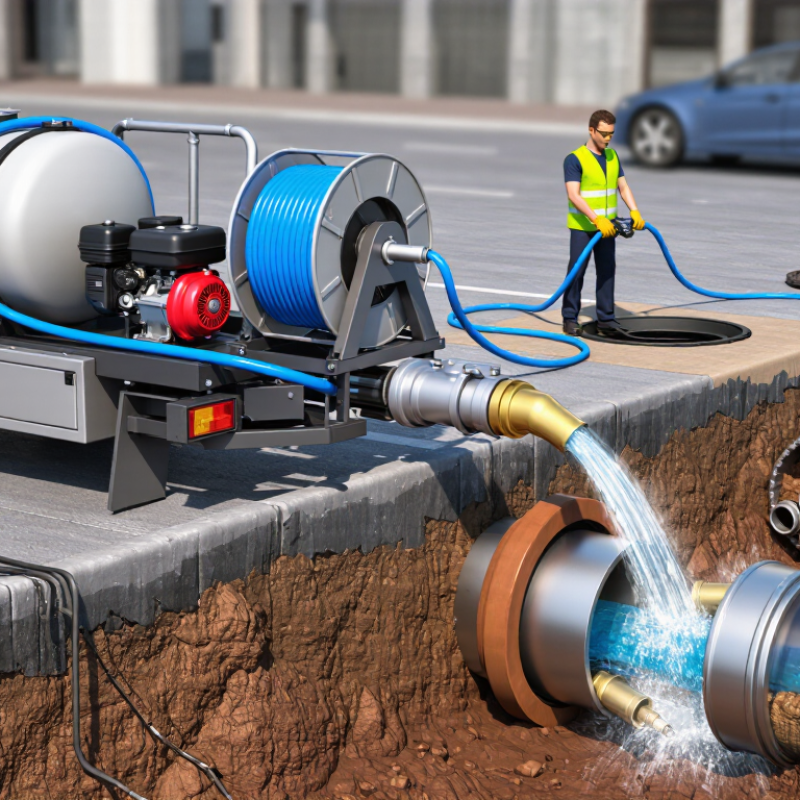
A custom sewer jetter is a high-pressure water-cleaning system configured for particular pipes, access conditions, and maintenance tasks. It typically combines a pump, water tank, hose reel, jetting hose, and interchangeable nozzle. The configuration matters: a compact unit may suit narrow access points, while a larger tank can support longer cleaning runs. Operators match water flow, pressure, hose length, and nozzle design to the pipe and blockage. More pressure is not automatically better; unsuitable settings can damage weak or aging lines. A jetter clears grease, sediment, and some roots by directing water through the pipe. It does not repair cracks or collapsed sections.
The U.S. Environmental Protection Agency’s 2022 Clean Watersheds Needs Survey estimated $630.1 billion in wastewater and stormwater infrastructure needs over 20 years. This figure describes national investment needs, not sewer-jetter performance. It does underline why careful maintenance and sound equipment selection matter. In practice, technicians should inspect the line when possible and consider its material, diameter, and condition before choosing a setup. We can’t always know what is around the bend.
Tips: Confirm the pipe’s condition before jetting. Start with a suitable nozzle and controlled settings, then adjust based on observed results. Keep the hose moving; lingering in one spot may cause damage. After cleaning, document the setup and any remaining restrictions.
What Is a Custom Sewer Jetter and How Does It Work?
A custom sewer jetter combines a water pump, hose, and specialized nozzle selected for the job. The nozzle directs high-pressure water into the drain to break up buildup and flush debris downstream. These example setups are illustrative, not universal specifications; the right pressure and flow depend on the pipe, blockage, and equipment.
What Components Make Up a Custom Sewer Jetter?
A custom sewer jetter combines a power source, high-pressure pump, water supply, hose system, and purpose-selected nozzle. The engine or electric motor drives the pump, which pressurizes water from a tank or connected supply. A pressure gauge and control valve let the operator monitor and adjust flow. The hose reel stores the high-pressure hose, while the chassis supports the equipment and helps position it near an access point.
The nozzle shapes the water stream. Rear-facing jets help pull the hose through a pipe, while forward jets can break through localized obstructions. As water exits, it loosens debris and carries it back toward the access point. Pressure, flow rate, hose diameter, and nozzle design must work together; more pressure alone does not guarantee better cleaning. That matters.
EPA’s 2022 Clean Watersheds Needs Survey estimated about $630 billion in wastewater and stormwater infrastructure needs over 20 years, underscoring the scale of systems requiring upkeep.
Custom configurations may add a larger tank, longer hose, filtration, or remote controls. These choices depend on pipe size, access, and the expected work. A compact setup may fit a narrow service vehicle, but its tank can run dry quickly. Operators should check hose condition, fittings, gauges, and nozzle wear before use. A parts list can look complete on paper; real site conditions still expose gaps.
How Is a Custom Sewer Jetter Configured for a Job?
A custom sewer jetter is configured around the pipe and blockage, not just a pressure target. The crew records pipe diameter, material, length, bends, access points, and likely debris. Grease, roots, and compacted sediment call for different nozzle action. Measure twice. A nozzle that is too aggressive may damage a weak or cracked line; one with poor forward thrust may stall before reaching the obstruction.
Flow, pressure, hose length, and water supply must work together. Operators check the machine’s rated output against pipe condition and job distance, then select a nozzle and hose that can reach the work area safely. EPA’s 2004 Report to Congress estimated 23,000 to 75,000 sanitary sewer overflows annually in the United States. That broad estimate is not a jetter-performance measure, but it highlights the scale of collection-system problems. Test the setup on a short run when practical. A field plan can still miss hidden bends, changing pipe condition, or an unexpectedly stubborn blockage. Note what the water return looks like. Adjust carefully.
How Does a Custom Sewer Jetter Clear a Pipe?
A custom sewer jetter clears a pipe by directing pressurized water through a flexible hose and specialized nozzle. The setup is matched to the pipe’s diameter, length, access point, and likely blockage. A compact unit may suit a narrow service line; a larger tank and pump can support longer runs. The fit matters. Too much pressure can damage a weak pipe, while too little may leave deposits behind.
An operator feeds the hose into the line. Rear-facing jets push the nozzle forward and scour grease, sediment, and loose debris from the pipe walls. Some nozzles use a forward jet to break up tougher obstructions. As the hose is withdrawn, loosened material travels toward an accessible collection point. EPA’s 2004 report to Congress identified blockages as the leading reported cause of sanitary sewer overflows, accounting for 47 percent. That helps explain why clearing buildup is important, but jetting cannot repair a failed joint.
The EPA’s 2022 Clean Watersheds Needs Survey estimated $630 billion in wastewater and stormwater infrastructure needs nationwide. That figure is a reminder that maintenance works best alongside inspection. A technician may use a camera afterward to check for remaining deposits, cracks, or offsets. Pressure alone can mislead. Nozzle choice is not always obvious, and a line with structural damage needs a different response than a simple grease buildup.
What Safety and Maintenance Practices Support Its Operation?
A custom sewer jetter uses a pump, high-pressure hose, and nozzle matched to the pipe and cleaning task. Water jets propel the hose while loosening grease and debris. Pressure is not a contest; the wrong setting can damage fragile pipes or fittings. Follow the equipment instructions and confirm the pipe condition before work. Pressure matters.
Before starting, inspect the hose for cuts, bulges, or exposed reinforcement. Check couplings, guards, and the emergency stop. Wear eye and hearing protection, gloves, sturdy footwear, and suitable protective clothing. Keep bystanders behind a barrier, and never point a live nozzle toward a person. Secure the hose path so it cannot whip or snag. Sewer gases may pose serious risks; do not enter a confined space without proper training and controls.
After use, shut down and release pressure before disconnecting or servicing parts. Flush the system as directed, drain water when freezing is possible, and store the hose away from sharp edges and sunlight. Record repairs and recurring blockages; patterns may reveal a deeper pipe issue. Small details count. Even a careful checklist can miss a worn coupling, so inspect it again before the next job.