
Why Choose Custom Tractor Trailers for Your Business?
Custom Tractor Trailers can help a business match its equipment to the work it actually performs. A regional hauler may need a different layout from a farm operator or construction fleet. The right trailer can improve loading routines, protect cargo, and make better use of available tractor capacity. Small details matter. Deck height, axle placement, tie-down locations, and storage compartments all affect daily use.
A custom build starts with practical questions: What loads move most often? Which routes include tight turns, uneven yards, or low clearances? How frequently will crews inspect the equipment? These answers guide choices such as trailer length, suspension, flooring, lighting, and braking systems. A buyer should compare expected payload, maintenance access, service support, and total ownership costs—not just the purchase price. Clear specifications also make vendor quotes easier to evaluate.
Custom equipment is not automatically the best choice. It may cost more upfront, take longer to deliver, and require specialized parts. That deserves a hard look. If work changes often, a standard trailer or flexible configuration may serve better. Still, when a fleet has recurring needs, thoughtful customization can reduce workarounds and improve consistency. This guide explores the benefits, design decisions, costs, and questions businesses should consider before ordering Custom Tractor Trailers. No build removes every operational challenge, but informed choices can make equipment fit the job more closely.
What Custom Tractor Trailers Are and How They Differ
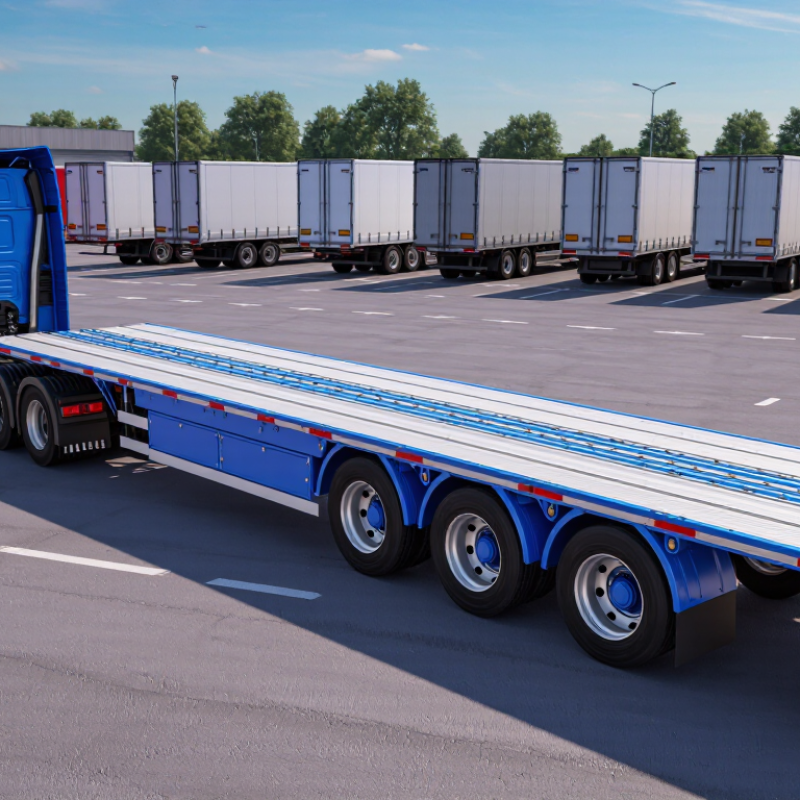
A tractor-trailer combines a powered tractor unit with a trailer that carries the load. A custom tractor trailer is configured around a business’s cargo, routes, and loading routines rather than selected only from standard specifications. Custom work may change the trailer’s length, axle arrangement, deck height, sidewalls, storage compartments, or tie-down points. The tractor may also need compatible connections or equipment. The trailer does the carrying.
The difference is practical. A flatbed operator may need extra anchor points for irregular equipment, while a refrigerated carrier may prioritize insulation and temperature-control space. A fleet moving pallets might benefit from a lower deck or easier loading access. These details can reduce handling time, but they also affect weight, maintenance, and purchase cost. Small choices matter.
Good planning starts with real measurements and operating conditions, not assumptions. Record typical cargo dimensions, loading methods, road surfaces, and daily mileage. Then review the design with qualified trailer and fleet professionals, including applicable weight and dimension requirements. A custom build can solve a recurring problem, yet added features may create new maintenance tasks. And sometimes, the first design is not the right one. Pilot use and driver feedback can reveal what needs adjustment before similar units are ordered.
| Dimension | Standard Trailer | Custom Tractor-Trailer Setup | Business Relevance |
|---|---|---|---|
| Definition | A commonly configured trailer designed for broad freight use, such as a dry van, flatbed, or refrigerated trailer. | A trailer or complete tractor-trailer combination specified around particular cargo, loading methods, routes, or operating requirements. | Customization can address a specific operating need, but it does not automatically improve every fleet or shipment. |
| Common trailer length | A 53-foot semitrailer is a common U.S. highway-freight configuration; shorter trailers are also widely used. | Length may be selected to suit the cargo and route, subject to applicable federal, state, and local rules. | Confirm permitted dimensions for the operating jurisdictions before specifying a nonstandard length. |
| Overall width | In many U.S. highway settings, the general maximum vehicle width is 102 inches, excluding specified items and subject to exceptions. | A custom design can arrange interior space and equipment within the applicable legal width; wider loads may require special permits. | Legal width and permit requirements depend on the route and jurisdiction. |
| Cargo space and layout | Uses a broadly familiar interior layout, with usable space varying by trailer type and construction. | Can be specified with features such as movable partitions, specialized tie-down points, access doors, or tailored shelving. | A layout matched to cargo may reduce handling steps and help secure loads appropriately. |
| Loading equipment | Typically has equipment suited to its trailer type, such as a standard rear door or a conventional flatbed deck. | May incorporate requested loading features, for example a liftgate, ramps, side access, or a specialized deck arrangement. | Select equipment based on dock access, cargo weight, loading frequency, and available handling machinery. |
| Temperature control | A refrigerated trailer is built for temperature-controlled transport; a dry van is not designed to provide active refrigeration. | A specification can address insulation, temperature range, monitoring, and compartment layout where appropriate. | Required temperature performance depends on the product and should be verified against operating conditions. |
| Payload and weight | Usable payload varies with the tractor, trailer, axle configuration, equipment, cargo distribution, and legal weight limits. | Material and equipment choices can affect empty weight and payload; axle and suspension specifications can be tailored within legal limits. | Compare the fully equipped vehicle’s ratings and expected loaded weight rather than relying on a generic payload figure. |
| Cost and lead time | A standard configuration may be easier to source and compare, depending on availability. | Special specifications may add design, equipment, and production costs and can affect delivery timing. | Evaluate purchase price alongside utilization, maintenance, operating needs, and expected service life. |
| Best fit | Businesses carrying varied freight that fits common trailer formats and loading practices. | Businesses with recurring cargo, access, handling, or route requirements that a standard configuration does not adequately meet. | Customization is most useful when the operational benefit justifies added cost and specification complexity. |
Note: Dimensions, weight limits, permits, and equipment requirements vary by jurisdiction, vehicle configuration, and route. Verify applicable regulations and manufacturer specifications before purchase or operation.
How to Match Trailer Design to Business Needs
A trailer should be designed around the work it repeats, not just the heaviest load it might carry. A produce hauler may need an insulated body, washable surfaces, and airflow that protects delicate cargo. A construction operator may value a reinforced floor, secure tie-down points, and a ramp suited to compact equipment. Small details matter. Door width, axle placement, and turning clearance can affect daily loading and route access. The Federal Highway Administration’s Freight Analysis Framework projects U.S. freight tonnage to grow about 50% between 2020 and 2050. That projection makes flexibility worth discussing, but it does not mean every business needs a larger trailer.
Start with actual loads, routes, loading tools, and cleaning routines. Record common cargo dimensions and peak weights, then share them with a qualified trailer designer. The American Transportation Research Institute reported an average trucking cost of $2.270 per mile in 2023. That figure covers more than trailers, but it underscores why payload, maintenance access, and fuel-related choices deserve careful review. A lighter design may help, yet durability still matters on rough routes. There are trade-offs. A custom build can also miss the mark if the specification relies on estimates instead of operating records. Revisit the design after a trial period; even good assumptions can prove wrong.
Why Choose Custom Tractor Trailers for Your Business?
Match trailer length to the freight and routes you serve.
These are common U.S. nominal trailer lengths, not a one-size-fits-all specification. A custom design can better suit your cargo, loading process, and routes. Confirm dimensions, weight limits, and applicable regulations before choosing a configuration.
Key Customization Options for Loads and Operations
Custom tractor trailers work best when their dimensions match the loads and routes they handle every week. Set deck length, width, and height around routine cargo, then have a qualified trailer specialist verify axle capacity and weight distribution. Flooring matters: treated wood can provide grip, while steel may suit heavy equipment but need added traction. Small details matter. Place tie-down rails within easy reach of secure frame points, and choose ramps or a detachable neck only when loading requires them. Measure twice.
Operational options can reduce delays between jobs. Select suspension and braking components for typical road conditions and load weights, with service access in mind. Add well-positioned work lights, lockable toolboxes, spare-tire storage, and steps where crews actually need them. Check the trailer’s turning clearance and loading height with the tractor attached; a rig that fits the cargo can still be awkward at a tight worksite. I would resist adding every available feature: extra weight and complexity can cost useful payload and maintenance time. A careful specification review should also confirm lighting and weight requirements for the intended routes, while leaving room for seasonal changes in cargo.
Operational and Financial Benefits of Custom Trailers
Custom tractor trailers can turn recurring workarounds into usable capacity. Matching cargo dimensions, dock height, and route conditions can reduce wasted deck space and simplify loading. Small details matter: ramp angle, tie-down placement, axle configuration, and a toolbox that does not block access. Less handling helps. Yet extra capacity only pays when the trailer stays well utilized.
ATRI’s 2024 Operational Costs of Trucking report estimated average marginal operating costs at $2.270 per mile in 2023. That compared with $2.251 in 2022. This is a useful cost backdrop, not proof that customization saves money. A lighter, task-matched specification may lower fuel use or trip counts, but specialized parts can raise purchase and repair costs. Track cost per loaded mile, payload utilization, loading time, and downtime against your current trailer for several months.
Before ordering, compare expected annual mileage and service needs with the quote. Ask a technician to review brake access, welds, and replacement-part availability. Drawings can miss a cramped yard turn. Have drivers and dispatchers test the layout on a real route; their feedback may reveal costly friction. A custom build is not automatically cheaper, and the best design may involve a compromise between flexibility and specialization.
Factors to Evaluate Before Choosing a Custom Trailer
Choosing a custom tractor trailer starts with the work it must do each day. Define the usual cargo, heaviest expected load, and typical route before discussing dimensions. Measure loading docks, yard gates, and tight turns; a trailer that fits the cargo but cannot maneuver comfortably creates daily delays. Small details matter.
Check how the trailer will match the tractor, including coupling height, axle arrangement, braking equipment, and electrical connections. Confirm payload needs against the trailer’s own weight, not just its advertised capacity. Consider deck height, ramp angle, tie-down locations, and weather protection for the actual cargo. A few inches can change loading access. Ask for drawings and written specifications, then compare them with the equipment already in your fleet.
Materials and features should suit the operating environment. Frequent loading may call for a durable floor and accessible service points, while rough routes can increase the importance of suspension and frame design. Review routine maintenance, parts availability, and expected downtime alongside the purchase price. It is easy to over-specify. Extra options may add weight and cost without solving a real problem. At the same time, choosing only for today’s most common load can leave little room for changing jobs. A simple cost comparison helps, but it will not capture every operational inconvenience.