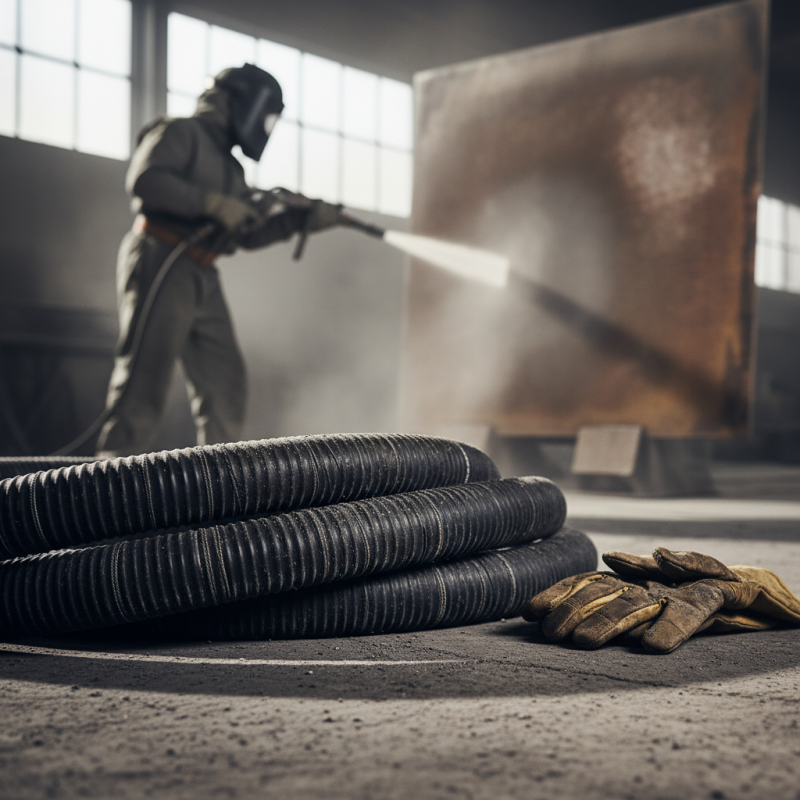
What is Sandblast Rubber Hose and How Does It Work?
Sandblast rubber hose is an essential tool in various industries. It facilitates the efficient transfer of abrasive materials during sandblasting applications. This durable hose is designed to withstand high pressures and harsh conditions. Users appreciate its flexibility and resistance to wear.
Understanding how sandblast rubber hose operates is crucial. Tiny abrasive particles are propelled through the hose at high speeds, allowing for effective surface cleaning. The material of the hose ensures that it doesn’t degrade quickly, even when subjected to intense use. While sandblast rubber hoses are sturdy, they do require regular inspections and maintenance.
Many professionals overlook this aspect. Ensuring the integrity of the hose can prevent accidents and prolong its lifespan. Users often need to remember that improper handling can lead to costly failures. The sandblast rubber hose has many advantages, but care is essential.
Understanding the Composition of Sandblast Rubber Hose
Sandblast rubber hose plays a crucial role in various industrial applications, particularly in sandblasting processes. These hoses are specially designed to withstand wear and tear due to abrasive materials. Understanding their composition helps in selecting the right hose for specific tasks.
The hose typically contains a resilient rubber outer layer, which offers flexibility and protection. Inside, a thick lining resists damage from the abrasive media used in sandblasting. Reinforced with cords, these hoses maintain their shape under pressure. The combination of materials provides durability and strength, allowing for efficient operation.
Tips: Regular inspection of hoses is important. Look for signs of wear or leaks. Replace hoses as needed to ensure safety during use. Be mindful of the pressure ratings; using hoses beyond their limits can lead to failure.
When selecting a sandblast rubber hose, consider the environment in which it will be used. Different applications may require specific features. Some hoses are better suited for cold weather, while others excel in high temperatures. Research and evaluate options carefully to avoid costly mistakes.
Sandblast Rubber Hose Composition and Performance
The Mechanism of Sandblast Rubber Hose Operation
Sandblast rubber hoses are essential in various industrial applications. They convey abrasive materials like sand, grit, or other particles at high pressure. The construction of these hoses typically includes a rubber interior reinforced with layers of fabric or steel wire. This design allows them to withstand the intense wear and tear from the materials they transport.
The operation mechanism of sandblast rubber hoses relies on their flexibility and durability. As pressurized air or water mixes with the abrasive substance, the mixture travels through the hose. The rubber lining helps to mitigate abrasion. However, over time, the hose can degrade. Regular inspections are necessary to identify wear and prevent unexpected failures. The impact of continuous usage can lead to cracks, which may not always be visible at first glance.
Understanding the dynamics of the sandblast rubber hose is crucial. The angle at which the sand hits the surface also affects its longevity. Poor handling can lead to uneven wear. Workers must maintain proper techniques to ensure safety and efficiency. Maintenance plays a key role in extending the hose's lifespan, requiring attention to detail. Without proper care, these hoses may not deliver optimal performance.
What is Sandblast Rubber Hose and How Does It Work? - The Mechanism of Sandblast Rubber Hose Operation
| Feature | Description |
| Material | High-quality rubber that is resistant to abrasion and wear. |
| Applications | Used for sandblasting, shot blasting, and abrasive material transfer. |
| Diameter Range | Typically ranges from 1 inch to 4 inches. |
| Working Pressure | Can handle pressures up to 150 PSI, depending on design. |
| Temperature Range | Operates effectively between -20°C to 80°C. |
| Benefits | Flexible, durable, and resistant to chemicals and high temperatures. |
| Maintenance | Requires regular inspection for wear and tear; clean after use. |
Common Applications of Sandblast Rubber Hose
Sandblast rubber hoses are essential in various industries, particularly for sandblasting applications. These hoses are designed to withstand high-pressure environments while delivering abrasive materials effectively. Common applications include construction, automotive, and manufacturing. In construction, these hoses are often used to clean surfaces before painting. In automotive industries, they help in removing old paint and rust from vehicles. According to industry reports, the global sandblasting market is projected to grow significantly, with a CAGR of over 5% in the coming years.
In manufacturing, sandblast rubber hoses play a crucial role in preparing surfaces for further treatment. They are used in metalworking and are vital for ensuring surface integrity. One report indicated that proper maintenance of sandblast hoses can enhance their lifespan by up to 20%. Regular checks and necessary repairs can prevent unexpected breakdowns.
Tips: Always inspect hoses for wear and tear before use. Ensure they are properly rated for the job. Safety gear is a must when working with sandblasting equipment. Lastly, consider your specific needs. Not all hoses are created equal; choosing the right one is key to efficiency.
Maintenance Tips for Sandblast Rubber Hose
Maintaining a sandblast rubber hose is crucial for longevity and performance. Regular inspections are important. Check for signs of wear, cracks, or abrasions. A damaged hose can lead to leaks. This not only reduces efficiency but can also pose safety risks. Keep an eye on the connections. Loose fittings can cause pressure loss and unnecessary waste.
Proper cleaning is vital as well. After each use, clear any abrasive materials. Leftover debris can cause blockages over time. Use mild soap and water for cleaning the exterior. This helps remove grime without damaging the hose. Be cautious with chemicals; some can weaken the rubber. Moreover, store the hose properly. Avoid folding or kinking it, as this may cause internal damage. A simple rack for hanging can prevent these issues.
Storing hoses in direct sunlight can degrade their material. Opt for a cool, dry place instead. Think about the environment in which the hose is used. Extreme temperatures can affect flexibility and durability. Reflect on these factors to enhance the hose's lifespan. A little attention now can prevent bigger issues later.
Safety Considerations When Using Sandblast Rubber Hose
Using sandblast rubber hoses requires careful attention to safety. These hoses transport abrasive materials under high pressure, which can pose risks. When using them, it’s crucial to wear proper protective gear, including gloves and goggles. The pressure can cause the hose to whip if disconnected, leading to injuries.
Ensure that hoses are properly maintained. Regularly inspect them for wear and tear. Look for cracks or bulges that could lead to a failure. It’s easy to overlook small issues, but these can escalate quickly. Always secure hoses in place to prevent accidental movement.
In case of an emergency, know the safety protocols. Be aware of the nearest exit points and first aid kits. Having a plan in place can make a difference. Talking through these precautions with your team may prevent mishaps. Remember, safety is everyone's responsibility, and complacency can lead to serious incidents.