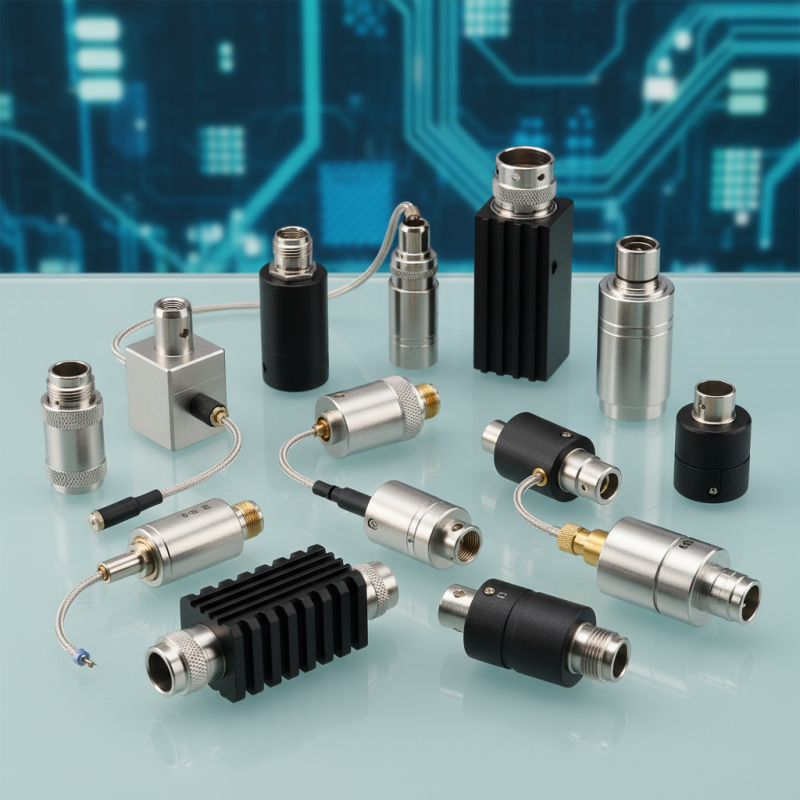
Top 10 Coaxial Attenuators You Need to Know About?
Coaxial Attenuators play a crucial role in various electronic systems. They help manage signal strength and minimize interference. These devices are essential for ensuring optimal performance in communication systems.
Understanding which coaxial attenuator to choose can be challenging. There are many options available, each with specific features and capabilities. For instance, some are designed for high-frequency applications, while others focus on low-power devices. Using the wrong attenuator can lead to poor signal quality.
In this article, we’ll explore the top 10 coaxial attenuators you need to know about. Each selection has been evaluated based on performance, reliability, and user feedback. Knowledge is power when selecting an attenuator, and it’s vital to consider your specific needs. Read on to discover these valuable tools that can enhance your electronic projects.
Understanding Coaxial Attenuators: What They Are and Their Purpose
Coaxial attenuators are essential components in radio frequency (RF) systems. They reduce signal strength without distorting the waveform. This function is vital for maintaining signal integrity in various applications, including telecommunications and broadcasting.
Industry reports indicate that coaxial attenuators can handle varying power levels, from a few watts to several hundred watts. This versatility makes them critical in matching impedance between components. A mismatch can lead to reflection, resulting in signal loss. Accurate impedance matching is crucial for optimal system performance.
Despite their importance, understanding coaxial attenuators can be complex. Users often struggle with specifications like frequency range and attenuation value. These factors significantly affect performance. Additionally, the choice of materials can introduce unwanted characteristics, leading to potential inefficiencies. It's a reminder that in RF design, every detail counts. A small oversight may lead to substantial signal degradation.
The Importance of Selecting the Right Coaxial Attenuator for Your Needs
When it comes to coaxial attenuators, making the right selection is crucial. These devices help control signal strength in various applications. Choosing the right type can impact performance significantly. Many factors influence your choice. Frequency range, power handling, and the required attenuation level must all be considered.
Different types of coaxial attenuators serve unique purposes. For example, fixed attenuators are straightforward and reliable. However, variable attenuators offer flexibility for changing conditions. Misjudging your needs can lead to problems. An improper selection may cause signal distortion or loss. Sometimes, users overlook these details. A little extra research goes a long way.
It's easy to get lost in the technical aspects. Glossy specifications can be overwhelming, making it hard to compare options. Practical experience is valuable here. Testing different models can reveal real-world differences. Relying solely on specifications might mislead you. Building a solid understanding fosters better decisions. A well-chosen attenuator can enhance your entire system, making the effort worthwhile.
Top Features to Look for in High-Quality Coaxial Attenuators
When searching for high-quality coaxial attenuators, several features should be at the forefront. Consider power rating. This determines how much power the attenuator can handle. Higher ratings typically mean better performance. Look for a range that fits your specific needs. Impedance is equally important. Most systems use 50 or 75 ohms. Matching this correctly ensures minimal signal loss.
Another crucial factor is frequency range. It affects signal integrity over varying applications. A wide frequency range allows more versatility in usage. Building materials can also impact quality. Premium metals enhance durability and signal fidelity. Finally, think about connectors. They should fit securely to prevent any interruptions.
Performance consistency is sometimes overlooked. An attenuator may excel in lab tests but fail in real-world applications. It's wise to read user reviews for practical insights. Longevity is essential too. Constantly replacing components can become a hassle. Many buyers don’t consider installation ease. Complicated setups can lead to frustrating experiences, dampening overall satisfaction. Examine these factors carefully to make a wise choice.
Top 10 Coaxial Attenuators You Need to Know About
| Model | Frequency Range (GHz) | Attenuation (dB) | Power Rating (W) | Connector Type |
| Model A | DC-3 | 6 | 2 | SMA |
| Model B | 1-6 | 10 | 5 | N-Type |
| Model C | 2-8 | 20 | 10 | BNC |
| Model D | DC-10 | 3 | 1 | TNC |
| Model E | 5-18 | 15 | 2 | F-Type |
| Model F | 1-18 | 1 | 10 | MCX |
| Model G | DC-6 | 8 | 5 | 4.3-10 |
| Model H | 2-7 | 12 | 1 | Mini DIN |
| Model I | 3-12 | 5 | 20 | SMA |
| Model J | 5-15 | 25 | 1 | BNC |
Overview of the Leading Coaxial Attenuator Brands in the Market
When it comes to coaxial attenuators, several brands stand out. These devices are crucial for managing signal levels in various applications. Users often seek attenuators that offer reliability and consistent performance. A variety of attenuation levels is available to meet diverse needs. Each brand has its unique design and specifications that can influence overall performance.
Many brands focus on specific market segments. Some cater to telecommunications, ensuring that signals remain clear. Others excel in broadcasting, where signal strength can mean the difference between clarity and interference. Attention to detail in manufacturing is essential. Features like frequency range and power handling capabilities are often discussed among users.
That said, nothing is perfect. Some users report issues with compatibility. Others feel uncertain about the durability of certain models. It's important to do thorough research. Pay attention to user reviews and feedback. Experimenting with different brands can sometimes lead to unexpected results. The right choice might not be immediately clear, requiring patience and consideration.
Comparative Analysis of the Best Coaxial Attenuators Available Today
When choosing coaxial attenuators, understanding their use is crucial. These devices help manage signal levels. They reduce power without altering signal characteristics. It’s essential to know their specifications. The wrong choice can lead to signal degradation or system failure.
A comparison of features like frequency range and power rating is vital. Look for models that suit your application. Some might offer higher precision, while others are more versatile. The build quality varies significantly. A sturdy construction can improve longevity. Pay attention to connectors too; they need to fit your system seamlessly.
Many users overlook the importance of thermal handling. Heat can affect performance. Longevity is often tied to how well a device dissipates heat. Testing under real conditions is beneficial. Sometimes, documentation may not provide complete insights. Taking a hands-on approach can reveal much about performance and potential issues.
Each attenuator has its strengths and weaknesses. Understanding these nuances is key to making an informed choice.