Top 10 Battery Connector Types for Your Global Sourcing Needs?
Battery Connectors play a vital role in today’s electronics and electric vehicle markets. According to a report by Market Research Future, the global battery connector market is expected to witness significant growth, projected to reach USD 5.6 billion by 2025. This surge is driven by increasing demand for reliable and efficient energy storage solutions.
Several factors contribute to this trend. The rise of renewable energy sources and electric vehicles has led to a higher demand for advanced battery connectors. Industry experts highlight that the choice of connector impacts performance, safety, and longevity of battery systems. Selecting the right battery connector can enhance energy efficiency and reduce potential failures.
However, sourcing the right battery connector remains challenging. Quality and compatibility must be prioritized to avoid costly mistakes. In a marketplace filled with options, understanding specific needs is crucial. Evaluating each type’s specifications can reduce confusion and ensure reliable performance. Whether for consumer electronics or industrial applications, knowing the best battery connector types is essential for success.
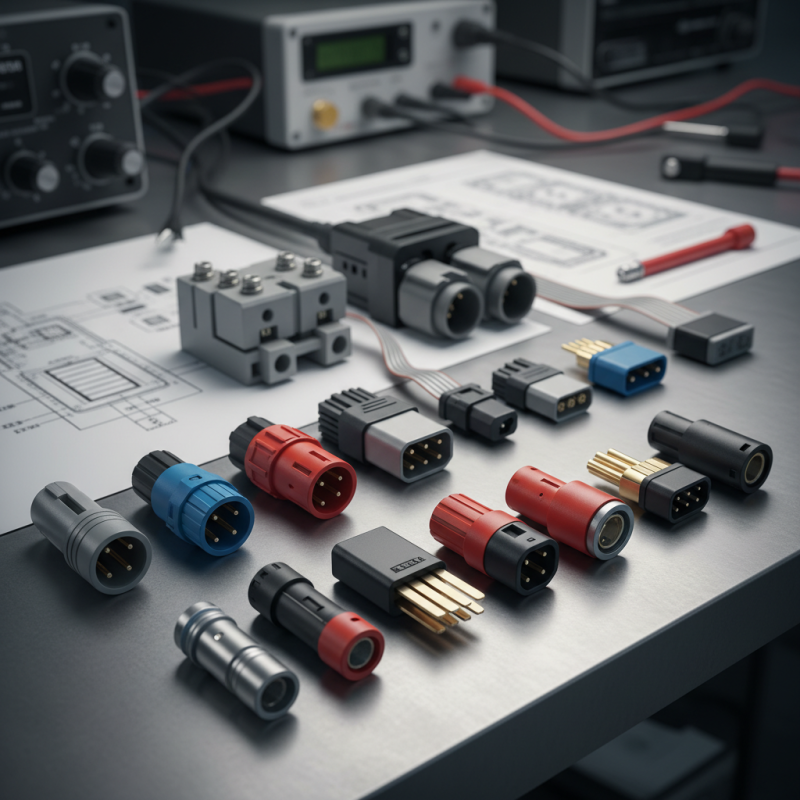
Overview of Battery Connector Types and Their Applications
Battery connectors play a crucial role in various applications, from consumer electronics to electric vehicles. Understanding the types of battery connectors can aid in making informed sourcing decisions. According to market research by MarketsandMarkets, the global battery connector market is projected to reach $2.8 billion by 2026, driven by the rising demand for electric mobility and renewable energy solutions.
Among the common types of battery connectors, Tamiya connectors are popular in hobby electronics. Their simple design ensures a secure connection, but they can struggle under high currents. JST connectors, on the other hand, offer compact size and reliability. These features make them ideal for applications where space is limited. However, their small pin design can pose challenges in terms of durability.
For high-performance applications, connectors like Anderson Powerpole are favored. They can handle high current and offer quick-connect options. Yet, their size may not be suitable for all designs. The choice of connector significantly impacts device performance and reliability. Not all connectors will meet the specific needs of every application, leading to potential mismatches. Understanding specifications and conducting thorough testing is essential in this ever-evolving market.
Key Considerations When Selecting Battery Connectors
When selecting battery connectors, several key factors come into play. Compatibility with your specific battery system is crucial. Analyze the voltage and current ratings to ensure safety and performance. Check the material quality. Higher-grade materials can enhance conductivity and durability, reducing long-term costs.
Tips: Always perform a thorough reliability test before finalizing your choice. Incorrect connectors can lead to system failures. Consider how easy it is to connect and disconnect. Some connectors can be cumbersome, especially in limited spaces.
Another significant aspect is environmental resistance. If your application involves extreme temperatures or humidity, select connectors that can withstand these conditions. Improper choices can lead to corrosion or performance degradation. Review the connector's sealing capabilities to protect against unwanted elements.
Tips: Think about the future needs of your project. Will your battery system expand? Choose versatile connectors that can adapt to evolving requirements. Evaluate the available space for installation too. A well-placed connector can simplify maintenance and improve access.
Top Battery Connector Types for Different Industries
Battery connectors play a crucial role across various industries. In automotive, proper connections are essential for safety and performance. According to a 2022 report by MarketsandMarkets, the global automotive connector market is projected to reach $33.42 billion by 2027. This highlights the industry's increasing reliance on efficient battery connectivity solutions.
In consumer electronics, connectors must be compact yet reliable. A study by Grand View Research states that the global consumer electronics market will exceed $1 trillion by 2025. This pushes manufacturers to innovate battery connectors that can fit slim devices without compromising power delivery. However, the challenge remains in ensuring these connectors can handle diverse environmental conditions.
The renewable energy sector also depends heavily on battery connectors. Solar technologies require durable connectors to withstand harsh weather. The global solar connector market is expected to grow significantly in the coming years. A report indicates a CAGR of over 14% from 2021 to 2028. Yet, as demand soars, ensuring quality and reliability in production can become difficult. Addressing these concerns is vital for the industry's sustainability.
Top 10 Battery Connector Types for Global Sourcing Needs
This chart illustrates the popularity scores of various battery connector types used across different industries. Higher scores indicate greater adoption and preference in global sourcing needs.
Comparative Analysis of Battery Connector Materials and Durability
When sourcing battery connectors, the choice of materials significantly impacts durability and performance. A comparative analysis reveals that materials like copper and aluminum dominate the market due to their excellent conductivity. According to the International Electrotechnical Commission (IEC), copper connectors can offer 96% electrical conductivity, making them highly efficient. However, their susceptibility to corrosion requires protective coatings to maintain longevity.
On the other hand, plastic connectors, often reinforced with additives, provide lightweight options that resist environmental stresses. The International Association of Electrical Inspectors reports that high-grade plastics can endure temperatures up to 120°C without degrading. Nevertheless, the challenge lies in their lower conductivity compared to metals. A balance of weight, conductivity, and temperature resistance often defines sourcing decisions.
Durability standards further complicate these choices. For instance, UL certification can assure reliable performance. Yet, achieving compliance can be resource-intensive. When assessing connectors for global supply chains, sourcing teams must also consider long-term reliability. Environmental conditions and operational stresses serve as critical factors. Each decision impacts not only functionality but also the overall safety of the electrical systems. Balancing these factors can be intricate and requires thorough analysis and strategic planning.
Top 10 Battery Connector Types for Your Global Sourcing Needs
| Connector Type | Material | Durability (Cycles) | Temperature Range (°C) | Application |
| Blade Connector | Copper | 1000 | -40 to 125 | Automotive |
| Ring Terminal | Tin-Plated Copper | 500 | -40 to 105 | Industrial |
| JST Connector | Plastic and Copper | 200 | -20 to 85 | Consumer Electronics |
| Anderson Powerpole | Copper Alloy | 1000 | -20 to 75 | Professional Audio |
| Micro Connector | Polycarbonate and Copper | 100 | -30 to 85 | Mobile Devices |
| XLR Connector | Brass and Plastic | 500 | -40 to 80 | Audio Equipment |
| Screw Terminal | Copper and Steel | 300 | -20 to 90 | General Electronics |
| Molex Connector | Tin-Plated Copper | 200 | -40 to 85 | Home Appliances |
| IEC Connector | Aluminum and Plastic | 1000 | -25 to 70 | Power Supply |
| USB Connector | Brass and Plastic | 5000 | -20 to 85 | Computers |
Future Trends in Battery Connector Technology and Innovation
The future of battery connector technology is rapidly evolving. Innovations in this field are driven by the increasing demand for efficient power solutions. A recent industry report predicts a growth rate of over 8% in the battery connector market by 2026. Many companies are exploring materials like thermoplastics to enhance connector durability. This shift not only improves reliability but also reduces overall weight, which is essential for portable energy applications.
Moreover, sustainability is becoming a significant trend. The shift towards environmentally friendly materials is gaining momentum. According to a study, 45% of manufacturers are prioritizing sustainable practices. This includes using recyclable materials and reducing harmful emissions during production. However, the transition can be slow and costly. Companies often find it challenging to balance innovation with cost-effectiveness.
As technology advances, wireless charging solutions are also on the rise. Research shows that wireless charging connectors could dominate the market by 2030. Despite numerous benefits, challenges remain in efficiency rates and heat generation. Development teams are constantly working to strike the right balance. Overall, the future of battery connectors holds exciting possibilities, yet requires caution and continuous improvement.