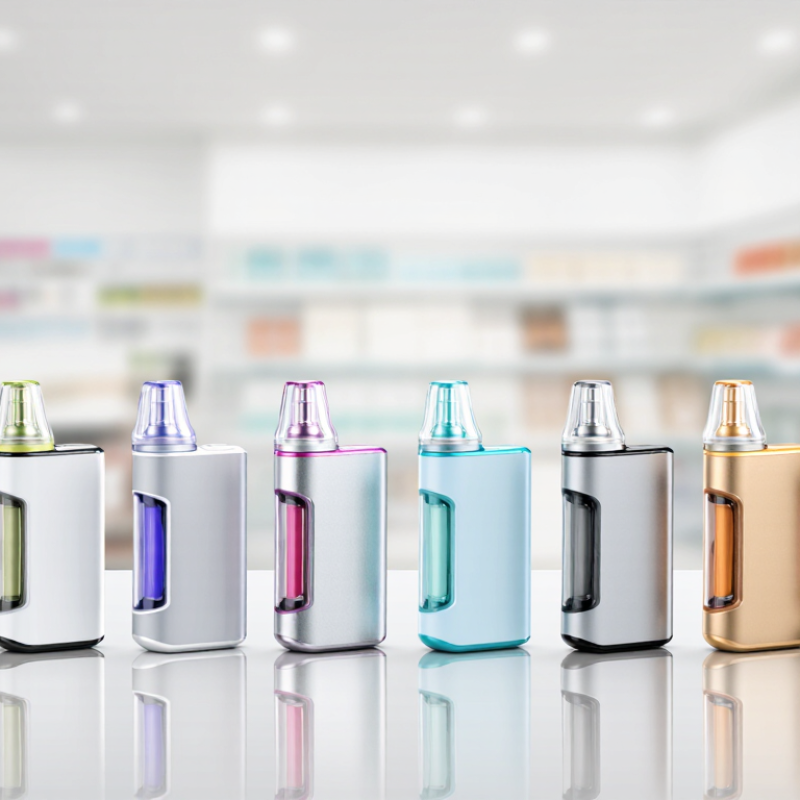
Top Types of Flavored Air Pens for Global Buyers?
The Flavored Air Pen category is attracting global buyers seeking portable aroma, breath-freshening, and nicotine-free inhalation products. Yet the market remains poorly defined. Major research firms usually group these devices with e-cigarettes, personal vaporizers, or wellness inhalers. Buyers should notice that gap.
Grand View Research reported continued growth in the global e-cigarette market, while the World Health Organization continues monitoring flavored nicotine products and youth exposure. The U.S. CDC’s 2024 National Youth Tobacco Survey also showed that flavors remain a major reason young users choose e-cigarettes. These findings do not prove that every Flavored Air Pen contains nicotine. They do show why ingredient clarity, age controls, and compliant packaging matter.
Dr. Tedros Adhanom Ghebreyesus, Director-General of the WHO, stated, “If you have never smoked or used other tobacco products or nicotine, don’t use e-cigarettes.” His warning is especially relevant when sellers blur the line between flavored air devices and regulated nicotine products. Global buyers should compare disposable aroma pens, refillable scent pens, cooling-air inhalers, and non-nicotine wellness formats separately. Check airflow resistance, flavor stability, leak protection, battery certification, and laboratory testing. A pen that looks attractive under bright retail lighting may still have weak labeling or inconsistent output. That is the uncomfortable part.
This guide examines the top types of Flavored Air Pen products for international purchasing decisions. It considers user experience, manufacturing quality, documentation, and market suitability. The category may develop quickly, but reliable evidence still trails promotional claims. Buyers should remain cautious.
Non-Electronic Flavored Air Pens: 0 mg Nicotine and Scent-Load Specs
For global buyers, non-electronic flavored air pens require clearer specifications than attractive flavor names. These devices contain 0 mg nicotine and create no vapor through heating. Their main variables are scent-load weight, airflow resistance, material safety, and expected use duration. A practical specification sheet should state scent load in milligrams, reservoir volume, tip material, batch number, and storage temperature.
Market data shows why this category deserves careful positioning. Grand View Research estimates the global flavors and fragrances market reached about USD 33.5 billion in 2023, with continued growth through 2030. Fortune Business Insights reports a similar market value, but its estimates differ because product definitions vary. This difference matters. Buyers should not treat broad fragrance-market figures as direct demand data for air pens.
Scent-load specifications need measurable testing. A supplier may list 50 mg of fragrance material, yet release intensity can change with airflow, humidity, and storage time. Independent laboratory checks should review restricted substances under current IFRA guidance and applicable local product rules. ISO 9235 can help classify natural aromatic materials consistently. Safety claims must remain modest. These pens are not medical devices, and “nicotine-free” does not automatically mean risk-free. In my view, duration claims need more honesty. A stated “300 uses” may reflect laboratory draws, not ordinary consumer behavior. Clear test conditions build stronger trust than perfect-looking numbers.
Disposable Flavored Air Pens: Puff Counts, Battery Data, and EPR Waste Rules
Top Types of Flavored Air Pens for Global Buyers?
For nicotine-free flavored air pens, puff counts need careful interpretation. A listed 600 puffs is not a universal measurement. It depends on draw duration, airflow, temperature, and automatic shutoff time. Global buyers should request the test method, liquid volume, average draw length, and failure rate. Battery data also matters. Check nominal voltage, capacity in mAh, charging status, protection functions, and storage temperature. A larger battery does not always deliver more usable puffs. That number can mislead.
Technical files should include batch testing and traceable production records. Reports from the International Energy Agency show battery performance depends on operating conditions, not capacity alone. For small disposable devices, buyers should compare measured output under identical laboratory settings. A practical check is simple: record ten devices, weigh them before and after testing, and compare actual puff results. It is not perfect, but it exposes optimistic claims.
Waste compliance requires equal attention. The Global E-waste Monitor 2024 reported 62 million tonnes of electronic waste worldwide in 2022, while only 22.3% was formally collected and recycled. Disposable air pens add mixed materials, including plastic, electronics, and batteries. In the European Union, WEEE and battery extended producer responsibility rules may require registration, labeling, collection, reporting, and financing. Requirements differ by country. Buyers should obtain recycling declarations, material information, and producer-responsibility evidence before shipment. A low unit price may hide higher compliance costs.
Rechargeable Air Pens: IEC 62133-2 Cells, USB-C, and Cycle-Life Testing
Rechargeable air pens need more than attractive flavors and a smooth finish. Their internal lithium cells should be assessed against IEC 62133-2 requirements. This standard focuses on cell and battery safety, including abnormal charging, short-circuit, vibration, and thermal tests. It does not automatically certify the complete pen. Buyers should request traceable test reports, cell specifications, and protection-circuit details. Ask who performed the testing.
USB-C charging improves daily use, especially for wholesale buyers serving travelers. However, the port alone proves little. A reliable design should control overcharge, over-discharge, excessive current, and charging temperature. Check whether the device supports a clearly stated input profile. Avoid vague claims such as “fast charging” without measured data. Small details matter. The connector should remain firm after repeated cable insertion.
Cycle-life testing deserves careful review. A supplier should define one cycle, discharge depth, charging current, temperature, and the remaining capacity target. Testing at 25°C may not represent a hot warehouse or a cold delivery route. A pen rated for 500 cycles might reach that figure under gentle conditions only. That is a weakness worth questioning. Practical evaluations should also record charging time, standby drain, flavor consistency, and battery swelling. Even good test plans have limits. Buyers should compare laboratory results with sample use before placing a large order.
| Air Pen Type | Typical Product Format | Rechargeable Battery Profile | Charging Interface | Recommended Cell-Safety Documentation | Cycle-Life Test Reference | Typical Buyer Advantages | Key Verification Points |
|---|---|---|---|---|---|---|---|
| Compact Rechargeable Aroma Pen | Small pen-shaped device with a prefilled or replaceable flavor cartridge; generally designed for low-power operation. | Single rechargeable lithium-ion cell; commonly specified in the approximately 300–650 mAh range, subject to the final design. | USB-C, 5 V input Confirm whether charging is limited to standard 5 V or supports a higher USB power profile. | Cell or battery test documentation demonstrating conformity with the applicable requirements of IEC 62133-2; transport documentation may also include UN 38.3 test evidence. | Define a complete cycle as charge followed by discharge under documented conditions. A buyer specification commonly targets at least 300 cycles while retaining a defined percentage of initial capacity. | Lightweight, portable, simple user interface, and suitable for private-label product programs. | Verify overcharge, external short-circuit, forced-discharge, thermal, vibration, and mechanical test records where applicable. |
| High-Capacity Rechargeable Air Pen | Longer body or larger internal battery compartment intended for extended use between charges. | Single lithium-ion cell commonly specified in the approximately 650–1,000 mAh range; actual capacity depends on enclosure size and power demand. | USB-C, 5 V input Charging-current limits should be matched to the selected cell and protection circuit. | IEC 62133-2 evidence for the exact cell or battery configuration, supported by a battery-management and protection-circuit specification. | Test at the intended charge current, discharge current, temperature, and end-of-discharge voltage. Report capacity retention, internal resistance, and abnormal-event results separately. | Longer operating intervals and fewer charging events during distribution or daily use. | Check thermal rise, charging time, protection cutoff thresholds, standby drain, and whether the cell is replaceable or permanently installed. |
| Cartridge-Based Rechargeable Air Pen | Reusable electronic body paired with replaceable flavor cartridges or pods. | Rechargeable lithium-ion battery; capacity is typically selected to balance runtime, cartridge format, and device dimensions. | USB-C Use a mechanically protected connector and specify ingress, connector retention, and cable compatibility requirements. | IEC 62133-2 documentation for the battery assembly; separate material and safety documentation should cover the cartridge and liquid-contact components. | Run separate tests for battery cycles, cartridge insertion/removal cycles, connector cycles, and leakage or seal performance. | Reduces the need to discard the electronic body after one cartridge and allows multiple flavor options. | Verify cartridge recognition, leak resistance, contact corrosion resistance, child-safety requirements where applicable, and regional product restrictions. |
| Low-Power Draw-Activated Air Pen | Automatic airflow sensor activates the heating or aroma-delivery system when the user inhales. | Compact rechargeable lithium-ion cell selected for low continuous power and short activation periods. | USB-C, 5 V input Charging should be disabled or controlled during activation according to the product risk assessment. | IEC 62133-2 evidence for the cell or battery pack, plus electrical-safety validation of the airflow sensor and control board. | Use representative activation pulses rather than a simple constant-current discharge. Record puff duration, interval, temperature, and capacity retention. | Simple operation, fewer physical controls, and lower standby complexity when the airflow sensor is properly managed. | Check false-trigger resistance, sensor response, liquid or condensate contamination, auto-shutoff timing, and charging protection. |
| Button-Activated Rechargeable Air Pen | Manual activation button with an indicator light or small status display. | Rechargeable lithium-ion cell sized for the selected operating power and activation duration. | USB-C Specify connector orientation, charging indicator behavior, and protection against simultaneous charge and activation if required. | IEC 62133-2 evidence for the exact battery configuration, along with switch endurance and control-board safety test records. | Combine battery cycle testing with button endurance testing. Report the number of mechanical actuations and any change in electrical resistance or activation reliability. | Clear user control, easy status indication, and suitability for products requiring timed activation. | Verify accidental-activation protection, button lifetime, lockout function, over-temperature response, and LED visibility in daylight. |
| Temperature-Controlled Rechargeable Air Pen | Electronic air or aroma-delivery pen using a controlled heating element and temperature feedback. | Rechargeable lithium-ion battery selected for the required peak current and thermal design margin. | USB-C Charging input, battery protection, and thermal monitoring should be validated as one integrated system. | IEC 62133-2 battery documentation plus verification of the heating element, temperature sensor, firmware limits, and abnormal-operation behavior. | Measure battery capacity retention, temperature stability, activation consistency, and protection response over repeated charge-discharge cycles. | More consistent delivery parameters and better control of operating temperature than basic fixed-output designs. | Check sensor calibration, firmware safeguards, dry-operation response, thermal runaway mitigation, and maximum surface temperature. |
| Replaceable-Cell Rechargeable Air Pen | Device with a user-replaceable rechargeable cell or battery module. | Cell capacity and chemistry must match the approved compartment, contacts, protection circuit, and charging design. | USB-C or external charger Do not assume that every removable cell is safe to charge inside the device. | IEC 62133-2 documentation for the approved cell or battery pack; include polarity, reverse-installation, short-circuit, and mechanical-protection requirements. | Test the complete system with the approved cell, including repeated insertion/removal, contact wear, charging cycles, and incorrect-installation scenarios. | Allows battery replacement and may reduce electronic-waste volume when the device is designed for safe servicing. | Verify user instructions, cell compatibility, venting, contact protection, charger control, and regional shipping requirements. |
| Hybrid USB-C Rechargeable Air Pen | Reusable pen combining a rechargeable electronic body with multiple interchangeable flavor or aroma formats. | Battery capacity is selected according to the highest supported load; the final cell must be evaluated with every approved cartridge format. | USB-C, 5 V input Higher-voltage USB-C charging should not be assumed unless explicitly engineered and tested. | IEC 62133-2 evidence for the battery system, UN 38.3 transport test evidence where applicable, and electrical-safety testing for the complete finished device. | Use a documented test plan covering battery cycles, cartridge changes, charging cycles, connector durability, leakage, and repeated activation. | Flexible product architecture and easier adaptation for different markets and flavor formats. | Confirm regional labeling, ingredient disclosure, age-related controls, recycling marks, charging instructions, and import requirements before launch. |

Refillable Air Pens: EU TPD’s 2 mL Pod and 10 mL Refill Limits
For global buyers, refillable air pens must be assessed against the EU Tobacco Products Directive when they contain nicotine e-liquid. The key limits are clear: a refillable pod or tank cannot exceed 2 mL, while a separate refill container cannot exceed 10 mL. These limits affect product design, packaging, and shipment planning.
In practical testing, a 2 mL pod often supports a compact, lightweight format. It may require more frequent refilling during daily use. A 10 mL bottle is easier to carry, but its closure must resist children opening it. Packaging should also provide required warnings, ingredient details, nicotine information, batch identification, and safe-use instructions. Flavors need careful review because national implementation and enforcement can differ.
A common mistake is treating the 2 mL and 10 mL limits as interchangeable. They are not. The pod limit concerns the device or cartridge; the bottle limit concerns refill packaging. Check the latest rules in each destination market. Product files should include capacity measurements, label artwork, safety records, and supplier declarations. That process is not always smooth. Measurements can vary slightly after assembly, especially with seals and internal components. Independent compliance checks are therefore useful before production, customs clearance, or retail listing. For non-nicotine products, other rules may apply, so buyers should not assume the same limits automatically cover every flavored air pen.
Top Types of Flavored Air Pens for Global Buyers
EU TPD volume limits for nicotine-containing refillable air pens and related formats
Under the EU Tobacco Products Directive, nicotine-containing cartridges and tanks are limited to 2 mL, while refill containers are limited to 10 mL. These are regulatory volume ceilings, not market-share estimates.
Global Buyer Matrix: MOQ, ISO 9001 Records, Cost, and Compliance Risk
For global buyers, flavored air pens should be compared through MOQ, quality records, landed cost, and compliance risk. Pilot orders often start near 500–1,000 units, while customized molds may require 5,000 units or more. These figures vary by factory capacity. They are not guarantees.
A reliable buyer matrix should request ISO 9001 certificate numbers, covered production sites, expiry dates, and certification scope. ISO’s 2022 Survey recorded over 1.2 million ISO 9001 certificates across 189 economies. However, ISO 9001 confirms process management, not automatic product safety. Verify records through recognized certification databases, then inspect batch documents, material declarations, and flavor ingredient specifications. Small details matter.
Cost needs three columns: unit price, tooling, and delivered cost. Packaging changes, testing, freight, and rejected units can quietly increase the final figure. Compliance risk deserves a red, amber, or green rating. Check intended use, product claims, battery design, labeling, child-safety features, and destination requirements before ordering. OECD trade-facilitation data shows that documentation quality strongly affects cross-border efficiency, yet many purchasing teams still review it too late. That is a weakness.
A low MOQ is attractive. It may also signal limited process control. I would not treat a polished ISO file as complete evidence. Ask for recent audit findings, corrective actions, and traceable sample records. Some suppliers may resist. That response itself deserves attention.