Top 10 Marine Wire Options for Your Next Project?
When it comes to selecting the right materials for marine projects, choosing the best marine wire is crucial. James Waters, a marine electrical expert, notes, "The right marine wire can make or break your project." His expertise highlights the importance of durability, reliability, and resistance to corrosion in marine environments.
Marine wire options vary greatly, each with unique characteristics suitable for different applications. From copper to tinned copper, each type plays a significant role in maintaining the safety and efficiency of marine systems. The right choice not only ensures longevity but also minimizes the risk of electrical failures.
However, many overlook the importance of quality in marine wire selections. It’s easy to choose cost over quality, but this could lead to costly mistakes later. Evaluating factors like insulation type and wire gauge is essential. Thoughtful selection today can prevent headaches tomorrow. Take time to reflect on your needs and make an informed choice to ensure your project is a success.
Criteria for Selecting Marine Wires for Your Project
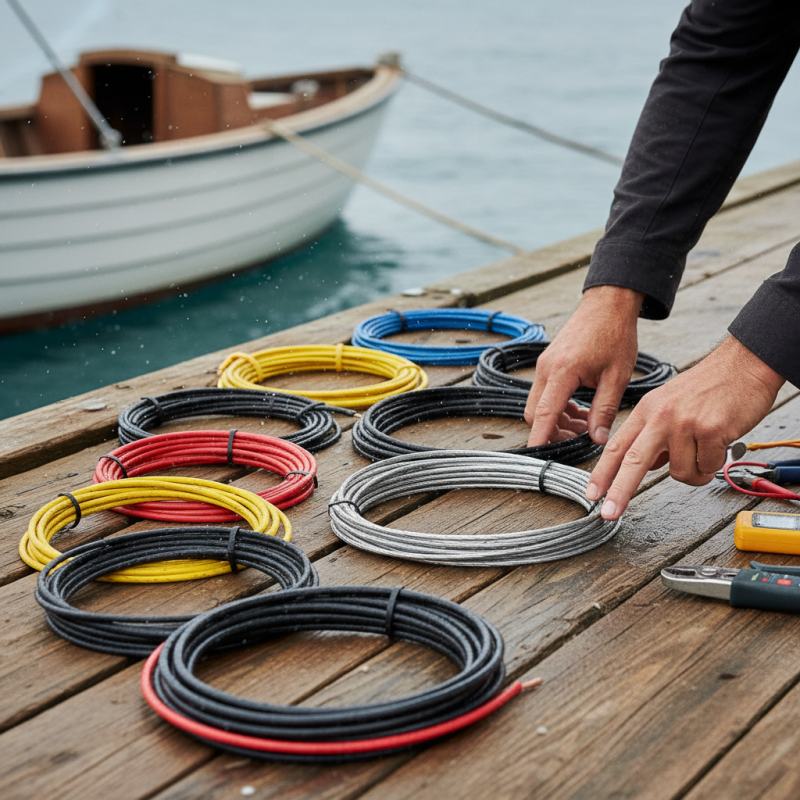
When selecting marine wires for your project, several criteria play a crucial role. Consider the wire's insulation type. For marine environments, wires must resist saltwater exposure and UV rays. Look for tinned copper conductors for enhanced corrosion resistance. This small detail can significantly extend wire lifespan.
Another important aspect is gauge size. Thicker wires handle more current but can be bulkier. Finding the right balance between flexibility and capacity is vital. If space is tight, you might choose a smaller gauge. However, this choice can limit performance. Think about the long-term impact on your project.
It's also wise to check the temperature rating of the wires. Marine conditions can vary significantly. Wires must withstand extreme temperatures. Pay attention to environmental factors, such as humidity and vibration. A wire may seem perfect on paper, but it could falter in real-world conditions. Testing options in a small setting might reveal flaws you didn't anticipate.
Top 10 Marine Wire Options for Your Next Project
Overview of Different Types of Marine Wire Materials
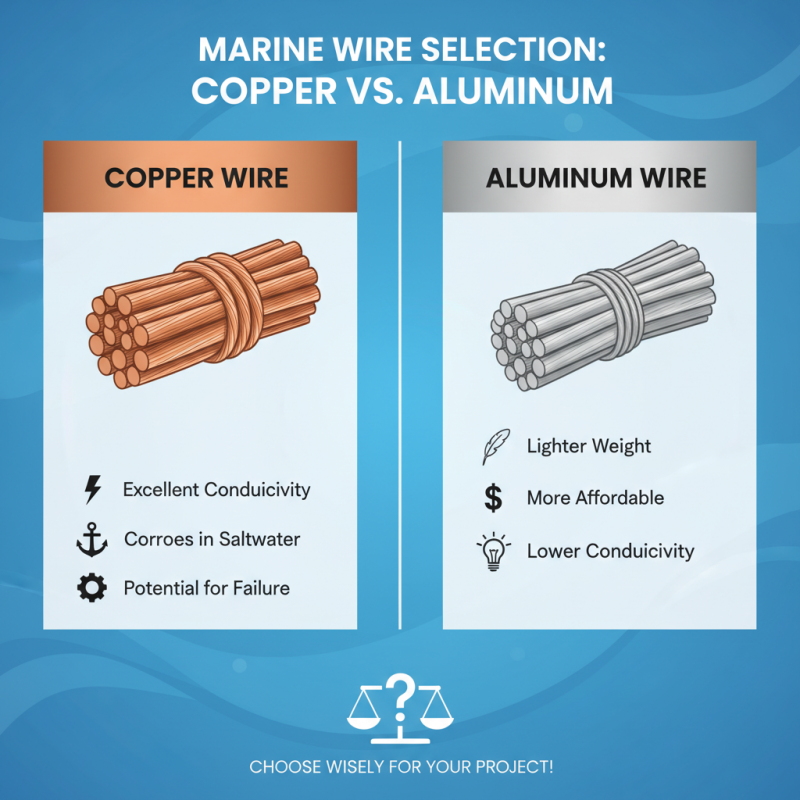
When selecting marine wire for your next project, understanding the materials is crucial. Copper is a popular choice due to its excellent conductivity. However, it can corrode over time in saltwater environments. This issue may lead to decreased performance and unexpected failures. Aluminum is lighter and often used as a more affordable option. Yet, it does not conduct electricity as efficiently as copper. Users must weigh these factors carefully.
Another option includes tinned copper, which is treated to resist corrosion. The tin layer protects the copper underneath, enhancing durability. Still, it can be more expensive than regular copper. Then there’s the option of stainless steel. It's incredibly strong and resistant to rust, but its conductivity isn't as good. A well-thought-out selection based on project requirements can prevent future complications. Always consider the unique environment your marine application will face. A mismatch can lead to frustrating setbacks that might have been avoided with careful planning.
Top 10 Marine Wire Brands and Their Features
When selecting marine wire for your next project, understanding brand features is essential. Many manufacturers claim to offer high-quality options, but not all live up to their promises. For instance, some wires are rated based on their resistance to corrosion, a critical feature in marine environments. According to industry reports, the most effective marine wires have undergone stringent testing, achieving over 500 hours of salt spray resistance. This standard ensures durability and longevity, two critical factors for any marine application.
Different brands present various insulation types, affecting wire performance. Many wires utilize cross-linked polyethylene (XLPE), recognized for its excellent thermal properties. Some brands may offer PVC, which is less effective in extreme conditions. Recent studies indicate that wires with XLPE insulation can operate in temperatures ranging from -40°F to 221°F. This range makes them versatile for varying marine conditions. However, some brands may fall short in providing adequate temperature ratings during extreme weather.
Additionally, cable flexibility is another important consideration. Many users report challenges in handling stiffer wires during installation. Wires with higher flexibility ratings simplify the installation process and reduce fatigue. Unfortunately, these high-flexibility products may sometimes compromise on strength. Finding the right balance between flexibility and durability requires careful evaluation. User reviews suggest that some overlooked brands offer surprising reliability, encouraging consumers to explore beyond the popular choices.
Comparison of Wire Gauges and Their Applications
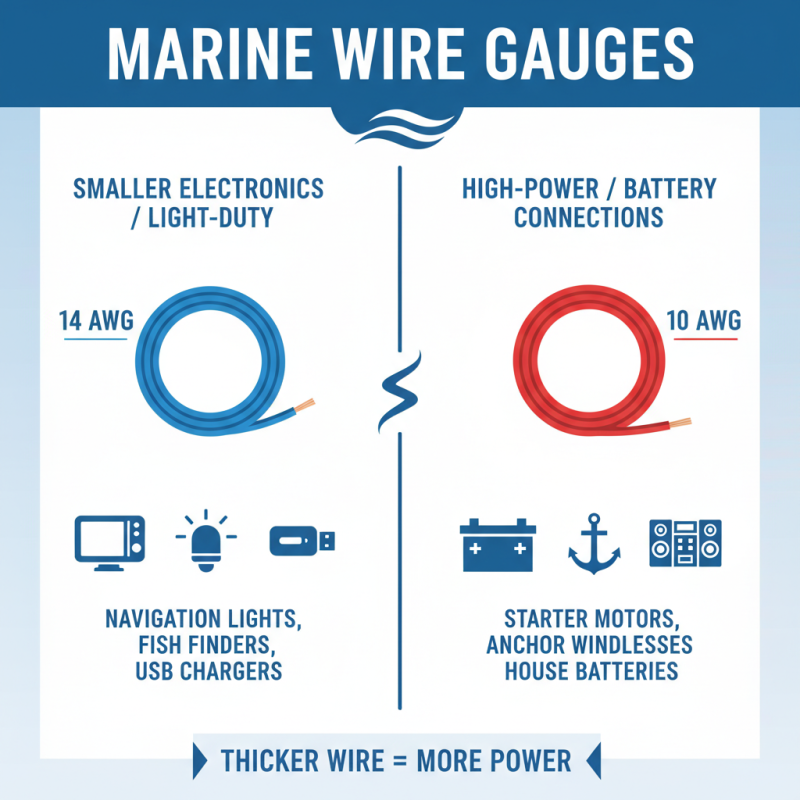
Choosing the right marine wire for your project involves understanding different wire gauges. Wire gauges, like 14 AWG, are commonly used for smaller electronics. They are suitable for light-duty applications. Thicker wires, such as 10 AWG, can handle more power. They are often used for battery connections in marine environments.
Each gauge has its unique applications. A 12 AWG wire works well for lighting and electronics. Meanwhile, 8 AWG is ideal for heavier loads, like motors or larger pumps. Many people overlook the significance of wire corrosion. Marine environments are harsh, and improper wire choice can lead to failures. Regular checks and appropriate insulation can mitigate this risk.
Think about flexibility too. Some projects require wires that can bend easily. Others need more rigid options. People sometimes forget this detail, which can lead to complications later. For outdoor projects, consider UV resistance as well. Not all marine wires are created equal. Testing different gauges under various conditions may provide insight into their performance.
Tips for Proper Installation and Maintenance of Marine Wires
When installing marine wires, it’s crucial to prioritize proper techniques. Start by ensuring you have the right type of wire for your project. Check the gauge carefully. Too thin a wire can cause overheating. Install wires in areas protected from moisture. Use cable ties to secure the wires neatly. This helps prevent wear and tear over time.
Regular maintenance is key to wire longevity. Inspect wires for frays or corrosion periodically. Pay attention to connections; they can loosen over time. It's not uncommon to find a few connections that could use tightening. Ensure your terminals are clean and free of debris. Applying dielectric grease can prevent corrosion. It might take extra effort, but this small step pays off significantly.
Be mindful of how you route your wires. Avoid sharp edges and potential pinch points. Leaving some slack in the wire can help accommodate movement and tension. Sometimes, this isn't considered, leading to unexpected issues. Reflect on your installation process after finishing. Learning from mistakes will improve your skills for future projects.
Top 10 Marine Wire Options for Your Next Project
| Wire Type |
Gauge |
Material |
Max Voltage |
Insulation Type |
Application |
| Tinned Copper Wire |
10 AWG |
Copper |
600V |
PVC |
General Wiring |
| Marine Grade Battery Cable |
6 AWG |
Copper |
12V |
EPDM |
Battery Connections |
| Multistrand Marine Wire |
14 AWG |
Copper |
300V |
PVC |
Lighting |
| Flat Tinned Copper Wire |
12 AWG |
Copper |
600V |
PVC |
Applications in Tight Spaces |
| Shielded Marine Cable |
16 AWG |
Copper |
300V |
Polyethylene |
Data and Signal Transmission |
| Heat Shrink Marine Wire |
8 AWG |
Copper |
600V |
Polyolefin |
Heat Protection |
| Solar Marine Wire |
10 AWG |
Copper |
600V |
XLPE |
Solar Panel Connections |
| Submersible Pump Wire |
12 AWG |
Copper |
600V |
Neoprene |
Pump Applications |
| High-Temperature Marine Wire |
18 AWG |
Copper |
300V |
Silicone |
Heat Sensitive Areas |
| AC Marine Power Wire |
10 AWG |
Copper |
600V |
PVC |
AC Power Supply |