What are the Different Types of Ball Bearings and Their Uses?
Ball Bearings are essential components in numerous applications. They reduce friction between moving parts, making machines run smoothly. According to a report by MarketsandMarkets, the global ball bearing market size was valued at $25.98 billion in 2021 and is projected to grow significantly. This growth reflects the increasing demand for efficient machinery in various sectors.
Different types of ball bearings, such as deep groove, angular contact, and self-aligning ball bearings, have unique properties. Each type serves specific needs in industries like automotive, aerospace, and manufacturing. Deep groove ball bearings, for example, are widely used due to their versatility. However, they may not be the best choice for extreme conditions.
Understanding the types of ball bearings and their applications is critical. This knowledge helps in selecting the right bearing for a given task. Misapplications can lead to increased wear and early failure, which is costly. Therefore, a thoughtful approach to ball bearing selection is vital for optimizing performance and longevity in machinery.
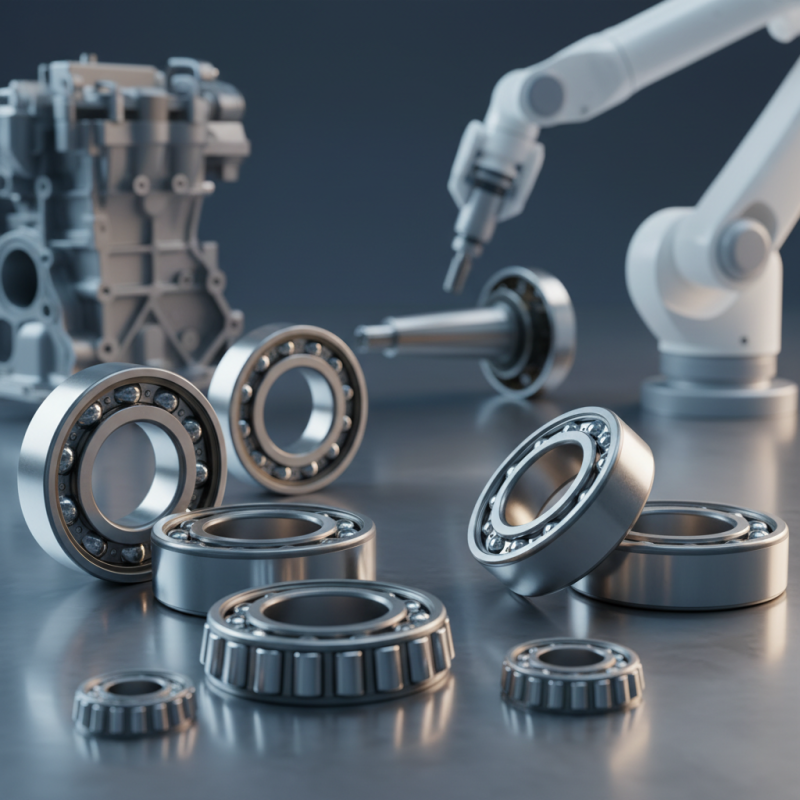
Types of Ball Bearings: A Comprehensive Overview
When it comes to ball bearings, diversity is key. There are several types tailored for different applications. Deep groove ball bearings are among the most common. They are versatile and found in electric motors and household appliances. According to industry reports, they contribute to over 40% of the ball bearing market share.
Angular contact ball bearings are another noteworthy type. They handle both radial and axial loads. This makes them ideal for high-speed applications like turbines. Additionally, they can be used in automotive gearboxes, where precision is vital. However, these bearings require careful installation. Misalignment can lead to premature failure.
Self-aligning ball bearings deserve attention too. They can tolerate misalignment, making them suitable for heavy machinery. In industries like construction and mining, their robustness is invaluable. Yet, their size can pose installation challenges. Moreover, they may not perform optimally under high speeds. Each type of bearing offers unique benefits and drawbacks. Understanding these nuances is crucial for optimal performance in various settings.
Applications of Deep Groove Ball Bearings in Industrial Machinery
Deep groove ball bearings are crucial in industrial machinery applications. They support both radial and axial loads. Their design features a deep raceway that allows for smoother operation. This is vital in machines that rely on high precision. Many industries, such as automotive and manufacturing, depend on them for efficiency.
In assembly lines, these bearings enable gears to rotate smoothly. They help reduce friction and wear. Consequently, machinery can operate for longer periods without maintenance. However, not all deep groove ball bearings perform equally well. Some may wear out faster than others, depending on load and speed. Users must consider these factors when selecting the right type.
The versatility of deep groove ball bearings makes them popular. They can be found in conveyor systems, pumps, and electric motors. Each application requires specific bearing characteristics. Users often overlook these details, leading to potential failures. Proper selection is essential for optimal performance.
The Role of Angular Contact Ball Bearings in High-Speed Applications
Angular contact ball bearings play a crucial role in high-speed applications. These bearings allow for the transmission of large axial and radial loads simultaneously. They have a specific design that enables them to handle greater forces at higher speeds. Reports indicate that these bearings are frequently used in aerospace and automotive sectors, where performance is critical.
Their unique geometry allows angular contact bearings to accommodate axial loads effectively. They are often employed in applications such as electric motors, turbochargers, and machine tools. According to a recent market analysis, the demand for angular contact bearings is expected to grow by 6% annually through 2027. This growth highlights the increasing need for reliable components in high-performance machinery.
However, not all applications suit angular contact bearings. For instance, misalignment can lead to premature failure. Regular maintenance is vital to ensure their longevity. Some users report unexpected wear and tear when operating at extreme angles. Understanding the specific requirements of your application can prevent costly mistakes. The balance of precision and load handling is key to leveraging the benefits of angular contact ball bearings effectively.
Differences Between Self-Aligning and Thrust Ball Bearings
When discussing ball bearings, it's crucial to understand the differences between self-aligning and thrust ball bearings. Self-aligning ball bearings have an outer ring with a spherical raceway. This design allows them to accommodate misalignments. They are often used in applications like motors and agricultural machinery. Their ability to handle dynamic loads makes them versatile.
Thrust ball bearings, on the other hand, are designed for axial loads. They consist of two rings and a ball rolling between them. These bearings support loads along a single axis, making them useful in gearboxes and various automotive applications. Unlike self-aligning bearings, they do not handle misalignment well. This limitation can lead to faster wear if not properly aligned.
Choosing the right bearing type requires careful thought. One might overlook the alignment requirements of thrust ball bearings, leading to premature failure. It’s important to remember that every application is unique, and understanding these differences can prevent costly mistakes. The interplay between different bearing types can be tricky and sometimes confusing. Always double-check alignment and load specifications.
Material Innovations in Ball Bearing Design and Their Impact on Performance
Material innovations in ball bearing design are transforming performance metrics. Steel is the traditional choice, but new materials are gaining traction. For instance, ceramic ball bearings are known for their reduced friction. They can enhance efficiency by up to 60% in some applications. This significant improvement underscores the potential of alternative materials.
Additionally, advanced composites offer impressive properties. These materials resist wear and corrosion better than conventional steel. Industry data suggests that bearings made with these composites can last twice as long under similar conditions. However, while the benefits are clear, the cost of production can be a barrier. Many companies hesitate to make the switch due to initial expenses.
Furthermore, the integration of smart technology in bearings is another major innovation. Sensors embedded in bearings provide real-time data on performance. This data can predict failures and reduce downtime. Yet, not all businesses are ready to embrace these technologies. Some still rely on outdated systems, potentially hindering their efficiency gains. Addressing these gaps is crucial for future advancements in ball bearing design.
What are the Different Types of Ball Bearings and Their Uses?
| Type of Ball Bearing | Description | Common Applications | Materials Used |
| Deep Groove Ball Bearing | Designed to accommodate radial and axial loads in both directions. | Electric motors, automotive applications, and machinery. | Chrome steel, stainless steel, and ceramic. |
| Angular Contact Ball Bearing | Designed for combined loads; can support axial loads in one direction. | High-speed applications, such as spindle bearings. | Chrome steel and ceramic. |
| Self-Aligning Ball Bearing | Can handle misalignment; features two rows of balls. | Agricultural machinery, conveyor systems. | Chrome steel and stainless steel. |
| Thrust Ball Bearing | Designed to support axial loads only; comes in single and double direction. | Machine tools and automotive applications. | Chrome steel and ceramic. |
| Miniature Ball Bearing | Smaller in size; ideal for compact applications. | Electronic devices, hobbies, and medical equipment. | Stainless steel and nylon. |