




2026 Best Cable Electric Wire Types for Global Buyers?

Choosing the right Cable Electric Wire in 2026 requires more than comparing prices or conductor sizes. Global buyers must assess electrical performance, installation conditions, certification, and long-term supply reliability. A wire suitable for a dry indoor panel may fail in sunlight, moisture, vibration, or high-temperature machinery. Small details matter.

This guide examines practical wire types, including copper and aluminum conductors, PVC, XLPE, LSZH, and other insulation options. It also considers voltage ratings, current capacity, flexibility, fire behavior, shielding, and environmental exposure. Experienced engineers usually verify these details against project drawings and recognized standards, such as IEC, UL, CSA, or applicable national requirements. Supplier declarations, test reports, batch records, and traceable labeling can reveal more than a polished product page.

The market is not perfectly simple. Terms and certifications may differ between regions, and a familiar product name does not guarantee equal performance. Buyers should confirm the destination country, installation method, conductor class, operating temperature, and required approvals before placing an order. Ask for samples.

Our recommendations are based on technical selection principles and common procurement experience, but conditions vary between projects. Even a carefully prepared specification may need revision after site inspection. That is not failure; it is responsible engineering. By comparing construction, documentation, compliance evidence, and lifecycle value, global buyers can reduce costly replacements and select Cable Electric Wire with greater confidence.
2026 Best Cable Electric Wire Types for Global Buyers?

2026 Cable Wire Types: Copper, Aluminum, Solid, Stranded, and Flexible

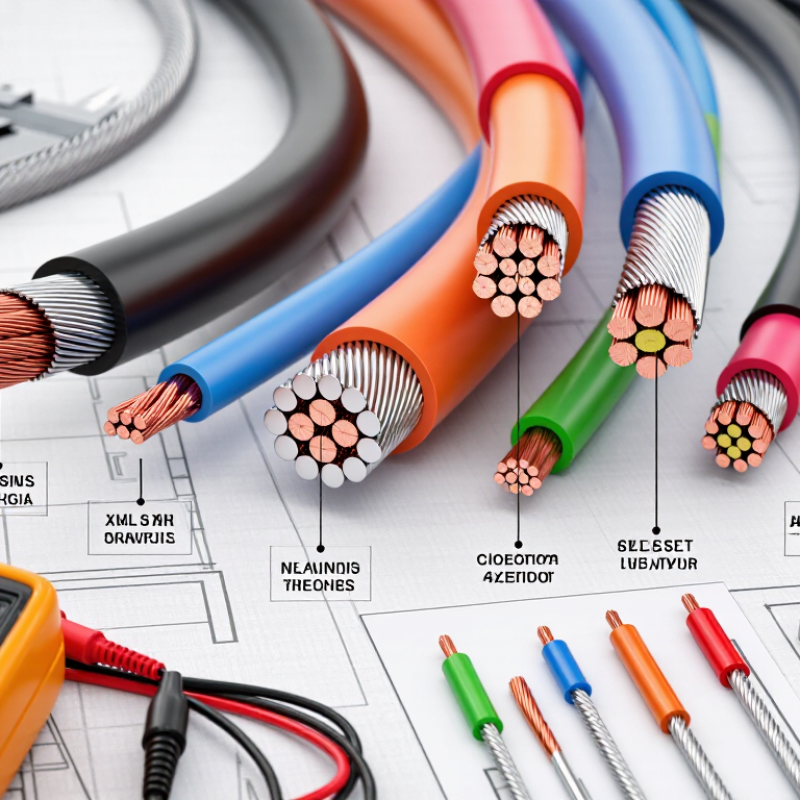
Copper, aluminum, solid, stranded, and flexible wires serve different installation needs. Copper offers excellent conductivity and stable performance in compact electrical systems. It also handles repeated connections well. However, copper usually costs more and weighs more.

Aluminum wire is lighter and can reduce material costs on long routes. Its larger cross-section may be necessary for similar current capacity. Installers must check termination methods, surface preparation, and thermal expansion carefully. I have seen projects fail because weight was considered, but connection quality was ignored. That mistake remains surprisingly common.

Solid wire has a single conductor and stays firmly in fixed routes. It suits building circuits, control panels, and short, protected runs. Stranded wire contains multiple small conductors, making it easier to route around corners. Flexible wire uses finer strands and performs better where vibration or frequent movement occurs. It is not automatically stronger. Buyers should compare conductor size, insulation temperature, voltage rating, bending radius, and test documentation. Ask for sample measurements before approving a large order. Specifications can look correct on paper, yet handling may reveal excessive stiffness or poor insulation recovery.

Copper at 58 vs Aluminum at 35.4 MS/m: Selecting Conductor Metal

For 2026 cable purchasing, conductor metal deserves careful attention. Copper reaches approximately 58 MS/m conductivity, while aluminum reaches about 35.4 MS/m. Copper carries current more efficiently within the same cross-sectional area. Aluminum needs roughly 1.6 times more area for similar resistance. That difference influences voltage drop, terminal size, and cable routing. Small panels need compact conductors.

Aluminum weighs far less than copper. This benefit becomes noticeable on long feeder runs, where lifting and support installation can become difficult. Yet aluminum expands more during heating and cooling. Its oxide layer also increases the risk of poor connections when preparation is careless. Use terminals approved for aluminum conductors and follow the specified torque values. Torque matters.

Field inspections often find loose connections, even when the cable calculation looks correct. Copper usually offers simpler termination and stable performance in compact equipment. Aluminum can be practical for large fixed installations, especially when weight and material cost matter. Do not select metal from conductivity alone. Check allowable temperature, installation method, ambient heat, conductor size, and local electrical requirements. A neat calculation can still mislead. The best choice may change after reviewing the complete route, joint design, and maintenance conditions.

2026 Best Cable Electric Wire Types for Global Buyers?

Copper at 58 vs Aluminum at 35.4 MS/m: Selecting Conductor Metal

Copper

Typical conductivity: 58 MS/m at 20°C. Its higher conductivity supports smaller conductor sizes for the same electrical performance.

Aluminum

Typical conductivity: 35.4 MS/m at 20°C, approximately 61% of copper. A larger cross-sectional area is generally required for equivalent resistance.

Reference values represent commonly used conductor properties at 20°C. Actual performance varies with alloy, temperature, conductor construction, and cable design.

IEC 60228 Classes 1, 2, 5, and 6: Matching Flexibility to Use

Choosing the best cable wire in 2026 starts with movement, not marketing. IEC 60228 Class 1 uses a solid conductor for fixed installations. It is economical and easy to terminate, but repeated bending can damage it. Class 2 uses stranded conductors, offering better handling for panels, trays, and permanent industrial wiring. It remains relatively firm.

Class 5 uses fine strands for flexible equipment, control cabinets, and machinery with regular movement. Class 6 goes further, using even finer strands for tight bends and continuous motion. It feels noticeably softer in the hand. However, flexibility alone does not guarantee safety. Buyers must check conductor resistance, insulation temperature, voltage rating, bend radius, and terminal compatibility. A flexible cable can still fail when clamped incorrectly.

The International Energy Agency’s Electricity 2024 report expects global electricity demand to grow by about 4% annually through 2026. Its Global EV Outlook 2024 also recorded more than 17 million electric vehicle sales in 2024. These figures point to expanding wiring needs in charging, automation, and power distribution. Yet, choosing Class 6 everywhere would waste money and may complicate termination. Class 1 is often adequate for static routes; Class 5 suits moving equipment; Class 6 belongs where bending is severe or continuous. Procurement teams sometimes focus on copper weight first. That is understandable, but incomplete. The installation’s motion pattern matters more. Always compare certified test data with the actual site conditions, because a catalogue description cannot reproduce a hot tray, a vibrating machine, or a cramped terminal box.

PVC 70°C vs XLPE 90°C: Choosing Insulation for Thermal Duty

For global buyers, the insulation choice often determines a cable’s safe working life. PVC rated at 70°C suits ordinary buildings, control circuits, and moderate ambient conditions. It is commonly flexible, cost-conscious, and easier to install. However, heat accumulates quickly inside crowded trays or conduits.

XLPE rated at 90°C provides greater thermal headroom. This matters near generators, industrial heaters, underground ducts, and heavily loaded distribution routes. A higher conductor temperature can increase ampacity, but only when the cable design and installation method allow it. Ambient temperature, grouping, ventilation, soil conditions, and voltage drop still control the final selection.

Field inspections often find cables operating hotter than the original calculation assumed. A tidy tray can hide several loaded circuits. That detail matters. PVC may age faster when exposed to repeated heating cycles, while XLPE can tolerate higher continuous conductor temperatures. Yet XLPE is not automatically better for every project. Its price, bending requirements, termination method, and local availability deserve practical review.

A simple mistake is comparing only the 70°C and 90°C numbers. The conductor size, sheath, screen, fire performance, and short-circuit rating also need verification. Project engineers should check certified test data and applicable installation standards before ordering. I would also question optimistic load forecasts. Real equipment often expands after commissioning, leaving little thermal margin.

6/1 kV Ratings, Ampacity, and Fire Tests: A Global Buyer Checklist

Global demand for distribution cable is rising. The International Energy Agency’s Electricity 2024 report projects global electricity demand to grow by about 3.4% annually from 2024 to 2026. For buyers, a 6/1 kV cable is not simply a voltage label. IEC 60502-1 defines this rating for medium-voltage power cables with a 6 kV conductor-to-screen voltage and 1 kV conductor-to-earth voltage. Confirm the system design before comparing prices.

Ampacity needs careful checking. IEC 60287 calculations consider conductor material, insulation temperature, installation depth, soil thermal resistance, grouping, and load cycle. A cable rated 300 A in open air may carry much less in a crowded duct bank. Copper or aluminium also changes voltage drop and termination requirements. Ask for the calculation sheet, not only the catalogue value. I have seen apparently suitable cables fail this practical check.

Fire performance requires separate evidence. IEC 60332-1-2 evaluates vertical flame spread on a single cable, while IEC 60332-3-24 or 60332-3-25 assesses flame spread among bunched cables. IEC 61034-2 measures smoke density, and IEC 60754 addresses halogen-acid gas emissions. These tests are not interchangeable. Request accredited laboratory reports, test dates, cable construction details, and production references. A “fire resistant” claim without the exact test method remains incomplete. Installation conditions still matter.

2026 Best Cable Electric Wire Types for Global Buyers — 6/1 kV Ratings, Ampacity, and Fire Tests: A Global Buyer Checklist
Cable Type Typical Construction Voltage Rating Typical Conductor Size Used for Reference Conductor Material Insulation / Sheath Maximum Continuous Conductor Temperature Indicative Ampacity* Relevant Fire and Smoke Tests Typical Applications Global Buyer Verification Points
XLPE/PVC power cable 3-core, circular stranded conductor, unarmoured 0.6/1 kV 3 × 35 mm² Copper XLPE insulation with PVC outer sheath 90°C continuous; 250°C maximum short-circuit temperature for XLPE insulation, subject to the applicable standard Approximately 125 A in air under the stated reference conditions IEC 60332-1-2 for vertical flame propagation on a single cable; IEC 60332-3-24 may apply when bundled flame performance is specified Commercial buildings, industrial feeders, indoor and outdoor distribution where ordinary PVC smoke and halogen performance is acceptable Confirm conductor resistance, voltage drop, sheath UV resistance, installation method, and local approval requirements
XLPE/PVC power cable with aluminium conductor 3-core, compact stranded conductor, unarmoured 0.6/1 kV 3 × 70 mm² Aluminium XLPE insulation with PVC outer sheath 90°C continuous Approximately 150–165 A in air under the stated reference conditions IEC 60332-1-2; IEC 60332-3-24 where a bundled flame-spread category is required Large building feeders, utility distribution, renewable-energy collection systems, and projects where lower cable mass is important Check termination compatibility, torque requirements, oxide protection, conductor compactness, bending radius, and aluminium correction factors
LSZH power cable 3-core, stranded conductor, low-smoke and halogen-free sheath 0.6/1 kV 3 × 35 mm² Copper XLPE insulation with LSZH thermoplastic or thermoset outer sheath 90°C continuous, depending on the insulation system Approximately 120–125 A in air under the stated reference conditions IEC 60332-1-2; IEC 60754-1 and/or IEC 60754-2 for halogen-acid gas and acidity/conductivity; IEC 61034-2 for smoke density Data centres, hospitals, transport facilities, tunnels, public buildings, and enclosed evacuation areas LSZH does not automatically mean fire-resistant. Verify smoke, halogen, flame-spread, oxygen-index, and mechanical-performance test reports separately
Armoured XLPE/PVC power cable 3-core, XLPE-insulated cable with metallic armour and outer sheath 0.6/1 kV 3 × 50 mm² Copper XLPE insulation, metallic armour, PVC outer sheath 90°C continuous Approximately 145–155 A in air under the stated reference conditions IEC 60332-1-2; IEC 60332-3-24 may be specified for grouped installations. Armour bonding and earthing requirements should be verified separately Outdoor feeders, industrial plants, cable trays, buried routes, and installations exposed to mechanical damage Confirm armour type, fault-current withstand, earth continuity, corrosion protection, minimum bending radius, and gland compatibility
Single-core XLPE cable for high-current circuits Single-core cables installed in trefoil or flat formation with appropriate spacing 0.6/1 kV 1 × 120 mm² per phase Copper XLPE insulation with PVC or LSZH outer sheath 90°C continuous Approximately 260–300 A in a trefoil arrangement in air under the stated reference conditions IEC 60332-1-2; IEC 60332-3-24 if bundled flame performance is required High-current switchboards, transformer connections, photovoltaic collection systems, and short high-load feeders Check magnetic effects, phase arrangement, cleat spacing, induced sheath currents, thermal short-circuit rating, and parallel-cable current sharing
Fire-resistant circuit-integrity cable Single- or multi-core cable with mineral, mica, ceramic, or other fire-resisting insulation system 0.6/1 kV; exact rating depends on the certified design Commonly selected from 3 × 16 mm² to 3 × 50 mm², subject to circuit load Copper Fire-resisting insulation with LSZH or other specified protective sheath Usually 90°C continuous; emergency fire-survival performance is defined by the fire-resistance test, not by normal operating temperature alone Project-specific; verify the manufacturer’s ampacity tables and installation derating data IEC 60331 for circuit integrity under fire conditions; IEC 60332-1-2 for single-cable flame propagation; IEC 60754 and IEC 61034 where low-halogen and low-smoke performance is required Emergency lighting, fire pumps, smoke-extraction fans, alarm systems, control circuits, and life-safety equipment Do not substitute ordinary LSZH cable for fire-resistant cable. Verify fire duration, test voltage, mechanical shock or water exposure, support system, and complete installation certification
Building cable assessed under CPR Fixed-installation power or control cable intended for construction works in applicable European markets Commonly 0.6/1 kV or lower, depending on product design Project-specific Copper or aluminium PVC, LSZH, or other declared sheath system Depends on the insulation material and product standard Must be taken from the product-specific current-carrying-capacity table EN 50575 and the applicable Euroclass declaration; classification may include reaction-to-fire, smoke production, and flaming droplets. CPR classification does not replace IEC 60331 fire-resistance testing Permanent wiring in buildings and civil-engineering works within markets applying the EU Construction Products Regulation Request Declaration of Performance, CE documentation where applicable, notified-body information, Euroclass, smoke class, and flaming-droplet class
*Ampacity values are indicative engineering references, not universal ratings. The examples assume a 30°C ambient temperature, cable installed in free air, three loaded conductors where applicable, and a 90°C XLPE conductor operating limit. Actual ampacity must be calculated using the applicable edition of IEC 60364-5-52, IEC 60287, national wiring rules, or the project authority’s requirements, including ambient-temperature, grouping, soil-thermal-resistivity, burial-depth, solar-radiation, installation-position, voltage-drop, and short-circuit correction factors.
Buyer checklist: confirm IEC 60502-1 or the relevant national product standard, conductor class and resistance, routine and type-test reports, rated voltage, operating temperature, DC resistance, insulation thickness, sheath material, minimum bending radius, environmental resistance, RoHS or material declarations where required, packing and marking, certificate validity, and the destination country’s electrical approval rules.