2026 Best Fiber Optic Cables for Global Buyers?
Choosing the best Fiber Optic Cables in 2026 requires more than comparing prices and transmission speeds. Global buyers must examine distance, installation conditions, network architecture, and future capacity requirements. A cable designed for a climate-controlled data center may fail in a coastal trench. A rugged outdoor cable may be unnecessary inside a protected server room.
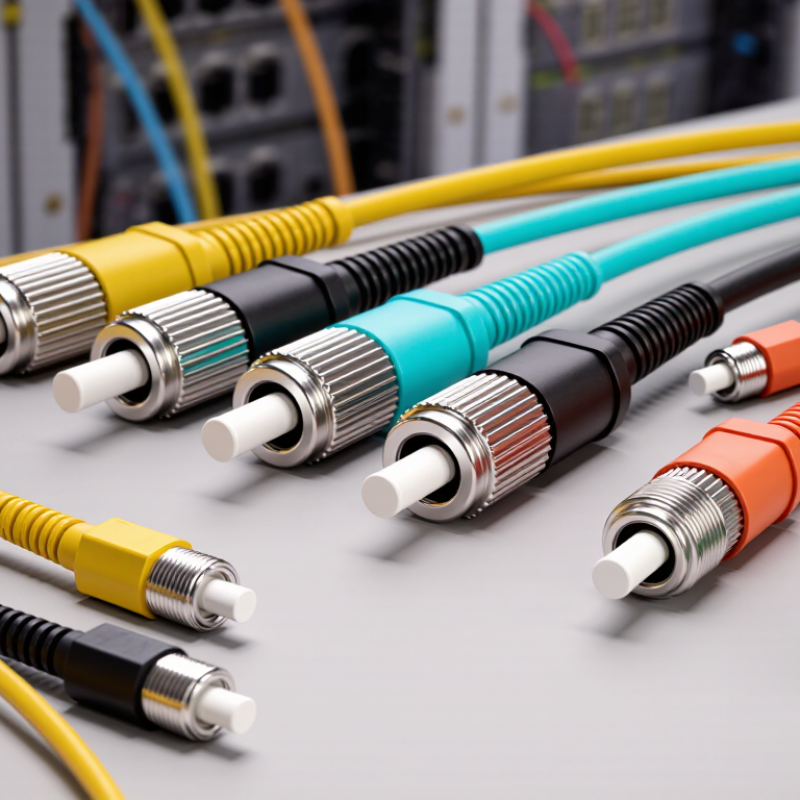
Charles K. Kao, widely recognized as a pioneer of optical fiber communications, once said, “The possibilities of optical communication are enormous.” His vision still guides modern network planning. Today, single-mode cables support long-distance backbone links, while multimode options serve shorter data-center connections. Buyers should also verify fiber count, connector type, bend radius, jacket material, fire rating, and operating temperature. Small specifications matter.
Real projects reveal the difference.
A reliable selection process includes factory testing, insertion-loss reports, return-loss measurements, and compatibility checks with active equipment. International buyers should confirm recognized standards and request clear documentation from suppliers. They should also review warranty terms, packaging quality, lead times, and replacement support. These details can prevent costly delays after shipment.
However, no universal winner exists. That assumption is too simple. The best cable depends on the route, environment, budget, and upgrade plan. Some buyers may overpay for performance they never use. Others may choose low-cost products and face early signal loss. This guide compares leading Fiber Optic Cables for global applications, using practical criteria rather than marketing claims. The recommendations are useful, but they are not flawless. Field conditions can always challenge laboratory results.
What Are Fiber Optic Cables and How Do They Work?
Fiber optic cables carry information as pulses of light through extremely thin glass strands. A transmitter converts electrical data into light. The light then travels through the core by total internal reflection. At the other end, a photodetector changes those pulses back into digital signals.
Two main designs serve different network conditions. Single-mode fiber uses a narrow core for long-distance links, including data centers and submarine routes. Multimode fiber has a wider core and suits shorter building connections.
The International Telecommunication Union’s G.652 standard remains widely used for single-mode infrastructure. TeleGeography’s 2024 Global Bandwidth Research Service reports that submarine cables carry more than 95% of intercontinental data traffic.
That figure shows why cable quality matters beyond the local network.
Performance depends on more than the glass. Dust on a connector can create serious insertion loss. Tight bends can weaken the signal, even when the cable looks undamaged. Testing with an optical time-domain reflectometer reveals distance, breaks, and abnormal reflections.
OECD Digital Economy Outlook 2024 reports that fiber represented about 42% of fixed broadband subscriptions across OECD economies in late 2023. Growth is strong, but installation practices still vary sharply between regions.
A specification sheet may promise low attenuation, yet field results can disappoint. Buyers should check wavelength, connector type, bend radius, temperature range, and test records before ordering. Small details matter.
Which Fiber Optic Cable Types Fit Different Global Applications?
Choosing the best fiber optic cable in 2026 depends on the application, distance, environment, and installation method. Single-mode fiber suits long-haul links, metropolitan networks, data centers, and international infrastructure. It carries signals over many kilometers with low attenuation. Multimode fiber works well inside buildings, campuses, and short data-center connections. It usually supports simpler, lower-cost equipment.
Cable construction also matters. Loose-tube designs protect fibers from moisture and temperature changes, making them suitable for outdoor ducts and direct-burial routes. Tight-buffered cables are easier to terminate indoors. Armored cables add protection in industrial areas, crowded pathways, and rodent-prone locations. Ribbon fiber can reduce splicing time in high-count backbone projects. Bend-insensitive fiber helps in compact cabinets, although careless routing can still create losses.
Tips: Confirm the connector, fiber grade, jacket rating, and local fire requirements before ordering. Leave spare length at distribution points. Test every installed link with an optical loss test set, not visual inspection alone. Field experience shows that cable labels often fail before the fiber does. I have also seen projects choose a higher fiber count than needed, then discover that the tray cannot handle the cable diameter. That mistake is easy to miss. For harsh climates, review water-blocking materials, UV resistance, and operating temperature records. A technically correct cable may still be the wrong choice if installers cannot handle it safely or replacement stock is unavailable.
How to Compare Fiber Optic Cable Performance and Specifications
For global buyers, “best” fiber optic cable depends on the link budget, distance, environment, and installation method. The ITU’s Facts and Figures 2024 report counted about 5.5 billion internet users, increasing pressure on reliable international networks. Compare attenuation first. ITU-T G.652.D specifies up to 0.4 dB/km attenuation for standard single-mode fiber under defined conditions. Lower measured loss leaves more power for connectors, splices, and future upgrades. Check test wavelengths, not only headline numbers.
Bandwidth ratings also need careful reading. Multimode cables may suit short data-center links, while single-mode cables support longer campus, metropolitan, and backbone routes. Review the cable’s operating temperature, tensile strength, crush resistance, water blocking, and minimum bend radius. IEC 60794 testing helps verify these mechanical claims. A high fiber count is not automatically better. Crowded ducts can increase pulling tension and installation risk. My practical mistake has been trusting a datasheet without checking field termination space.
Tips: Request factory test results for attenuation, return loss, and geometry. Confirm connector polishing and polarity requirements before ordering. Compare the complete link budget, including every splice and adapter. The Fiber Optic Association notes that contamination remains a frequent cause of connector loss, even in professionally installed systems. Clean inspection is simple, but often skipped. Also ask whether specifications apply before or after cabling. That small distinction can change the final result.
What Standards and Certifications Should International Buyers Check?
2026 Best Fiber Optic Cables for Global Buyers?
International buyers should check standards before comparing price or transmission distance. The ITU Facts and Figures 2024 report estimated 5.5 billion people were online. Meanwhile, OECD Broadband Data for June 2024 showed fiber represented about 42% of fixed broadband subscriptions across OECD economies. This growth increases pressure on cable quality, documentation, and long-term compatibility.
For single-mode cable, verify ITU-T G.652.D or G.657.A2 performance, especially for backbone and bend-sensitive installations. IEC 60793 covers optical fiber testing, while IEC 60794 addresses cable construction and environmental requirements.
Check IEC 61754 connector interfaces, test reports, and attenuation results at 1310 and 1550 nanometers. CE marking may apply in relevant markets, but it is not a universal quality certificate. Buyers should also review RoHS, REACH, and fire-safety requirements such as CPR where applicable. Country rules can differ. That is easy to miss.
Tips:
Request a recent third-party test report, batch traceability, fiber-count drawings, and a sample before ordering. Confirm whether the report covers the exact cable structure, not merely the fiber inside. Ask about temperature cycling, tensile strength, water blocking, and installation radius. A polished certificate is not enough. I would also check mismatched dates, unclear laboratories, and missing accreditation numbers. Some purchasing teams skip these details, and that remains a costly weakness.
How to Select Reliable Fiber Optic Cable Suppliers in 2026
2026 Best Fiber Optic Cables for Global Buyers?
How to Select Reliable Fiber Optic Cable Suppliers in 2026
In 2026, selecting a fiber optic cable supplier requires more than comparing price per kilometer. Reliable suppliers provide stable production, clear documentation, and responsive technical support. Ask for current datasheets, IEC 60794 references, and batch-level test reports. Request OTDR traces, insertion-loss results, return-loss values, and cable dimensions. A professional supplier should explain every result in practical language. Vague answers deserve caution.
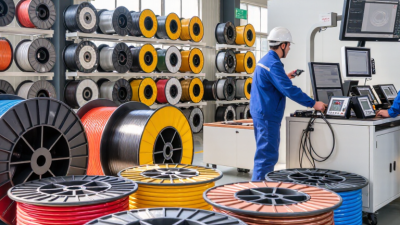
Review the supplier’s manufacturing experience before placing a large order. Check fiber types, jacket materials, bend-radius performance, tensile strength, and operating temperature. Confirm whether cables suit outdoor ducts, direct burial, indoor risers, or data centers. Ask about traceability from raw materials to finished reels. Packaging also matters. Strong drums, moisture protection, and readable labels prevent avoidable damage during international transport. One lesson from field projects is simple: never trust a perfect sample alone. Production consistency matters more.
Tips: Order samples from different batches and test them independently. Compare supplier claims with measured results. Ask about failure rates, corrective actions, warranty limits, and replacement procedures. Check compliance documents, including RoHS or REACH statements where applicable. Also evaluate communication speed. A supplier who answers technical questions clearly may handle problems better later. Still, no supplier is flawless. Leave room for verification, negotiation, and a second inspection before shipment.
| Selection Area | Recommended Specification | Key Technical Data | Supplier Evidence to Request | Global-Buyer Checkpoint |
|---|---|---|---|---|
| Fiber Type | Single-mode fiber for long-distance networks | ITU-T G.652.D fiber is commonly specified for access, metro and backbone links. Typical maximum attenuation values are approximately 0.36 dB/km at 1310 nm and 0.22 dB/km at 1550 nm, subject to the applicable product specification. | Request the fiber classification, attenuation test records and compliance statement against the stated ITU-T recommendation. | Select single-mode fiber when the link exceeds typical premises distances or must support future high-capacity upgrades. |
| Bend Performance | Bend-insensitive single-mode fiber for dense installations | ITU-T G.657.A1 and G.657.A2 fibers are designed for improved bend performance. A2 generally permits tighter controlled bends than A1; the actual minimum bend radius must be taken from the cable data sheet. | Request bend-loss test results at the specified wavelength, minimum installation bend radius and minimum long-term bend radius. | Use bend-insensitive fiber for data centers, building entrances, cabinets and routes with repeated turns, while avoiding bends below the supplier's stated limit. |
| Multimode Option | OM3, OM4 or OM5 for short-distance premises links | OM3 and OM4 are 50/125 µm multimode categories commonly used for high-speed data-center links. OM5 is also 50/125 µm and supports shortwave wavelength division multiplexing applications. Reach depends on transceiver speed, optical loss and the selected cabling standard. | Request modal bandwidth, attenuation, core/cladding dimensions and test results at the operating wavelengths. | Confirm the required link length and transceiver standard before choosing multimode cable; do not select by cable category alone. |
| Cable Construction | Match the structure to the installation environment | Common constructions include tight-buffered, loose-tube, central-tube, ribbon and micro-cable designs. Outdoor loose-tube designs generally provide better protection against moisture and temperature variation than indoor-only constructions. | Request cross-sectional drawings, fiber count, tube count, filling method, material declaration and installation instructions. | Confirm whether the cable is intended for indoor, outdoor, duct, direct-burial, aerial, riser, plenum or conduit installation. |
| Jacket and Fire Rating | Use the rating required by local building and electrical codes | Indoor cables may require flame-performance classifications such as LSZH, plenum or riser ratings. Outdoor cables may require a UV-resistant, water-blocked jacket. The correct rating varies by country and installation zone. | Request fire-test reports, declarations of performance where applicable, jacket material details and the exact marking printed on the cable. | Do not accept “fire resistant” as a complete claim; require the applicable test method, classification and certificate number. |
| Mechanical Performance | Verify tensile, crush and impact requirements | Mechanical limits are construction-specific. Tensile load may be listed separately for installation and permanent service; crush resistance is commonly expressed in N/100 mm or N/cm. Values must be compared using the same test method and unit. | Request the product's tensile, crush, impact, torsion and minimum bend-radius values, together with the relevant IEC or equivalent test method. | Check whether the stated load applies during installation or long-term operation; these are not interchangeable ratings. |
| Environmental Performance | Select temperature and moisture protection for the route | Review operating temperature, storage temperature, water penetration performance, UV resistance and chemical compatibility. Outdoor designs commonly use water-blocking elements such as swellable materials, gel or an approved equivalent. | Request temperature-cycle results, water-penetration test records and the cable's declared installation and operating temperature ranges. | Consider the coldest, hottest and wettest conditions at the actual destination, including transport and warehouse storage. |
| Optical Loss | Specify a complete link-loss budget, not only cable attenuation | Total optical loss includes fiber attenuation, connector insertion loss, splice loss, patch cords, splitters and engineering margin. A basic calculation is: total loss = fiber loss + component loss + design margin. | Request factory attenuation results for every reel, connector insertion-loss data, splice-loss assumptions and the recommended test wavelength. | Confirm that the available transceiver power budget exceeds calculated link loss with an appropriate engineering margin. |
| Connector and Termination | Use compatible connector geometry and polish type | Common connector interfaces include LC, SC and MPO/MTP-style multi-fiber systems. UPC and APC polished end faces are not interchangeable for every application. APC is frequently used where lower back reflection is required. | Request end-face inspection records, polarity information for multi-fiber assemblies, insertion-loss limits and return-loss limits. | Verify connector type, keying, polarity, adapter compatibility and cleaning requirements before placing a volume order. |
| Quality Testing | Require 100% reel-level optical testing | A reliable production process should include continuity, attenuation and length verification. OTDR traces can help identify reflections, events and irregularities along the cable length. | Request sample OTDR traces, insertion-loss test reports, calibration records and a traceable reel or batch identification system. | Make test documentation a shipment requirement and define acceptance limits before production begins. |
| Standards and Compliance | Use recognized international and destination-market requirements | Relevant references may include IEC 60794 for optical-fiber cables, IEC 61300 for fiber-optic interconnecting tests, ISO/IEC 11801 for generic cabling and ITU-T recommendations for optical fiber characteristics. | Request certificates, declarations, test reports and the exact standard edition used for each claim. Check whether documents apply to the offered construction. | Confirm import, building, fire-safety and telecommunications requirements in every destination market rather than relying on a general compliance logo. |
| Traceability | Choose suppliers with batch and reel traceability | Each reel should be identifiable by a unique lot or serial number linked to fiber type, cable construction, production date, test results and measured length. | Request a sample reel label, packing list, certificate of conformity and retention policy for quality records. | Traceability reduces investigation time when a field installation reports excessive loss, incorrect length or jacket damage. |
| Supply Reliability | Evaluate capacity, lead time and change control | Supplier reliability is influenced by production capacity, raw-material control, standard lead time, inspection capacity and documented engineering-change procedures. | Request a production schedule, capacity statement, approved-substitute policy, nonconformance process and business-continuity plan. | Use a pilot order before a large contract and define delivery tolerance, replacement obligations and notification requirements for material changes. |
| Packaging and Logistics | Protect cable length and geometry during international transport | Cable reels should be suitable for handling and shipping, with secure end protection, clear winding direction, measured length and moisture protection where required. | Request packaging drawings, reel dimensions, gross weight, loading method, storage limits and photographs of a packed shipment. | Confirm container fit, unloading equipment, customs documents, Incoterms and destination-country labeling requirements. |
| Commercial Acceptance | Compare total delivered cost and technical risk | Total cost includes cable, connectors, testing, packaging, freight, insurance, duties, installation accessories, inspection and potential replacement costs. | Request a technically identical quotation showing unit, reel, packaging, inspection and logistics charges separately. | Avoid selecting solely on price; compare the same fiber class, cable structure, fire rating, test scope, delivery term and warranty conditions. |

Related Posts
-
Top Strategies for Sourcing High-Quality Solar Electric Solutions Globally
-
Best Water Resistant Cable Options for Your Projects?
-
2026 Top Rubber Cable Types for Global Buyers Needs?
-
Discovering the Best Voltage Cable Options for Your Electrical Projects
-
Ultimate Comparison: Top 5 Best Medium Voltage Cables for Your Industrial Needs
-
China Best Power Cable Electrical Manufacturers?