Why Choose Rubber Flexible Cable for Industrial Use?
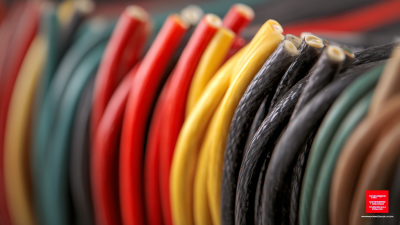
Industrial equipment rarely works in a clean, gentle environment. Cables may trail across workshop floors, bend beside moving machinery, or face oil splashes, vibration, and changing temperatures. In these conditions, Rubber Flexible Cable can offer a practical combination of flexibility and mechanical resilience. Its rubber insulation and outer sheath are designed to withstand repeated movement, though performance varies by cable construction and intended application.
That distinction matters. A cable suitable for a portable tool may not suit a crane, pump, or outdoor installation. Buyers should check the rated voltage, conductor size, temperature range, bend radius, and resistance to oils or abrasion. The manufacturer’s technical datasheet is more useful than a broad claim that a cable is “heavy duty.” Small details count, especially where equipment runs for long shifts.
Rubber cable can also be easier to handle when frequent repositioning is part of daily work. It may remain pliable in conditions where some other sheath materials feel stiff. Still, no cable is ideal for every site. Not always. Poor routing, excessive tension, or the wrong specification can shorten service life, even with a robust product. A careful selection process starts with the actual working environment, not the label alone. This guide explores why industrial users choose Rubber Flexible Cable, what features deserve attention, and where its limitations should shape the decision. The right choice is often less dramatic than expected: match the cable to the task, then inspect it regularly.
What Rubber Flexible Cable Is and How It Is Constructed
Rubber flexible cable is built to bend repeatedly without exposing its conductors. Inside, fine-stranded copper carries current; each conductor is wrapped in rubber insulation, then grouped beneath a protective outer sheath. Depending on the design, insulation may use an elastomer such as EPR, while the sheath may use a tougher rubber compound for resistance to abrasion, oil, or weather. The exact materials vary by duty. Rubber alone does not guarantee suitability for every environment.
Construction details matter. IEC 60228 defines conductor classes 5 and 6 for flexible copper conductors, with class 6 using finer strands for greater flexibility. IEC 60245-4 covers rubber-insulated cords and flexible cables rated up to 450/750 V. These standards help buyers compare cable types, but they do not replace checking the manufacturer’s data for temperature, voltage, and chemical exposure. A thick-looking sheath can still be wrong for a hot, oily machine bay.
Tips: Check the cable’s marked voltage and temperature ratings before installation. Inspect the sheath for cuts, swelling, or flattened spots. And consider the bend radius. It is easy to overlook. A cable forced around a sharp machine edge may fail sooner, even when its construction is sound.
How Its Materials Provide Flexibility and Durability
Why Choose Rubber Flexible Cable for Industrial Use?
Rubber flexible cable combines a stranded copper conductor with resilient rubber-based insulation and an outer sheath. The fine conductor strands bend more readily than a solid core, while the rubber layers help protect them during repeated movement. On a workshop floor, a cable may trail beside a moving machine, coil around a reel, or flex near a handheld tool. Its construction helps it cope with these motions without making it rigid. That matters.
The materials also support durability, but performance depends on the compound and cable design. A suitable outer sheath can resist scuffing, impacts, and contact with oils or moisture; resistance levels vary, so check the product specification rather than assuming all rubber cables behave alike. In cold conditions, flexibility can be useful, though temperature limits still apply. Inspect the sheath for cuts, flattening, or exposed conductors, especially where cables cross busy areas. Small signs matter.
Rubber cables can be heavier than some alternatives, and a tight bend or constant dragging can still cause damage. Choose a cable rated for its environment, voltage, and movement pattern, then route it to reduce strain. Even durable materials need care. A quick inspection can catch trouble early.
Key Performance Features in Industrial Environments
Rubber flexible cable is useful where machinery moves, vibrates, or operates in demanding conditions. Its flexible outer sheath can help resist scuffing from repeated contact with equipment and workshop floors. Inside, finely stranded conductors bend more readily than solid conductors, making routing around moving parts easier. That matters near a gantry, pump, or portable machine.
Movement takes a toll. A cable dragged across a rough concrete floor may wear faster than one installed in a protected tray, so routing and inspection still matter. Rubber compounds vary: some offer better resistance to oil, heat, or weather than others. Check the cable’s rated voltage, temperature range, and environmental suitability against the actual installation, rather than relying on appearance alone.
Look for cuts, flattened sections, and exposed conductors during routine checks. Small signs matter. Flexible does not mean indestructible. In cold conditions, some sheaths stiffen, and tight bends can stress conductors over time. Choosing the right cable means matching its construction to the load, movement, and exposure it will face. A little more care at installation can prevent avoidable wear later.
Common Industrial Applications and Operating Conditions
Industrial plants use flexible cables on motor connections, pendant controls, mobile machinery, and equipment that vibrates during operation. Rubber sheathing can help resist abrasion and repeated flexing, but performance depends on the cable’s construction and rating. The International Energy Agency’s 2011 report, Energy-Efficiency Policy Opportunities for Electric Motor-Driven Systems, estimated that motor-driven systems account for about 46% of global electricity use. That scale helps explain why dependable connections around motors matter.
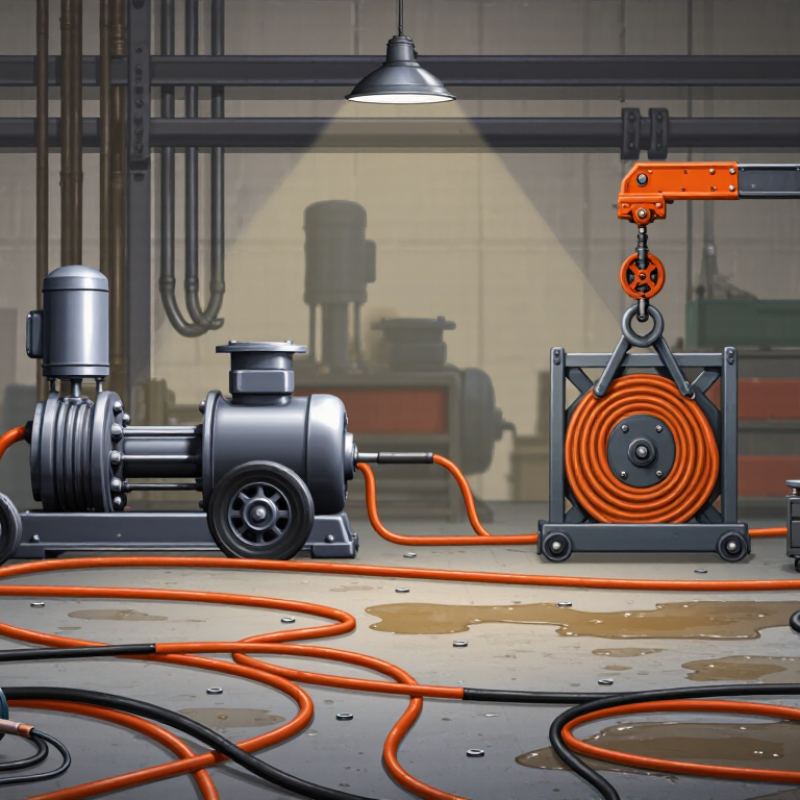
On factory floors, cables may trail moving hoists, cross damp walkways, or connect pumps near splashing water. In workshops, welding equipment and portable tools need leads that tolerate frequent handling. Flexible rubber cable is often considered for these duties because its sheath can remain pliable in demanding environments. But “rubber” alone is not a complete specification. Oil, chemicals, sunlight, heat, and cold can affect different compounds differently.
Conditions change quickly. A cable beside a hot motor may face heat and vibration, while a conveyor connection may bend thousands of times. Check the manufacturer’s temperature range, voltage rating, ingress protection, and minimum bending radius against the actual installation. IEC 60204-1 addresses electrical equipment of machinery, including wiring practices. Field checks still matter: look for cuts, flattened sections, loose glands, or stiffened sheaths. Ratings are easy to misread. They do not guarantee suitability for every moving or wet application.
Why Choose Rubber Flexible Cable for Industrial Use?
Common industrial applications and operating conditions
Rubber-sheathed flexible cables are used where equipment needs to move or cables may face demanding site conditions. The chart compares nominal voltage ratings in harmonized cable designations: H05RR-F is rated 300/500 V, while H07RN-F and H07RN8-F are rated 450/750 V. H07RN8-F is designed for applications involving prolonged immersion in water. Actual temperature, chemical, abrasion and immersion limits depend on the specific cable and its datasheet.
How to Select the Right Rubber Flexible Cable for a Job
Selecting rubber flexible cable starts with the job, not the jacket’s appearance. Check the equipment’s rated voltage, current, starting load, and the cable’s full operating temperature range. IEC 60245-4 covers certain rubber-insulated flexible cables rated up to 450/750 V; that figure is not a universal rating for every rubber cable. Confirm the cable type and its datasheet before specifying it. A thicker conductor may reduce voltage drop over a long run, but it also adds weight and can make repeated handling harder.
Now picture the route: a cable dragged across a workshop floor faces abrasion; one beside a press may be crushed or exposed to oil, heat, and vibration. Match the sheath to those hazards, then check the minimum bend radius and whether the cable is designed for continuous movement. IEC 60245 provides construction requirements, while IEC 60228 classifies conductor sizes and construction. Both are useful references, but neither replaces the product’s application limits. A practical check: measure the route, inspect pinch points, and compare the cable’s stated ratings with the actual duty cycle. Easy to overlook. If the load or environment is uncertain, ask a qualified engineer to verify the selection; guessing from flexibility alone is not enough.
| Selection Dimension | What to Assess | Why Rubber Flexible Cable May Suit the Job | Selection Check |
|---|---|---|---|
| Flexibility and movement | Determine whether the cable will be moved occasionally, flexed repeatedly, or used with moving equipment. | Flexible conductors and an elastomeric sheath can make suitable cable constructions practical for portable equipment and applications involving movement. | Match the cable’s stated duty to the movement involved. Repeated flexing or continuous motion may require a cable specifically designed for that service. |
| Voltage and electrical load | Establish the system voltage, equipment load, conductor size, and number of cores required. | Rubber-sheathed flexible cables are available in different voltage classes and conductor configurations. | Check the cable’s voltage marking and select conductor size using the applicable electrical rules and the equipment’s load requirements. |
| Current-carrying capacity | Consider conductor size, ambient temperature, installation method, grouping with other cables, and duty cycle. | A suitable cable can carry the required load when correctly specified and installed. | Do not select by conductor size alone. Verify the allowable current for the actual installation conditions against applicable standards or regulations. |
| Oil, grease, and chemicals | Identify likely contact with oils, lubricants, cleaning products, fuels, or process chemicals. | Some rubber compounds are formulated for improved resistance to specific oils or environmental exposures. | Confirm compatibility for the exact sheath material and the substances involved; “rubber” does not mean resistant to every chemical. |
| Outdoor exposure | Check for sunlight, rain, moisture, temperature changes, and mechanical exposure. | Certain industrial rubber cable constructions are designed for outdoor or demanding site conditions. | Verify the manufacturer’s stated resistance and permitted installation conditions. Protect the cable from damage beyond its rated capability. |
| Abrasion and impact | Assess contact with rough floors, sharp edges, tools, machinery, or vehicle traffic. | A robust outer sheath can help protect the cable in demanding environments, depending on its construction. | Choose a construction rated for the expected mechanical exposure and use suitable guards, routing, or cable protection where needed. |
| Water and damp locations | Distinguish occasional splashing from sustained wet conditions, immersion, or use in a specified water-related application. | Some flexible rubber cables are suitable for damp or wet environments when their ratings and installation conditions permit. | Check the exact water or immersion rating. A flexible rubber sheath alone does not establish suitability for underwater use. |
| Temperature range | Consider the lowest and highest temperatures during storage, installation, and operation. | Available cable compounds differ in their operating and handling temperature limits. | Use the temperature limits stated for the specific cable and account for both ambient conditions and conductor heating. |
| Installation and termination | Plan the cable route, bend radius, entry points, connectors, and strain relief. | Flexible construction can simplify connection to portable or repositioned equipment. | Follow the cable’s minimum bend radius and termination requirements. Prevent pulling forces from being transferred to electrical connections. |
| Standards and certification | Identify the standards and regulatory approvals required for the site, equipment, and country of use. | Industrial flexible cables are manufactured in different constructions for defined applications and standards. | Check markings, technical documentation, and required approvals before purchase; do not infer compliance from appearance. |
| Lifecycle and maintenance | Consider how often the cable will be moved, inspected, cleaned, and replaced. | Choosing a cable suited to the actual duty can help avoid premature wear and unplanned replacement. | Inspect for cuts, cracks, deformation, exposed conductors, or damaged terminations, and replace damaged cable promptly. |
| Final selection rule | Select by the complete application: voltage, load, movement, environment, mechanical exposure, installation method, and required approvals. Confirm the final specification with the cable documentation and applicable electrical regulations. | ||
Related Posts
-
7 Compelling Reasons to Choose the Best Rubber Cable for Your Industry Needs
-
Understanding Import Export Certifications for Best Rubber Flexible Cable in the Global Market
-

2026 Top Rubber Cable Types for Global Buyers Needs?
-
Ultimate Checklist for Global Buyers to Choose the Right Electrical Power Cable
-
Innovative Alternatives for Electric Cables Enhancing Efficiency and Sustainability in the Industry
-
Why Is Power Cable Quality Important for Global Buyers?