How to Choose China Best Rubber Power Cable Suppliers?
Choosing a China-based supplier for Rubber Power Cable involves more than comparing prices. The cable must suit its actual working conditions, including movement, temperature, moisture, and exposure to oil or abrasion. Details matter. A flexible cable used beside workshop machinery may need different construction from one installed on portable equipment. Ask suppliers to explain conductor material, insulation, sheath composition, voltage rating, and available sizes. Their answers should match the product datasheet and your application—not just a sales brochure.
A dependable supplier can provide clear technical documents, relevant test records, and consistent product specifications. Request samples and inspect practical details, such as jacket markings, finish, and flexibility. If possible, compare samples with the quoted specification and ask how production batches are identified. Factory capability, quality-control procedures, communication, lead times, and export experience also deserve careful review. Standards and certification needs vary by destination and use, so confirm requirements with a qualified technical professional before ordering. A polished website is not proof of reliable production. Nor is a low price proof of poor quality. The uncomfortable part is that some differences are hard to judge from a sample alone. Keep written records, clarify acceptance criteria, and check whether the supplier can answer specific questions without changing the details. Choosing well takes patience, and even a careful review cannot remove every uncertainty. It can, however, make the risks easier to see.
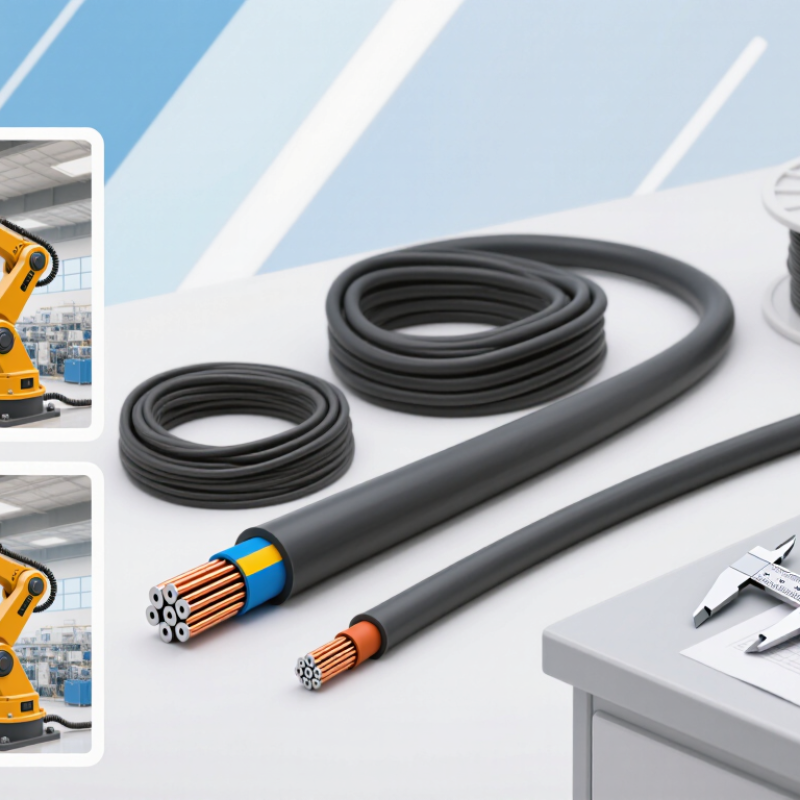
Define Rubber Power Cable Requirements and Operating Conditions
Before comparing suppliers, write down the cable’s actual job.
Record rated voltage, current, conductor size, cable length, and the equipment it will connect. Note whether the cable stays fixed or bends during use. Repeated movement can call for a more flexible construction.
Small details matter.
Heat changes everything.
Describe the expected ambient temperature, nearby heat sources, moisture, oil, abrasion, and any outdoor exposure. Also explain how the cable will be routed, supported, and connected. A cable that performs well in a cool workshop may behave differently beside a motor or on a wet production floor. Specify operating and storage temperatures, plus the duty cycle where known. If a value is uncertain, mark it as an estimate rather than presenting it as a firm requirement.
Tips:
Send suppliers a simple application sketch, cable length, voltage, load, and site conditions. Ask for the proposed construction, conductor material, insulation and sheath details, temperature ratings, and test documentation. Check that the stated ratings match your real installation, not just a standard catalogue description. If flexibility or abrasion resistance is critical, request evidence relevant to that use. One missed condition can affect service life, and specifications are easy to revise before ordering—not always afterward.
Check Supplier Credentials, Manufacturing Capacity, and Product Range
When evaluating China-based rubber power cable suppliers, verify credentials before discussing price. Request business registration details, current quality-management certificates, and recent test reports for the cable types you need. Check that report numbers, product descriptions, and issuing laboratories match. Ask for evidence. A certificate alone cannot show how consistently a factory controls production.
Manufacturing capacity should be visible in process records, not just a large claimed output. Ask how the supplier manages conductor preparation, rubber insulation, vulcanization, and final electrical tests. Request realistic monthly capacity, typical lead times, and details about peak-season delays. If possible, review sample inspection records or arrange a factory audit. Compare a production sample with the approved specification; small differences in insulation thickness can matter. Capacity figures may be estimates, so clarify what is actually available.
A useful product range should fit your operating conditions. Confirm voltage rating, conductor size, temperature range, flexibility, and resistance to oil, water, or abrasion where relevant. Ask for technical datasheets and clarify whether custom lengths or constructions affect testing and delivery. Product catalogs can look comprehensive, yet some options may be outsourced. That deserves a closer look. I would also ask how the supplier identifies cable batches and handles complaints; the answer can reveal more than a sales presentation.
Assess Materials, Standards Compliance, and Quality Control
When evaluating China’s rubber power cable suppliers, begin with the compound, not the catalogue photo. Ask whether the insulation and sheath suit the site’s heat, oil, moisture, abrasion, and movement. Check the declared conductor material, cable size, rated voltage, and operating-temperature range against your application. Small details matter. A cable may look robust yet become brittle after repeated bending or outdoor exposure.
Standards need product-level evidence. IEC 60245 covers rubber-insulated cables, including products rated up to 450/750 V; the applicable part depends on cable type. Request the exact standard edition, test reports, and traceable batch documents. For routine quality checks, look for conductor-resistance measurements, insulation-thickness records, and voltage-withstand results. Ask how samples are selected and what happens when a batch fails. Ask for proof. A certificate alone does not show how consistently a factory controls its process.
Demand also makes verification practical, not bureaucratic. The International Energy Agency’s Electricity 2024 report recorded 2.2% global electricity-demand growth in 2023 and projected average annual growth of 3.4% for 2024–2026. These figures do not prove cable quality, but they point to expanding electrical infrastructure and tighter sourcing needs. Request a recent factory audit and compare its findings with production records. I would still inspect a physical sample; paperwork can be tidy while a small manufacturing variation goes unnoticed.
Compare Samples, Pricing, Lead Times, and After-Sales Support
A rubber power cable sample should be checked against your actual working conditions, not just its catalogue photo. Ask for the same conductor size, core count, voltage rating, and sheath type planned for production. Flex it repeatedly, inspect the outer surface, and note whether the printed markings remain clear. Check the sample’s dimensions and weight, too. A lighter sample may signal a mismatch, though it does not prove poor quality. Record what you observe. Simple, but useful.
Compare quotations using identical specifications and order quantities. Confirm whether copper, testing, packaging, and freight are included; a low unit price can hide omitted costs. Request a written production schedule covering sample approval, material preparation, inspection, and dispatch. Ask which items could delay delivery, such as an uncommon cable size or color. Dates need evidence. A confident promise is not a schedule.
After-sales support is easiest to judge before a problem occurs. Ask who handles technical questions, what inspection records accompany each batch, and how quality issues are investigated. A clear process should explain response times, required evidence, and possible corrective actions. Keep emails, approved samples, and specification sheets together. One awkward point: sample testing cannot guarantee every production meter will match. That limitation deserves discussion, not a sales gloss. Compare each supplier’s response to a specific technical question; clarity often says more than a polished brochure.
How to Choose China’s Best Rubber Power Cable Suppliers
Suggested weighting for comparing samples, pricing, lead times, and after-sales support
Use these suggested weights as a starting point, not as market-survey data. Compare suppliers against the same cable specification and RFQ: assess sample conformity and test reports, compare like-for-like quoted prices, confirm production and shipping lead times in writing, and review warranty terms and technical support. Adjust the weights to match your project’s priorities.
Verify Supplier Reliability Through Audits and Contract Terms
Choosing a rubber power cable supplier in China requires evidence, not a polished showroom. During an on-site audit, trace one finished drum back to its material records. Check rubber and conductor batches, extrusion settings, curing logs, and calibration labels. Ask to witness a routine electrical test, then compare its result with the shipment’s test certificate. Small details matter. A missing batch link can weaken an otherwise convincing quality system.
The ISO Survey 2022 recorded more than 1.26 million valid ISO 9001 certificates worldwide. That figure shows how widely quality systems are adopted; it does not prove a particular cable performs well. Treat certification as a starting point. Review product-specific test reports, confirm the laboratory and sample are identifiable, and check whether audit findings were closed with documented corrective actions. I would not treat a high audit score as certainty. One visit can miss a weak shift or an unrecorded process change.
Put the important checks into the contract. Specify conductor size, insulation material, voltage rating, test methods, tolerances, and approved samples. Set inspection access, batch traceability, change-notification rules, delivery dates, and remedies for failed tests. Keep signed drawings and test records tied to each order. Clear wording helps. It cannot replace a factory check, but it makes disagreements easier to investigate.